
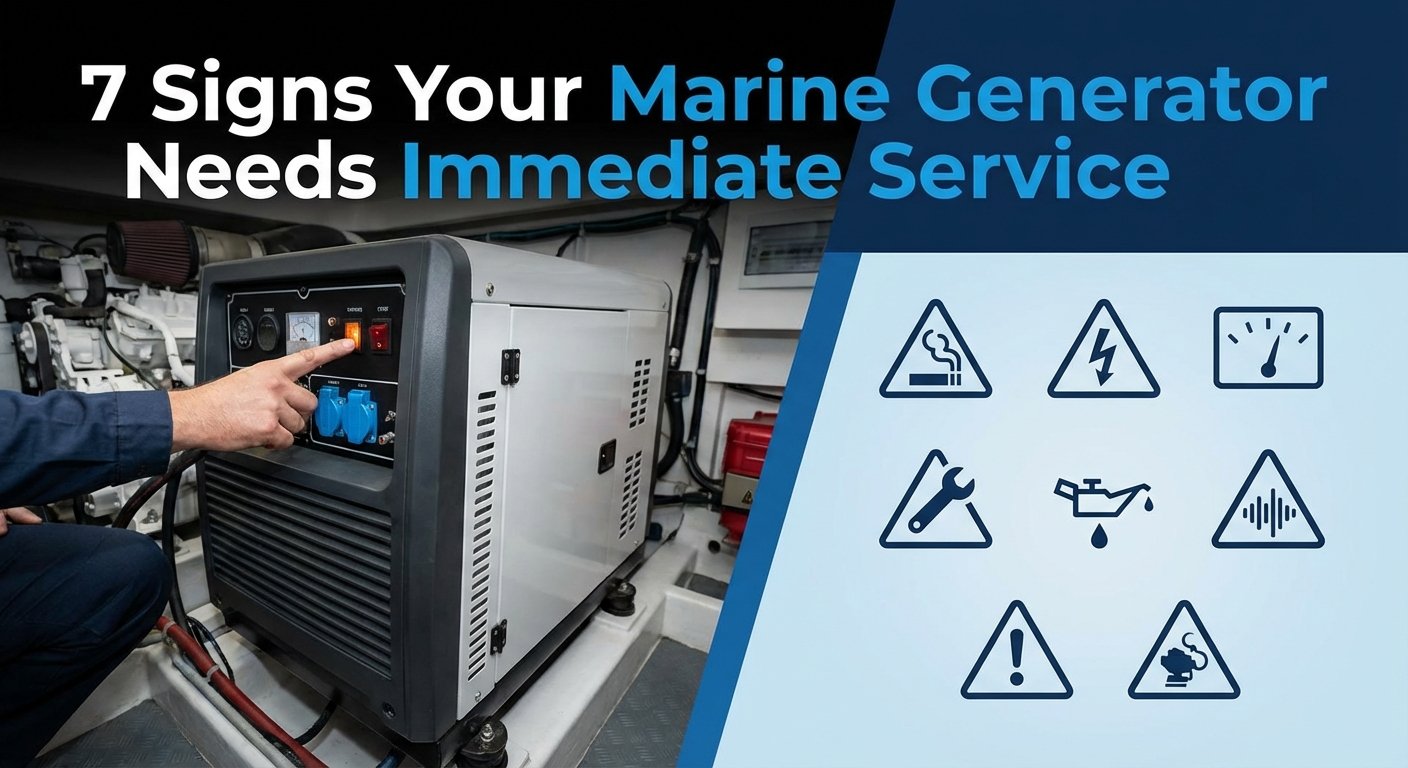
Your marine generator is the silent workhorse of your vessel, providing essential electrical power for everything from air conditioning and refrigeration to navigation systems and lighting. When it fails, your time on the water can quickly turn from pleasure to problem. Recognizing the early warning signs of generator trouble can save you from costly repairs, dangerous breakdowns at sea, and the inconvenience of being without power when you need it most.
Marine generators from manufacturers like Kohler, Onan, Northern Lights, and Westerbeke are built to withstand the harsh marine environment, but they require proper maintenance and prompt attention when problems arise. Understanding what your generator is telling you through various symptoms can mean the difference between a simple service call and a catastrophic failure requiring complete replacement.
1. Unusual Noises During Operation
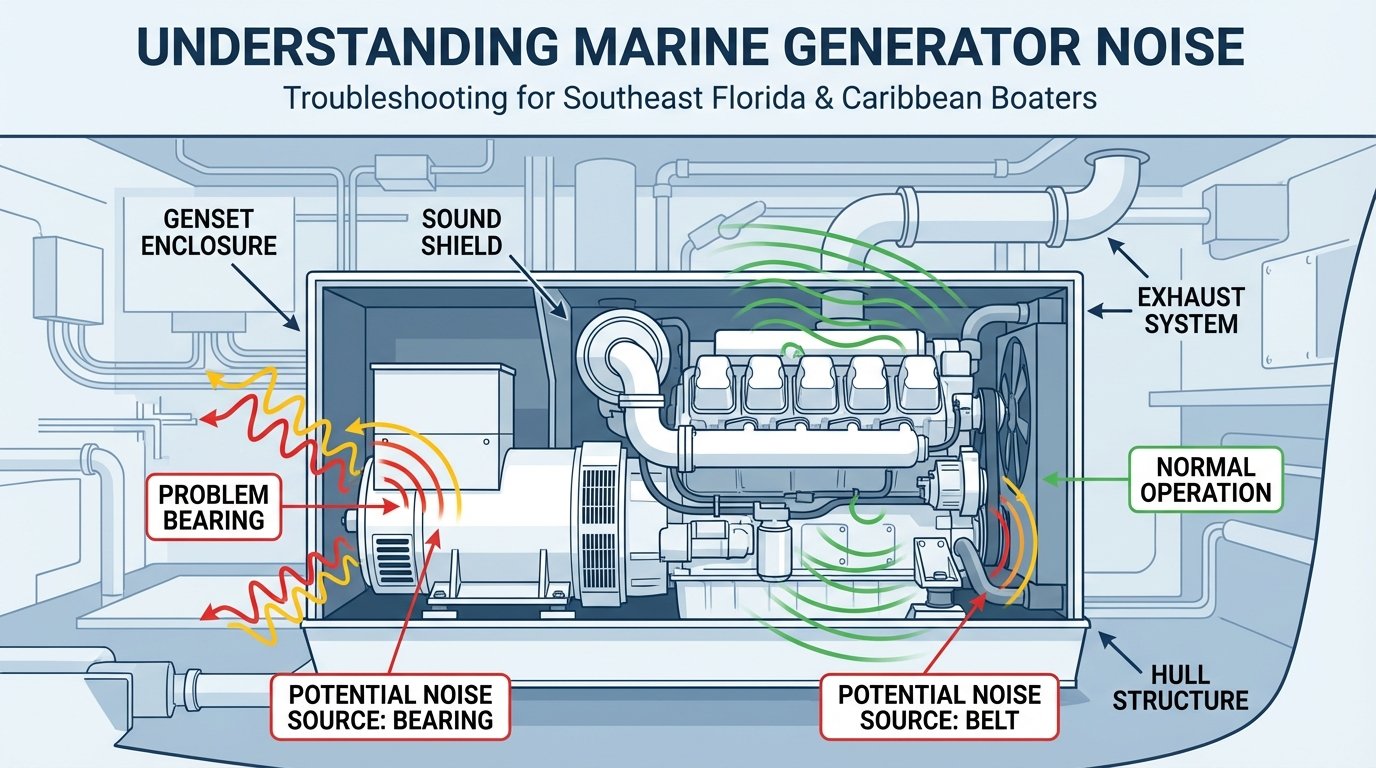
A properly functioning marine generator operates with a consistent, steady hum. When you start hearing knocking, rattling, grinding, or high-pitched squealing sounds, your generator is communicating that something has gone wrong. These auditory warnings should never be ignored.
Knocking sounds often indicate problems with internal combustion components, potentially signaling worn bearings, loose mounting bolts, or timing issues. A grinding noise typically points to alternator bearing failure or problems with the drive belt system. High-pitched squealing usually means belt slippage or misalignment, which if left unaddressed can lead to charging system failure.
Rattling sounds may indicate loose heat shields, exhaust components, or internal engine parts that have worked themselves free due to vibration. While some of these issues might seem minor, they can quickly escalate. A loose bolt can cause vibration that damages other components, and a failing bearing can seize completely, potentially destroying your alternator or causing internal engine damage.
Professional marine generator service can diagnose the exact source of unusual noises and address them before they become major failures. Factory-authorized technicians familiar with your specific generator model understand the normal operating sounds and can quickly identify deviations that signal trouble.
2. Difficulty Starting or Failure to Start
When you press the start button and your marine generator hesitates, cranks slowly, or fails to start altogether, you’re facing one of the most common yet potentially serious generator problems. Starting issues can stem from numerous causes, ranging from simple battery problems to complex fuel system failures.
Battery-related starting problems are common but often overlooked. Marine generators require substantial cranking power, and weakened batteries or corroded connections can prevent successful starts. However, if your batteries are in good condition and connections are clean, the problem likely lies deeper within the system.
Fuel delivery issues frequently cause starting problems in marine diesel generators. Water contamination in diesel fuel, clogged fuel filters, air in the fuel lines, or failed lift pumps can all prevent proper starting. The marine environment accelerates fuel degradation, and water intrusion through tank vents or condensation is a persistent challenge for boat owners.
Glow plug failure in diesel generators is another common culprit. These components preheat the combustion chamber to facilitate cold starting, and when they fail, your generator may struggle to start or refuse to start entirely, especially in cooler conditions. Control module failures, sensor malfunctions, and starter motor problems can also prevent your generator from firing up when needed.
Attempting repeated starts when your generator won’t fire can damage the starter motor and drain your batteries, potentially leaving you without any electrical power. Professional yacht engine service can quickly diagnose starting problems using proper diagnostic equipment and address the root cause rather than just the symptoms.
3. Excessive Smoke or Unusual Exhaust Color
The color and quantity of exhaust smoke provides valuable diagnostic information about your marine diesel engine’s internal condition. While a small amount of light smoke during startup is normal, excessive or colored smoke indicates problems requiring immediate attention.
Black smoke signals incomplete combustion, typically caused by insufficient air intake, clogged air filters, faulty injectors, or an overloaded generator running beyond its rated capacity. This condition wastes fuel, reduces power output, and accelerates carbon buildup inside the engine, which can lead to more serious problems over time.
Blue or gray smoke indicates oil burning, which means oil is entering the combustion chamber where it shouldn’t be. This can result from worn piston rings, cylinder wall damage, valve guide wear, or overfilled crankcase oil levels. Oil consumption from this condition can be substantial, and the underlying cause often requires significant mechanical repair.
White smoke typically indicates coolant entering the combustion chamber, often pointing to head gasket failure, cracked cylinder heads, or damaged engine block. This is a serious condition that can lead to catastrophic engine failure if not addressed immediately. White smoke can also indicate water in the fuel, which is equally problematic and requires fuel system service.
Any significant change in exhaust smoke characteristics warrants immediate professional evaluation. Marine generator service technicians can perform compression tests, cylinder leak-down tests, and other diagnostics to pinpoint the exact cause and recommend appropriate repairs.
4. Power Output Fluctuations or Voltage Instability
Consistent, stable electrical power is the primary purpose of your marine generator. When lights flicker, appliances cycle on and off, or voltage meters show unstable readings, your generator is failing to perform its essential function. These power quality issues can damage sensitive electronics and indicate serious generator problems.
Voltage regulation problems often stem from faulty automatic voltage regulators (AVRs), which control generator output voltage. These electronic components can fail due to heat, moisture, or electrical surges. When they malfunction, your generator may produce voltage that’s too high (potentially damaging connected equipment) or too low (causing equipment to malfunction or fail to operate).
Frequency instability, where power cycles fluctuate above or below the standard 60 Hz, typically indicates engine speed control problems. The governor system maintains consistent RPM regardless of electrical load, and when it fails, engine speed varies with load changes, causing frequency and voltage fluctuations.
Alternator problems can also cause power output issues. Worn brushes, failed diodes, damaged windings, or bearing problems within the alternator assembly prevent consistent power generation. Additionally, loose or corroded connections throughout the electrical system can cause voltage drops and instability that appear to be generator problems but are actually distribution system issues.
Power quality problems require sophisticated diagnostic equipment and expertise to properly diagnose. Professional boat engine troubleshooting services can differentiate between mechanical, electrical, and control system problems to identify the true source of power instability.
5. Fluid Leaks of Any Type
Discovering puddles, drips, or moisture around your marine generator should trigger immediate concern. Fluid leaks not only indicate component failure but can also create dangerous conditions aboard your vessel. Different fluids signal different problems, but all require prompt professional attention.
Fuel leaks are particularly dangerous in the confined spaces of engine rooms. Diesel fuel may be less volatile than gasoline, but it still presents fire risks and creates environmental hazards. Fuel leaks typically originate from deteriorated fuel lines, loose fittings, failed injector seals, or damaged fuel lift pumps. The vibration inherent in marine applications accelerates fuel system component wear, making regular inspection essential.
Coolant leaks appear as colored fluid (often green, orange, or pink) and may create sweet-smelling puddles or steam. These leaks can originate from deteriorated hoses, failed water pump seals, damaged heat exchangers, or corroded engine block components. Running a generator with low coolant can cause catastrophic overheating and complete engine failure.
Oil leaks may seem less urgent than fuel or coolant leaks, but they indicate seal failures, gasket deterioration, or cracked housings that will worsen over time. Oil leaks can also create fire hazards when hot oil contacts exhaust components, and low oil levels from unnoticed leaks can cause bearing failure and engine seizure.
The marine environment accelerates corrosion and deterioration of all components, making fluid leaks more common than in land-based applications. Factory-authorized marine generator service includes thorough leak inspection and proper repairs using marine-grade components designed to withstand harsh conditions.
6. Overheating or High Operating Temperatures
Marine generators operate in challenging thermal environments, but they’re designed to maintain safe operating temperatures through properly functioning cooling systems. When your temperature gauge shows readings higher than normal, or you notice excessive heat radiating from the generator, you’re facing a problem that can quickly escalate to complete failure.
Cooling system problems are the most common cause of overheating. Raw water-cooled systems can suffer from clogged raw water strainers, failed impellers in the raw water pump, blocked heat exchangers due to marine growth or mineral deposits, or restricted seawater intake through-hulls. Freshwater cooling system problems include low coolant levels, failed thermostats, malfunctioning freshwater pumps, or clogged radiators.
Exhaust system restrictions can also cause overheating. Carbon buildup in exhaust elbows, collapsed exhaust hoses, or blocked exhaust through-hulls prevent proper heat evacuation and can cause dangerous backpressure that damages engine components.
Operating a generator at or near its maximum rated capacity in high ambient temperatures pushes the cooling system to its limits. In Southeast Florida and Caribbean waters where ambient temperatures regularly exceed 85°F, cooling system efficiency becomes even more critical. Many boats in these regions run air conditioning continuously, placing sustained heavy loads on generators.
Continuing to operate an overheating generator can warp cylinder heads, damage head gaskets, seize pistons, and cause complete engine failure. At the first sign of overheating, shut down the generator and contact professional yacht engine service before attempting to restart.
7. Excessive Vibration or Movement
All generators produce some vibration during operation, but excessive shaking, movement, or vibration indicates problems that can damage the generator, mounting system, and surrounding vessel components. Increased vibration often signals developing mechanical failures that will worsen rapidly if not addressed.
Engine misfiring due to fuel system problems, faulty injectors, or compression loss creates uneven power pulses that manifest as vibration. Internal component wear, including worn bearings, damaged crankshafts, or unbalanced rotating assemblies, produces vibration that increases with engine speed.
Failed engine mounts are common sources of excessive vibration. Marine engine mounts must absorb normal operating vibration while securing the generator firmly to the vessel structure. Over time, these mounts deteriorate from oil exposure, heat, and constant flexing. When they fail, the generator moves excessively and transmits vibration throughout the vessel.
Misaligned drive components, loose mounting bolts, damaged flexible couplings, or failing alternator components can all produce abnormal vibration. These conditions accelerate wear on all generator components and can cause fatigue failures in fuel lines, exhaust components, and electrical connections.
Excessive vibration can also damage your vessel’s structure, particularly in the mounting area where stress concentrates. Professional marine diesel engine service includes vibration analysis and proper mounting system inspection to identify and correct these problems before they cause extensive damage.
Why Professional Service Matters
Modern marine generators are sophisticated systems integrating mechanical, electrical, and electronic components that require specialized knowledge and diagnostic equipment. Factory-authorized technicians trained on specific brands like Cummins/Onan, Kohler, Northern Lights, and Westerbeke understand the unique characteristics and common failure modes of each manufacturer’s products.
Professional marine generator service provides accurate diagnosis rather than guesswork, proper repairs using marine-grade components, and warranty protection that DIY repairs void. Experienced technicians can identify problems in early stages when repairs are simpler and less expensive, preventing the cascade of failures that occur when initial problems go unaddressed.
Dockside service eliminates the need to haul your vessel or attempt to trailer a large yacht to a service facility. For boat owners throughout Southeast Florida and the Caribbean, having access to professional technicians who come to your location provides convenience and minimizes downtime.
Take Action Before Problems Escalate
Recognizing these seven warning signs and acting promptly can prevent minor issues from becoming major failures. Your marine generator is essential equipment, and treating it with the care it deserves ensures reliable power when you’re miles from shore or simply enjoying your vessel at the dock.
If you’ve noticed any of these symptoms in your marine generator, don’t wait for complete failure. Contact DSOA’s factory-authorized service team for professional diagnosis and repair. With expertise in all major marine generator brands and convenient dockside service throughout Southeast Florida and the Caribbean, DSOA provides the professional care your vessel deserves. For worldwide parts shipping and expert service, reach out today to schedule your generator inspection and restore confidence in your vessel’s electrical system.
