
Contaminated fuel ranks among the leading causes of marine diesel engine failures in tropical waters. While boat owners invest thousands in routine maintenance, many overlook a critical vulnerability lurking in their fuel tanks—biological growth, water contamination, and sediment accumulation that can disable even the most well-maintained engines. In the warm waters of the Caribbean and Southeast Florida, these fuel quality issues accelerate at alarming rates, making fuel polishing not just a preventive measure but an essential component of responsible vessel ownership.
Understanding Fuel Contamination in Marine Environments
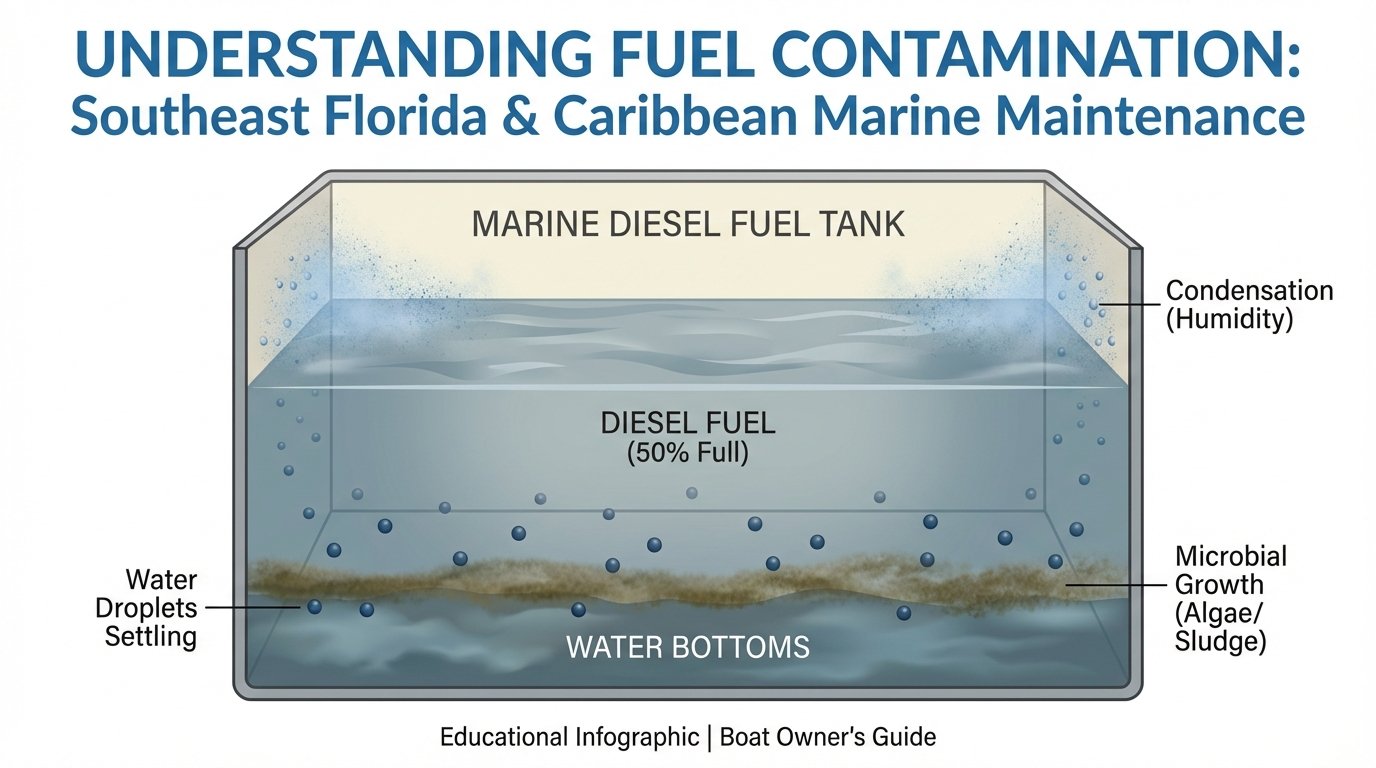
Marine diesel fuel degrades differently than automotive diesel, primarily due to the unique challenges of the marine environment. Unlike road vehicles that consume fuel quickly, boats often sit for extended periods with partially filled tanks. This creates ideal conditions for contamination, particularly in warm climates where temperatures regularly exceed 80°F.
Three primary contaminants threaten fuel quality:
- Water: Enters through condensation, deck fills, or faulty tank seals, creating a breeding ground for biological growth
- Microbial growth: Bacteria, fungi, and algae colonies form at the fuel-water interface, producing acidic waste products and biomass
- Sediment and particulates: Rust, dirt, asphaltenes, and decomposed microorganisms settle at tank bottoms
In Caribbean waters, elevated temperatures accelerate microbial reproduction cycles. What might take months to develop in northern climates can occur within weeks in tropical conditions. This biological activity produces slime that clogs fuel filters, corrodes injection systems, and creates acids that damage tank interiors.
How Fuel Polishing Works
Fuel polishing is a comprehensive cleaning process that removes water, biological contaminants, and sediment from diesel fuel while it remains in the tank. Unlike simple filtration, professional fuel polishing employs multiple stages to restore fuel to near-specification quality.
The process typically involves:
- Fuel extraction: Drawing fuel from the tank through dedicated equipment
- Multi-stage filtration: Removing particulates down to 2-10 microns
- Water separation: Eliminating free and emulsified water through coalescence
- Biocide treatment: When necessary, treating fuel to kill existing microbial colonies
- Tank agitation: Disturbing sediment from tank bottoms for removal
- Fuel return: Returning cleaned fuel to the tank through a continuous circulation process
Professional fuel polishing systems process hundreds of gallons per hour, cycling entire tank contents multiple times to ensure thorough cleaning. This comprehensive approach addresses contamination that basic fuel filters cannot capture, particularly the microbial colonies that form in tank corners and along baffles.
The Caribbean Difference: Why Tropical Waters Accelerate Fuel Problems
Caribbean boaters face unique fuel quality challenges that mainland operators rarely encounter. Consistent warm temperatures—both ambient air and water—create year-round conditions favorable to microbial growth. While northern boaters might winterize and deal with seasonal fuel issues, Caribbean vessels experience continuous biological activity in their fuel systems.
The region’s humidity compounds these challenges. Warm, moist air entering tanks during refueling or through vent systems condenses rapidly when it contacts cooler fuel, introducing water directly into the tank. A single tank of fuel can accumulate significant water through condensation alone over several weeks of sitting.
Additionally, fuel quality varies considerably across Caribbean islands. While major marinas in Fort Lauderdale and other Southeast Florida ports typically maintain high fuel standards, remote island destinations may offer fuel that has already sat in storage for extended periods. This aged fuel arrives in your tanks with existing contamination, accelerating the degradation process.
Signs Your Fuel Needs Polishing
Recognizing fuel contamination early prevents costly marine diesel troubleshooting and repair down the line. Watch for these warning signs:
- Frequent filter changes: If you’re replacing fuel filters more often than maintenance schedules recommend, contamination is likely the culprit
- Hard starting or rough running: Particularly after the vessel has sat for several days or weeks
- Power loss under load: Contaminated fuel reduces combustion efficiency, robbing engines of power
- Black or gray exhaust smoke: Indicates incomplete combustion often caused by water in fuel
- Visible contamination: Water, sediment, or biological growth visible in filter bowls or inspection samples
- Fuel odor changes: A sour or rotten smell indicates active microbial growth
These symptoms often appear gradually, making them easy to dismiss initially. However, waiting until engines fail completely can result in extensive fuel injection repair or damage to sensitive components in modern common-rail diesel systems found in MAN, Volvo Penta, and John Deere marine engines.
Fuel Polishing vs. Tank Cleaning: Understanding the Difference
Boat owners sometimes confuse fuel polishing with complete tank cleaning, though these services address different situations. Fuel polishing is a preventive or corrective measure performed while keeping fuel in the system. It effectively removes contamination from fuel and loose sediment from tank surfaces.
Complete tank cleaning involves pumping out all fuel, physically entering or inspecting tanks, and manually removing heavy sludge buildup. This more invasive process becomes necessary when contamination has progressed beyond what polishing can address—typically when several inches of sludge coat tank bottoms or when tanks have never been properly maintained.
Regular fuel polishing prevents the need for complete tank cleaning, saving both time and money. For most Caribbean vessels, annual fuel polishing maintains fuel quality adequately, though boats that sit for extended periods or operate in particularly challenging conditions may benefit from more frequent service.
Impact on Modern Diesel Engines
Today’s marine diesel engines employ sophisticated fuel injection systems with extremely tight tolerances. Common-rail systems operating at pressures exceeding 30,000 PSI require fuel cleanliness far beyond what older mechanical injection systems needed. Even microscopic particles that earlier engines would handle without issue can damage modern injectors, leading to expensive diesel marine engine repair.
Brands like Cummins, Volvo Penta, and MAN specify maximum particle counts and water content in their fuel. When contamination exceeds these specifications, injector wear accelerates dramatically. A single contamination event can reduce injector life by thousands of hours, while water in fuel can cause catastrophic failure through hydrostatic lock or corrosion.
Generator sets from Onan, Kohler, Northern Lights, and Westerbeke face similar vulnerabilities. These engines often run at constant speeds under varying loads, making them particularly sensitive to fuel quality variations. Contaminated fuel causes frequency instability, voltage fluctuations, and premature component failure in generator systems.
Preventive Maintenance Integration
Fuel polishing should integrate into comprehensive boat engine maintenance programs alongside routine service intervals. Factory-authorized service providers recommend incorporating fuel polishing based on vessel usage patterns and operating environment.
Consider this maintenance schedule for Caribbean operations:
- Active vessels (used weekly): Annual fuel polishing before hurricane season
- Seasonal vessels (several months idle): Fuel polishing before extended storage and again before recommissioning
- Occasionally used vessels: Fuel polishing every six months, with fuel stabilizer treatment between services
- Commercial operations: Quarterly fuel polishing or as operating conditions dictate
Professional marine diesel service includes fuel quality testing that can guide polishing frequency. Simple test kits identify water content, microbial contamination, and particulate levels, providing objective data to support maintenance decisions rather than relying on guesswork.
The Professional Advantage: Why DIY Isn’t Enough
While some boat owners attempt fuel polishing with portable systems, professional service delivers results that basic equipment cannot match. Factory-authorized technicians bring experience recognizing contamination patterns, understanding how different engine systems respond to fuel quality issues, and having equipment capable of processing large fuel capacities efficiently.
Professional fuel polishing also includes proper disposal of contaminated fuel and water—an environmental compliance issue that boat owners cannot ignore in protected Caribbean waters. Licensed marine diesel service providers maintain relationships with approved disposal facilities and document proper handling of hazardous materials.
Additionally, professional technicians can identify underlying issues contributing to fuel contamination. Tank ventilation problems, defective deck fills, corroded sending units, or failed gaskets often cause recurring contamination. Addressing these root causes during professional service prevents the cycle of repeated contamination and cleaning.
Fuel Polishing as Storm Preparation
Caribbean boat owners face seasonal hurricane threats that make fuel quality particularly critical. Vessels relying on engines for storm evasion or riding out weather at anchor cannot afford fuel system failures when conditions deteriorate. Clean fuel ensures reliable engine operation when it matters most.
Pre-season fuel polishing removes contamination before storm preparations begin, eliminating one variable during the stress of hurricane planning. This preventive measure also protects vessels remaining in the water, as contaminated fuel can worsen during the turbulence and motion of storm conditions, stirring sediment throughout the tank.
Maintaining Fuel Quality Between Polishing Services
Several practices extend the benefits of professional fuel polishing between scheduled services:
- Keep tanks full: Minimizes condensation by reducing air space
- Use fuel stabilizers: Prevents oxidation and extends fuel life during storage
- Replace filters regularly: Prevents contamination from reaching injection systems
- Run engines periodically: Circulates fuel and prevents stagnation
- Monitor water separators: Check and drain regularly to remove water before it reaches engines
- Source quality fuel: Refuel at reputable marinas with high turnover
These practices complement rather than replace professional fuel polishing. Even with diligent preventive care, the Caribbean environment ensures some contamination occurs, making periodic professional service essential for long-term engine health.
Professional Fuel Polishing in Southeast Florida and the Caribbean
Boat owners throughout the region benefit from dockside fuel polishing services that bring professional equipment directly to vessels. This mobile approach eliminates haul-out requirements and allows service during routine maintenance periods or alongside other boat engine maintenance tasks in Fort Lauderdale and throughout the Caribbean.
Factory-authorized service providers maintain equipment specifically designed for marine applications, with filtration systems meeting manufacturer specifications for MAN, Volvo Penta, John Deere, Cummins, and other marine diesel brands. This ensures polished fuel meets the strict cleanliness standards required by modern common-rail injection systems.
Professional technicians also coordinate fuel polishing with related services—fuel injection repair, filter replacements, or complete fuel system inspections—providing comprehensive solutions rather than isolated treatments. This integrated approach identifies and addresses multiple issues during single service appointments, minimizing vessel downtime and maximizing reliability.
Protect Your Investment with Professional Fuel Polishing
Marine diesel engines represent substantial investments that deserve protection through proper fuel quality maintenance. In Caribbean waters, fuel polishing transitions from optional service to operational necessity, preventing contamination-related failures that can leave vessels stranded or require extensive repairs.
Don’t wait until fuel contamination causes hard starting, power loss, or expensive injection system damage. Schedule professional fuel polishing as part of your regular maintenance program. Contact DSOA for dockside fuel polishing services throughout Southeast Florida and the Caribbean, or discuss your fuel quality concerns with factory-authorized technicians who understand the unique challenges of tropical marine operations. With worldwide parts shipping and mobile service capabilities, professional fuel system care remains accessible wherever your vessel operates.
