
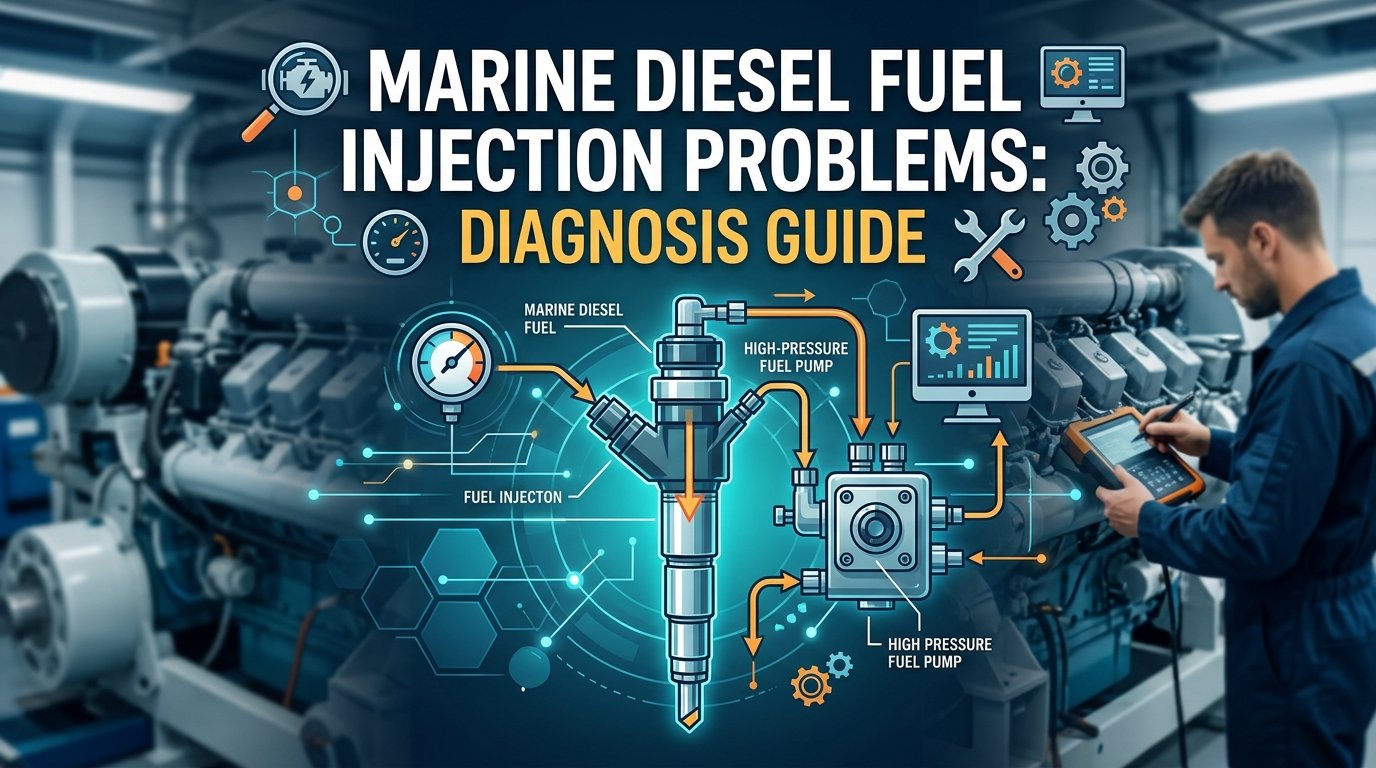
When your marine diesel engine sputters, loses power, or refuses to start, the fuel injection system is often the culprit. Unlike gasoline engines with spark plugs and carburetors, diesel engines rely entirely on precise fuel injection to create combustion. A malfunction anywhere in this complex system can bring your voyage to an abrupt halt—often miles from shore. Understanding fuel injection problems and their symptoms can mean the difference between a minor service call and catastrophic engine damage.
The fuel injection system represents the heart of every marine diesel engine, from compact Westerbeke generators to powerful MAN main engines. When this system fails, diagnosis requires both technical knowledge and specialized equipment that most boat owners simply don’t have access to. Recognizing early warning signs and understanding the underlying causes helps you act quickly before minor issues escalate into major failures.
How Marine Diesel Fuel Injection Works
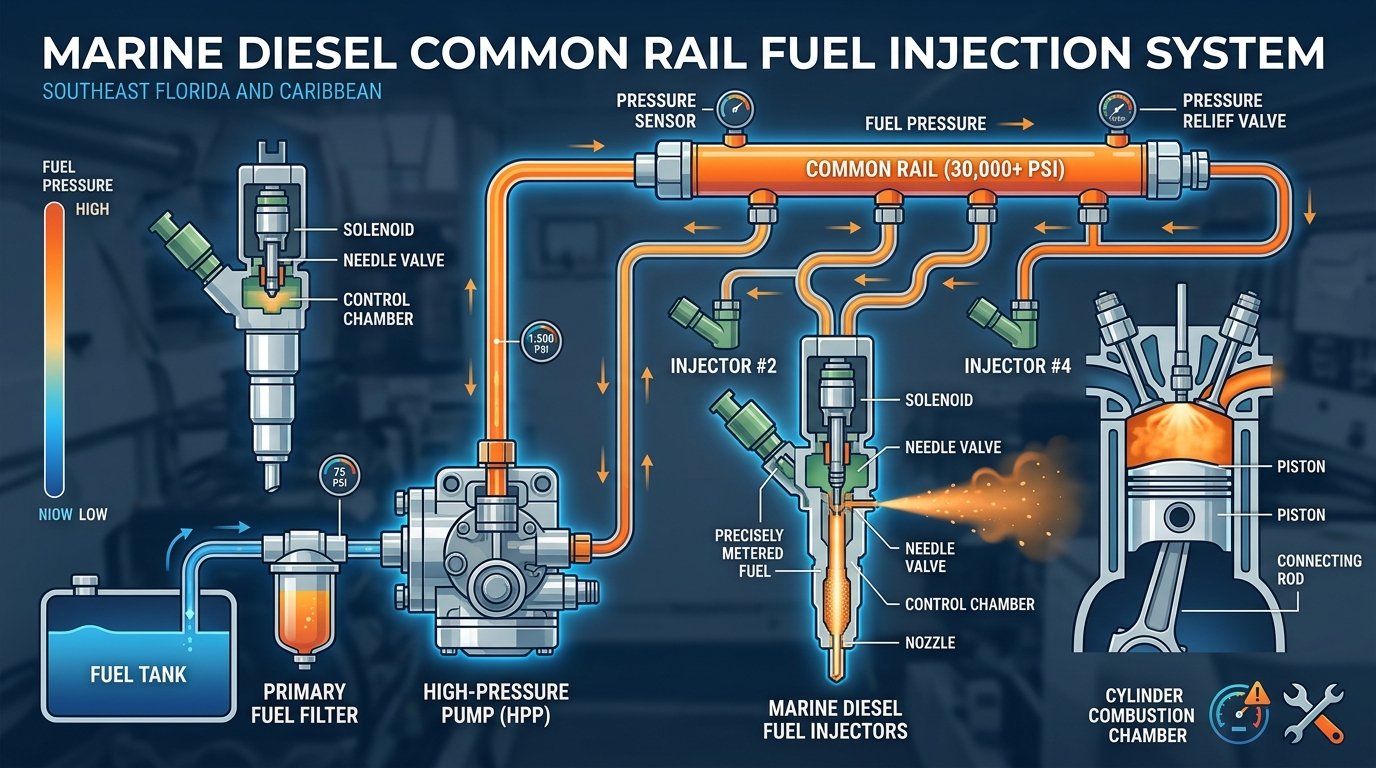
Before diagnosing problems, understanding the basics helps identify where failures occur. Marine diesel fuel injection systems pressurize fuel to extremely high levels—often exceeding 30,000 PSI in modern common rail systems—then inject precisely metered amounts into the combustion chamber at exactly the right moment. The fuel ignites from the heat of compression alone, without any spark.
This process depends on several critical components working in perfect harmony: the fuel tank and supply lines, primary and secondary fuel filters, fuel transfer pump, high-pressure injection pump, fuel injectors, and return lines. Each component has specific failure modes that produce distinct symptoms.
Modern systems from manufacturers like Volvo Penta, Cummins, and John Deere incorporate electronic controls that manage injection timing and fuel quantity with extraordinary precision. These systems improve efficiency and reduce emissions, but they also introduce additional diagnostic complexity that requires factory-authorized service capabilities and specialized diagnostic software.
Common Fuel Injection Problems and Symptoms
Hard Starting or No Start Conditions
When a marine diesel engine refuses to start or requires extended cranking, fuel delivery issues are the primary suspects. Air in the fuel system prevents proper injection pressure from building. This commonly occurs after running a tank low, changing fuel filters, or when loose fittings allow air infiltration. Unlike automotive diesels that may see occasional use, marine engines operating in Southeast Florida and Caribbean waters face constant vibration and movement that can loosen connections over time.
Contaminated fuel filters restrict flow, starving the injection system of adequate fuel supply. Marine diesel fuel quality varies significantly between marinas, and biological growth thrives in the warm, humid marine environment. Water contamination presents another serious concern—even small amounts passing through injectors can cause immediate damage and corrosion.
Rough Idle and Power Loss
Uneven running at idle typically indicates one or more injectors failing to deliver proper fuel atomization. Worn injector nozzles produce poor spray patterns, resulting in incomplete combustion. You’ll notice excessive smoke, vibration, and potentially hear distinct misfiring from specific cylinders.
Progressive power loss under load suggests injection pump wear or electronic control issues. High-pressure pumps in systems from MAN, Volvo Penta, and other manufacturers experience tremendous internal pressures. Wear gradually reduces delivery pressure, robbing the engine of power. This degradation happens slowly enough that operators may not notice until performance has significantly deteriorated.
Excessive Smoke
Smoke color provides valuable diagnostic information. Black smoke indicates incomplete combustion from over-fueling—stuck injectors, incorrect injection timing, or faulty electronic controls allow too much fuel into cylinders. White or gray smoke suggests unburned fuel passing through, often from low compression or severely mistimed injection. Blue smoke points to lubricating oil entering the combustion chamber, though this relates more to ring and valve issues than fuel injection problems.
Fuel in the Oil
Rising oil levels or fuel odor in engine oil indicates serious injector failure. Leaking injectors drip raw diesel into cylinders where it washes past rings into the crankcase. This dilutes lubricating oil, dramatically reducing its protective properties. Continued operation risks bearing damage and complete engine failure. This constitutes an emergency requiring immediate shutdown and professional marine engine maintenance.
Diagnostic Procedures for Fuel System Problems
Professional diagnosis follows a systematic approach that isolates problems without unnecessary parts replacement. Factory-authorized technicians use specific procedures and tools designed for each engine manufacturer’s systems.
Visual Inspection and Basic Checks
Diagnosis begins with thorough visual inspection. Technicians examine fuel lines for damage, chafing, or deterioration. They check all connections for tightness and evidence of leakage. Fuel filter condition provides immediate insight—contaminated filters often reveal underlying fuel quality problems requiring tank cleaning and biocide treatment.
Checking for air in the fuel system involves bleeding procedures specific to each engine model. Northern Lights, Kohler, and Onan generators have different bleeding points than main propulsion engines. Proper bleeding requires knowledge of manufacturer specifications and procedures.
Fuel Pressure Testing
Measuring fuel pressure at various points throughout the system identifies where problems exist. Low supply pressure indicates transfer pump failure or severe restriction. High return pressure suggests blocked return lines or faulty pressure regulation. Modern common rail systems require specialized pressure transducers and diagnostic computers to properly evaluate performance.
Injector Testing
Professional injector testing requires specialized benches that simulate operating conditions while measuring spray pattern, opening pressure, and flow rate. Visual inspection rarely reveals injector problems—microscopic wear significantly affects performance without visible damage. Many injector failures occur internally where carbon buildup or wear prevent proper sealing.
Electronic injectors in modern Volvo Penta, Cummins, and John Deere engines require additional electrical testing. Solenoid resistance, response time, and control signal verification need manufacturer-specific diagnostic equipment and software that factory-authorized service centers maintain.
Electronic System Diagnosis
Computer-controlled injection systems store fault codes that guide diagnosis. However, interpreting these codes requires experience—a code pointing to an injector circuit might actually indicate wiring problems, ECU issues, or sensor failures rather than injector replacement needs. Professional marine diesel troubleshooting considers the complete system rather than simply replacing flagged components.
Preventing Fuel Injection Problems
Preventive maintenance dramatically reduces fuel injection failures and extends system life. Understanding what causes problems helps implement effective prevention strategies.
Fuel Quality Management
Marine diesel fuel quality represents the single most important factor in injection system longevity. Using reputable fuel sources, adding biocide treatments in warm climates, and installing proper filtration prevents most contamination issues. Keeping tanks full during storage minimizes condensation that introduces water into fuel systems.
Regular fuel polishing removes water and biological contamination before it reaches injection components. For vessels operating throughout the Caribbean and Southeast Florida, fuel polishing should occur at least annually, more frequently for boats stored in hot, humid conditions.
Filter Replacement
Following manufacturer-recommended filter change intervals protects expensive injection components. However, contaminated fuel may require more frequent changes. Professional technicians monitor filter condition and recommend appropriate intervals based on actual operating conditions rather than rigid schedules.
Using genuine OEM filters ensures proper filtration ratings and compatibility. Aftermarket filters may not provide adequate protection for high-pressure injection systems, potentially voiding warranties and risking component damage.
Regular Professional Service
Annual professional inspections catch developing problems before they cause failures. Factory-authorized technicians familiar with MAN, Volvo Penta, John Deere, Cummins/Onan, Kohler, Northern Lights, and Westerbeke systems know what to look for and which issues commonly develop in specific engine models.
Dockside service eliminates the hassle of transporting vessels to repair facilities. Professional marine technicians bring diagnostic equipment and expertise directly to your vessel, performing comprehensive evaluations without disrupting your schedule.
When to Call Professional Service
While some maintenance tasks suit owner involvement, fuel injection diagnosis and repair require professional capabilities. Attempting DIY fuel injection work risks expensive mistakes and potential safety hazards from high-pressure fuel systems.
Contact factory-authorized service immediately when experiencing hard starting, rough running, excessive smoke, or sudden power loss. Early intervention prevents secondary damage—a failing injector caught early might need replacement, but delayed service could result in damaged pistons, cylinders, or catastrophic engine failure.
For boat engine not starting situations, professional diagnosis quickly identifies whether fuel injection problems, air system issues, or other factors prevent operation. Experienced technicians systematically test components rather than replacing parts based on guesswork.
The Value of Factory-Authorized Service
Factory-authorized service centers maintain current technical information, specialized tools, and genuine parts inventory that independent shops simply cannot match. Manufacturers continuously update repair procedures, issue technical service bulletins, and refine diagnostic approaches based on field experience. Authorized technicians receive this information and training directly from manufacturers.
When complex fuel injection repair becomes necessary, authorized service ensures work meets manufacturer specifications and maintains warranty coverage. Using genuine parts and approved procedures protects your investment and ensures reliable performance.
For vessels throughout Southeast Florida and the Caribbean, having access to factory-authorized service with worldwide parts shipping capability means faster repairs and less downtime. Professional marine diesel troubleshooting identifies problems accurately the first time, avoiding the costly trial-and-error approach that often results from inexperienced diagnosis.
Conclusion
Marine diesel fuel injection systems deliver remarkable reliability when properly maintained, but problems inevitably occur. Understanding symptoms, recognizing warning signs, and acting quickly protects your engine investment and prevents catastrophic failures. While fuel quality management and regular filter changes fall within owner capabilities, diagnosis and repair require professional expertise and specialized equipment.
Whether operating a sportfishing yacht with Volvo Penta power, a trawler with John Deere propulsion, or relying on Onan, Kohler, or Northern Lights generators, fuel injection system health directly impacts reliability and safety. Don’t wait for complete failure—schedule regular professional inspections and address problems immediately when symptoms appear.
Contact DSOA today for factory-authorized diesel marine engine repair and maintenance. Our experienced technicians provide convenient dockside service throughout Southeast Florida and the Caribbean, with worldwide parts shipping for vessels anywhere. We specialize in all major marine diesel brands including MAN, Volvo Penta, John Deere, Cummins/Onan, Kohler, Northern Lights, and Westerbeke. Let our expertise keep your vessel running reliably season after season.
