
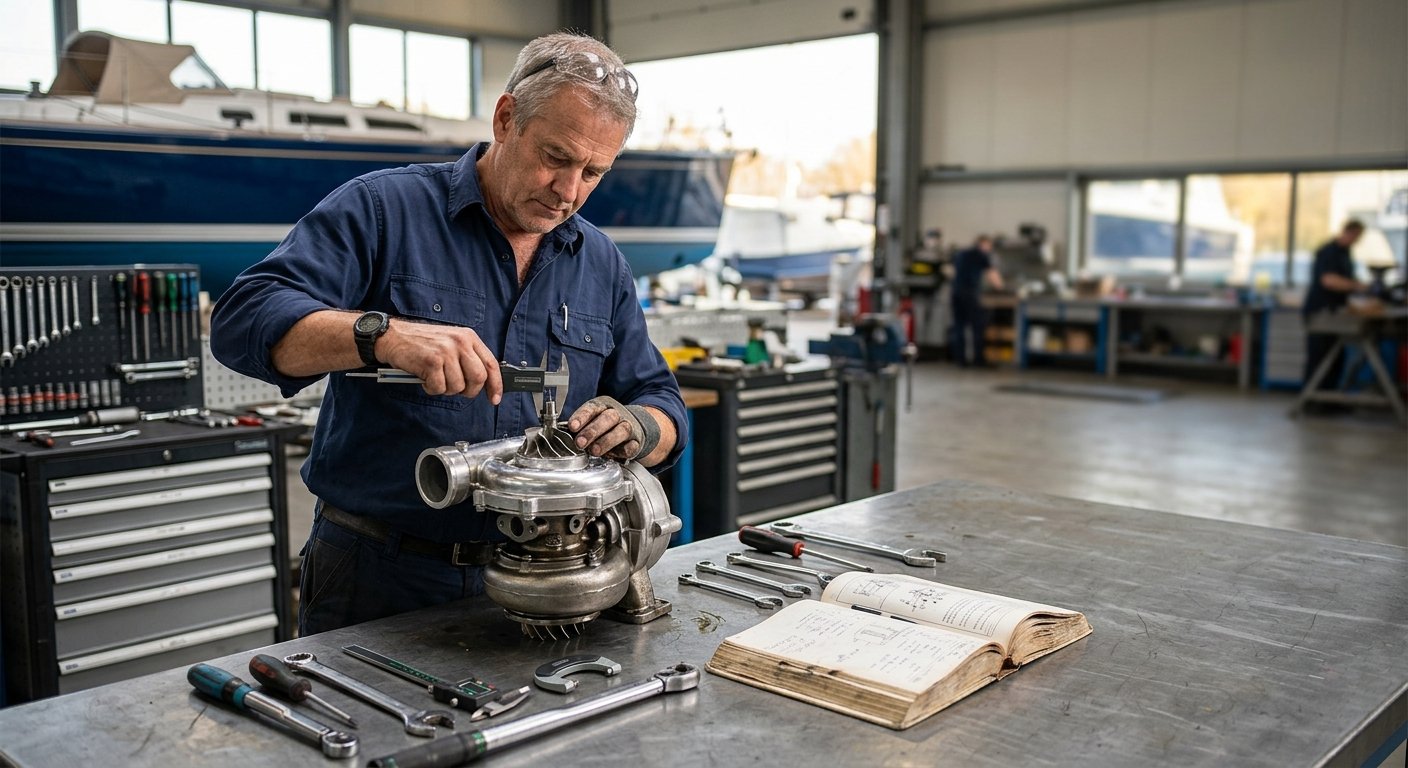
A failed turbocharger doesn’t announce itself with much warning. One day your yacht is pushing through the Gulf Stream with the power and efficiency you expect—the next, you’re watching black smoke billow from the exhaust while your engine struggles to reach half its rated output. For owners of MAN, Volvo Penta, Cummins, or other premium marine diesel engines, understanding turbocharger maintenance isn’t optional knowledge. It’s the difference between a routine service call and a costly diesel engine overhaul at the worst possible moment.
This guide breaks down how marine diesel turbochargers work, what causes them to fail, how to recognize the warning signs early, and why factory-authorized service matters when it comes time for turbo diesel engine repair or rebuilding.
How Marine Turbochargers Work
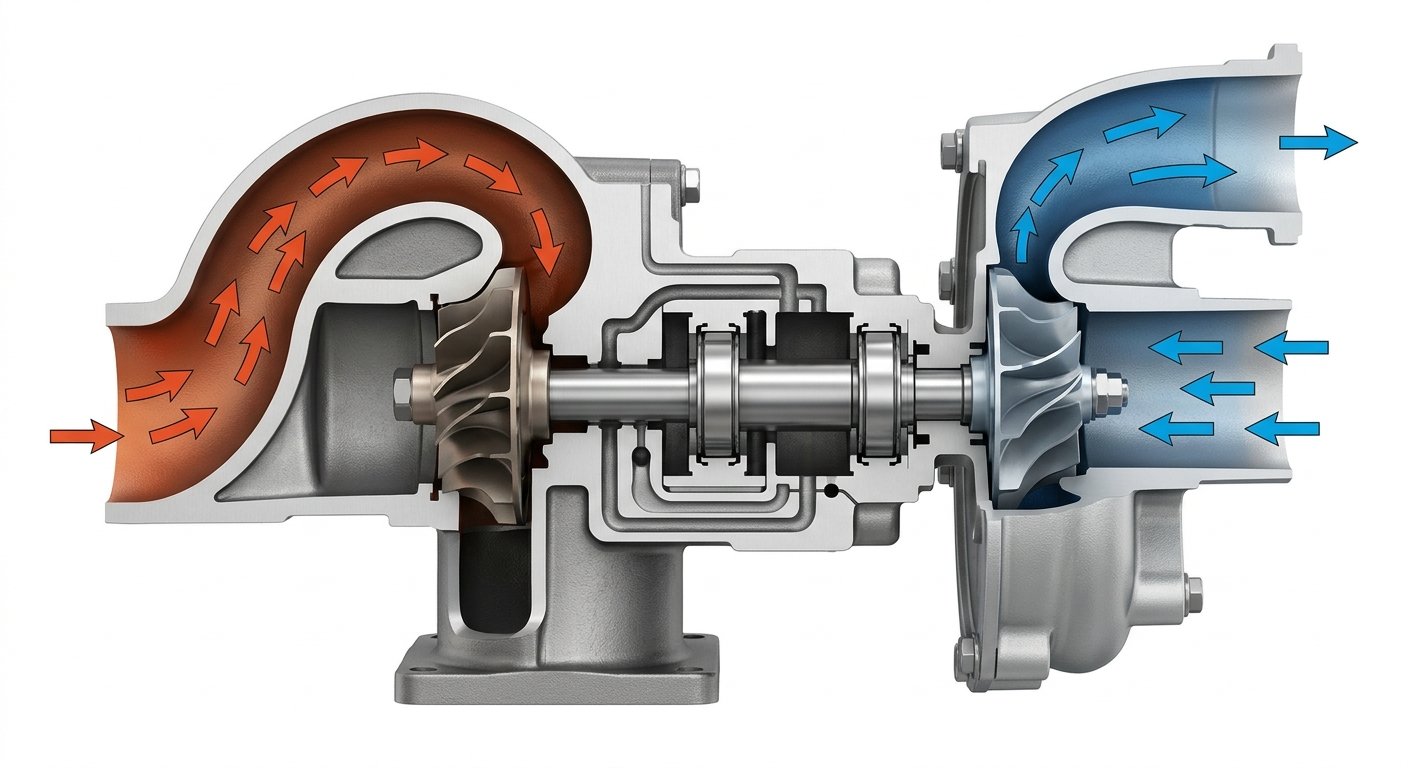
A turbocharger is elegantly simple in concept: exhaust gases spin a turbine wheel, which drives a compressor wheel on the same shaft, forcing more air into the engine’s combustion chambers. More air means more fuel can be burned, which translates directly to increased power output without increasing engine displacement.
In marine diesel applications, turbochargers operate under demanding conditions. Saltwater air, high ambient temperatures, sustained high-load operation, and the constant vibration environment of a vessel at sea all stress components that spin at speeds exceeding 100,000 RPM. The BoatUS Foundation’s engine systems guidance notes that turbocharged marine diesels require more disciplined maintenance attention than naturally aspirated engines precisely because of these operating stresses.
Unlike automotive turbochargers, marine units typically don’t get the benefit of long cool-down periods at idle. Vessels often shut down shortly after arriving at dock while the turbo is still heat-soaked—a condition that can carbonize oil in the bearing housing if proper shutdown procedures aren’t followed.
Common Causes of Turbocharger Failure
Oil Starvation and Contamination
The majority of turbocharger failures trace back to lubrication issues. Turbo bearings rely entirely on a pressurized film of clean engine oil. When that oil is dirty, degraded, or delayed in reaching the bearing housing at startup, wear accelerates rapidly. This is why consistent oil change intervals and using the manufacturer-specified oil grade are non-negotiable for turbocharged marine diesel service—not merely recommended best practice.
On engines like the John Deere marine series or Volvo Penta IPS drives, low oil pressure caused by a worn pump or clogged passages can destroy a turbocharger bearing within hours of operation. Contaminated oil with metal particles or water intrusion compounds the problem further.
Foreign Object Ingestion
The compressor side of a turbocharger is vulnerable to anything that bypasses the air filter or intake system. In the marine environment, this includes salt crystals, insects, and even small debris that finds its way into engine compartments. Even minor compressor wheel damage throws the assembly out of balance, and at 100,000+ RPM, imbalance means rapid bearing failure. Inspecting air filter condition is part of any thorough preventive marine engine maintenance program.
Exhaust Side Carbon Buildup
The turbine side of the housing is exposed to combustion byproducts. Extended low-load operation—common when vessels are moved short distances at reduced throttle—promotes carbon deposits on turbine wheels and variable geometry vanes where applicable. These deposits restrict flow, reduce efficiency, and can eventually cause the turbine wheel to contact the housing. On MAN marine engines with variable geometry turbos, this failure mode is particularly important to monitor.
Seal and Bearing Wear
Over time, the internal seals that prevent oil from migrating into the intake or exhaust passages wear down. Blue or white smoke at startup is often the first visible symptom. Left unaddressed, oil consumption accelerates and the engine’s intercooler and intake manifold become contaminated with oil residue, creating further complications for marine diesel troubleshooting.
Warning Signs You Shouldn’t Ignore
Catching turbocharger issues early keeps a manageable service call from becoming a full marine engine rebuild. Watch for these indicators:
- Excessive black or white smoke: Black smoke under load suggests over-fueling or insufficient boost. Blue or white smoke at startup points to oil seal degradation.
- Loss of power or sluggish throttle response: If boost pressure is compromised, the engine will feel flat, especially at mid-range to high RPM.
- Unusual whining or whistling: A high-pitched whine from the engine compartment under load can indicate bearing wear or a boost leak at an intercooler connection.
- Elevated exhaust gas temperatures (EGT): Modern engines with EGT monitoring will alert you when combustion temperatures are running abnormally high—often a consequence of reduced turbo efficiency.
- Increased oil consumption without visible external leaks: Oil being drawn through worn seals into the intake system won’t drip on your bilge, but your dipstick will tell the story.
- Shaft play or bearing noise: A technician can check turbo shaft radial and axial play with basic instruments. Excessive movement confirms bearing wear before catastrophic failure occurs.
If you’re experiencing any combination of these symptoms, professional marine diesel service should be your next call—not a continued voyage hoping things improve.
Preventive Maintenance That Protects Your Turbo
Turbos don’t fail in isolation. They fail when surrounding systems aren’t maintained properly. A disciplined approach to yacht engine service includes practices that directly protect turbocharger longevity:
- Oil and filter changes on schedule: Follow manufacturer intervals strictly. Extended drain intervals might be standard in automotive applications, but marine diesels operating in heat-intensive environments benefit from conservative oil change timing.
- Proper warmup and cooldown procedures: Allow the engine to idle briefly at startup before applying load, and idle down before shutdown to allow oil circulation to cool the bearing housing.
- Air filter inspection and replacement: Restricted airflow starves the turbo of the volume it needs and increases vacuum on the inlet side, potentially drawing oil past seals.
- Intercooler inspection: Salt fouling and internal oil contamination reduce intercooler effectiveness, forcing the engine to work harder and the turbo to compensate.
- Addressing boost leaks immediately: Any crack in an intercooler hose, loose clamp, or damaged charge air pipe reduces boost to the engine and increases the turbo’s workload.
The American Boat and Yacht Council (ABYC) publishes standards for marine engine system maintenance that align with these practices, reinforcing why systematic preventive maintenance is considered industry-standard care for turbocharged vessels.
When Turbo Repair or Replacement Is Required
Not every turbocharger issue requires full replacement. In many cases, a turbo rebuild—replacing bearings, seals, and balancing the rotating assembly—restores function at lower cost than a new unit, provided the housings aren’t damaged. However, for premium brands like Cummins/Onan, Kohler, or Westerbeke, using factory-authorized replacement components matters. Aftermarket turbo kits that don’t meet OEM specifications can create new problems, from incompatible oil feed fittings to improper balance tolerances.
For vessels with more serious underlying issues—worn pistons allowing blowby gases to contaminate intake systems, or injector problems creating excessive soot loading—turbo repair alone won’t solve the root cause. In these cases, a broader diesel engine overhaul assessment is the appropriate next step. DSOA’s technicians evaluate the complete picture before recommending turbo repair or replacement in isolation.
Dockside service availability means that for many vessels in Palm Beach County and Broward County, a qualified technician can diagnose turbocharger condition aboard the vessel without requiring a haul-out or marina travel. Learn more about DSOA’s on-site diesel marine engine service and how it simplifies turbo diagnostics and repair for local boaters.
Frequently Asked Questions
How long should a marine diesel turbocharger last?
With proper maintenance, a quality marine turbocharger should last the interval between major engine overhauls—often 5,000 to 10,000 engine hours depending on the brand and operating conditions. Neglected oil changes, extended low-load operation, and deferred air filter service can significantly shorten that lifespan. Factory-authorized technicians familiar with your specific engine brand can assess current turbo condition and project remaining service life during routine maintenance visits.
Can I continue operating my vessel if the turbocharger is failing?
Operating with a known turbo problem is not advisable. A deteriorating turbo can contaminate the engine’s intake system with oil, score cylinder walls, and ultimately cause damage far more expensive than the turbo repair itself. If you’re observing smoke, power loss, or unusual sounds consistent with turbo wear, schedule a professional marine diesel troubleshooting inspection before your next offshore trip.
Does turbocharger failure affect my marine generator as well?
Many larger yacht generator sets from brands like Cummins/Onan, Kohler, and Northern Lights use turbocharged diesel engines. The same failure modes apply—oil starvation, carbon buildup, and seal wear. Generator turbos often run under sustained load for extended periods, making proper oil maintenance and cooldown procedures equally critical for generator longevity.
What’s involved in a marine engine rebuild when the turbo has caused engine damage?
If a failed turbocharger allowed oil to contaminate the intake or caused thermal damage from insufficient boost, a full marine engine rebuild may involve inspecting and potentially replacing pistons, rings, cylinder liners, and valves. DSOA’s factory-authorized technicians perform comprehensive teardown assessments to determine actual damage extent and provide accurate repair scope before any work begins.
Does DSOA ship turbocharger parts for vessels outside Southeast Florida?
Yes. DSOA offers worldwide parts shipping for authorized brands including MAN, Volvo Penta, John Deere, Cummins/Onan, Kohler, Northern Lights, and Westerbeke. Vessel owners in the Caribbean or beyond who need OEM-quality turbo components can access DSOA’s parts inventory without being physically located in Palm Beach or Broward County.
Schedule Your Turbocharger Inspection
A turbocharger is one of the hardest-working components in your marine diesel system, and it deserves the same disciplined attention you give your fuel system, cooling system, and drive components. Whether you’re experiencing symptoms that warrant immediate marine diesel troubleshooting or you simply want peace of mind before a Caribbean passage, DSOA’s factory-authorized technicians bring four decades of expertise directly to your vessel.
Serving boat and yacht owners throughout Palm Beach County and Broward County, DSOA provides dockside diagnostics, turbo repair and replacement, and complete diesel engine overhaul services for MAN, Volvo Penta, John Deere, Cummins/Onan, Kohler, Northern Lights, and Westerbeke engines. Contact DSOA today to schedule your turbocharger inspection and keep your vessel performing at its best.
