
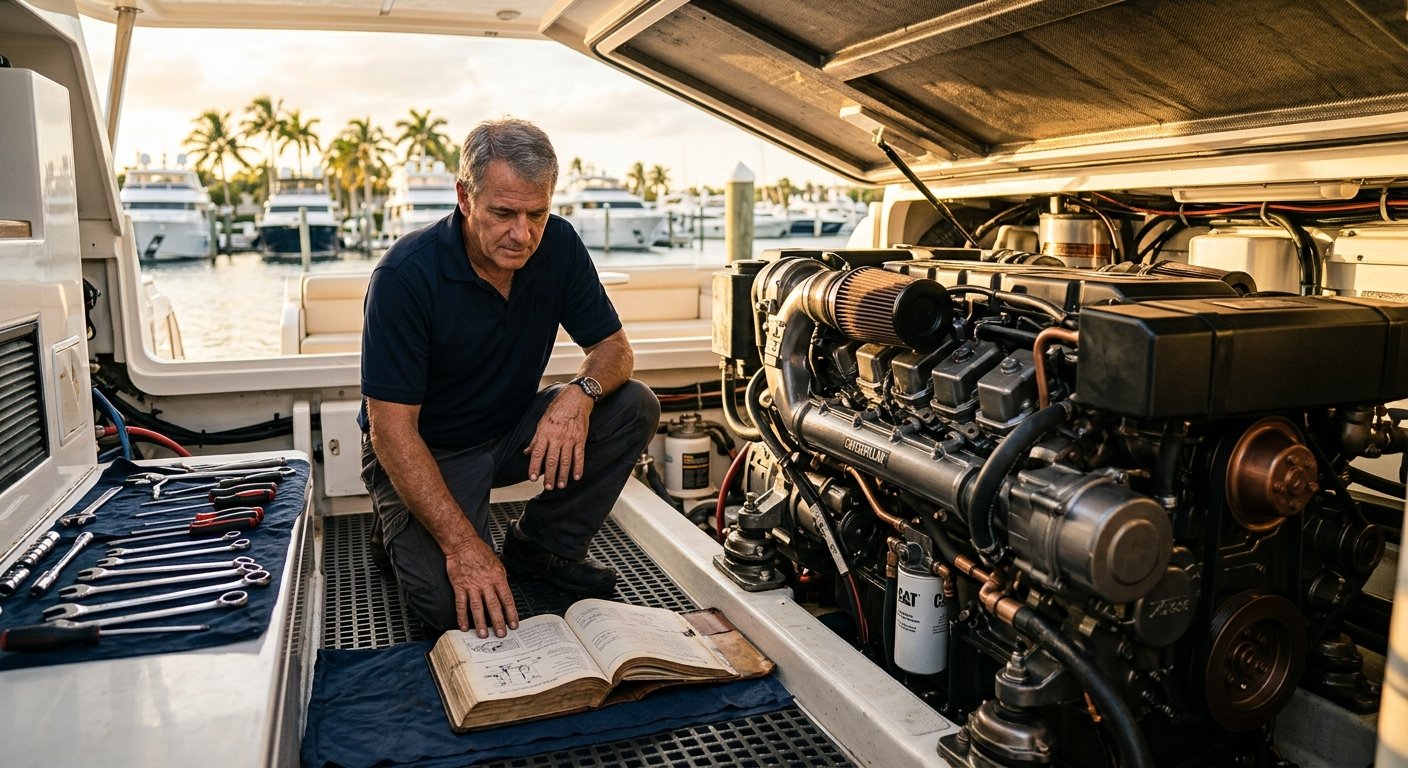
Ask most boat owners in the Northeast about winterization and they’ll nod knowingly—it’s a seasonal ritual as familiar as putting away the dock lines. Ask the same question of a Palm Beach or Fort Lauderdale yacht owner and you might get a puzzled look. After all, South Florida boats run year-round. Why bother with winterization?
The honest answer: because “winterization” is the wrong word for what’s actually happening. What this process really describes is end-of-season or extended-layup maintenance—a set of critical service procedures that protect your marine diesel engines and generators whether you’re laying up for three months in a cold-water marina or simply reducing your run schedule during the slower boating months. In Southeast Florida, that distinction matters enormously, and skipping this service based on a technicality can cost you significantly at the dock or, worse, offshore.
Why “Winterization” Still Applies in South Florida
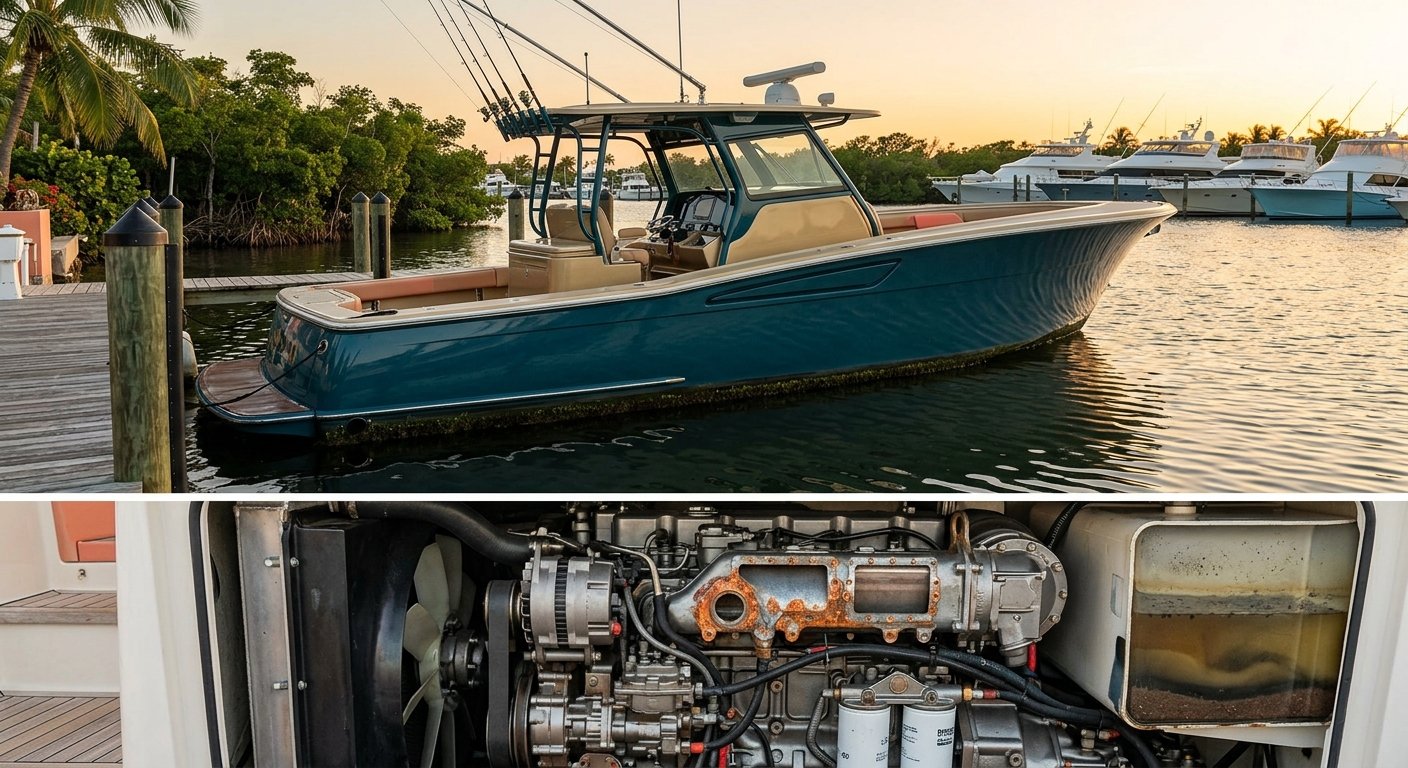
Southeast Florida doesn’t face frozen water lines or below-zero engine blocks. What it does face is a distinct seasonal rhythm that affects how vessels are used, how diesel engines accumulate operating hours, and how quickly biological growth, fuel degradation, and corrosion can take hold in warm, humid conditions.
During the slower fall and winter months, many Palm Beach County and Broward County vessels see reduced underway time. Engines that sit—even in 75-degree saltwater—develop their own set of problems. Diesel fuel left in tanks begins to degrade and grow microbial contamination. Cooling systems accumulate deposits. Raw water impellers that aren’t cycled regularly can bond to their housings. Exhaust systems trap moisture.
The BoatUS Foundation’s research on diesel fuel degradation consistently highlights microbial growth and water contamination as leading causes of fuel system failure in marine environments—problems amplified in warm, humid climates like South Florida’s year-round conditions.
What marina operators in Fort Lauderdale and Riviera Beach understand well is this: the cost of a proper layup service is a fraction of the cost of diagnosing a failed injector pump or a corroded heat exchanger six months later.
Core Winterization Services for Marine Diesel Engines
A professional marine diesel layup service isn’t a single task—it’s a coordinated sequence of inspections and treatments. Here’s what a thorough service should address:
Fuel System Treatment
Diesel fuel begins breaking down within 30 to 60 days under poor storage conditions. In a vessel sitting in a warm, humid slip, microbial growth (often called “diesel bug”) can colonize tank walls and fuel lines, producing sludge that clogs primary filters and injectors. A proper layup service includes fuel polishing or treatment, filter replacement, and an inspection of tank venting and water separators.
Cooling System Service
Marine diesel engines use either raw water cooling or closed freshwater cooling with a raw water heat exchanger. The raw water side is particularly vulnerable during periods of reduced use. Impellers in raw water pumps should be inspected and replaced on schedule—not just when they fail. Heat exchangers should be checked for zinc anode condition and internal fouling. Freshwater coolant should be tested for proper inhibitor concentration and pH levels.
Oil and Filter Changes
Used engine oil contains combustion byproducts, acids, and moisture that accelerate internal corrosion when left sitting in an engine. Changing oil and filters before a layup—rather than after—means your engine stores with clean, fully inhibited lubricant protecting internal surfaces. This applies equally to transmission fluid in ZF and other marine gearboxes.
Exhaust System Inspection
Wet exhaust systems in marine diesels trap water when the engine isn’t running. Extended layups increase the risk of water intrusion into cylinders through open exhaust valves—a scenario that can cause severe hydraulic lock damage at startup. Technicians should verify exhaust system integrity and proper water drain-back during layup preparation.
Generator Layup Service
Generators aboard yachts deserve the same attention as propulsion engines. Generators that run intermittently or sit unused develop varnish in fuel systems, experience wet-stacking in diesel units, and suffer battery and starter degradation. Brands like Cummins/Onan, Kohler, Northern Lights, and Westerbeke each have specific layup procedures that factory-authorized technicians follow to the letter.
The Southeast Florida Factor: Specific Considerations
Boating in Palm Beach and Broward County presents specific environmental challenges that make professional layup service especially important:
- Saltwater exposure: South Florida’s intracoastal and offshore environment accelerates corrosion on external engine components, exhaust fittings, and through-hull hardware.
- Biological growth: Warm water temperatures year-round mean faster growth of barnacles and marine organisms on raw water system components, including strainers and heat exchangers.
- Humidity and condensation: Even when not in use, engines in South Florida’s humid environment accumulate moisture internally, particularly in air intake systems and crankcase ventilation.
- Tropical storm season: Preparing a vessel properly before hurricane season—which peaks September through November—often overlaps with layup service timing for many owners who leave the area or reduce use during summer months.
The National Weather Service Miami forecast office typically tracks active tropical weather between June and November—a window that coincides with when many Southeast Florida yacht owners naturally reduce offshore activity and when proper layup maintenance becomes most strategically timed.
Brand-Specific Layup Requirements
One of the most important reasons to use a factory-authorized service center for winterization is that each engine manufacturer publishes specific layup procedures that differ meaningfully from generic advice. MAN marine diesel engines, for example, have specific coolant formulation requirements and turbocharger inspection protocols during extended layup. Volvo Penta IPS and shaft drive systems have transmission and drive unit procedures that must be followed to maintain warranty compliance. John Deere marine engines have their own oil specification and filter requirements.
Generic maintenance advice—or a well-meaning but unauthorized technician—may cover the basics but miss manufacturer-specific steps that are critical to long-term reliability. As a factory-authorized service center for MAN, Volvo Penta, John Deere, Cummins/Onan, Kohler, Northern Lights, and Westerbeke, DSOA technicians work from the actual manufacturer documentation for each brand, not general guidelines.
Learn more about our full-scope capabilities at our marine diesel engine repair service page.
Dockside Service: Convenience Without Compromise
One practical consideration that keeps many yacht owners from scheduling timely layup service is the inconvenience of hauling out or repositioning a vessel. DSOA’s dockside service capability eliminates that obstacle. Factory-authorized technicians come to your vessel at your marina throughout Palm Beach County and Broward County, performing layup services with the same equipment and expertise available at a full service facility.
For vessels that require parts sourced from manufacturers, DSOA’s worldwide parts shipping capability means that even specialized or hard-to-source components for premium brands reach our technicians without the extended delays that generic parts suppliers often create.
When to Schedule Your Layup Service
In Southeast Florida, the optimal layup service window typically falls between late September and November—after the peak summer boating season and before the winter cruising season begins in earnest for vessels heading to the Bahamas or Caribbean. Scheduling early avoids the service backlog that develops when multiple yacht owners realize simultaneously that their vessels need attention before a planned departure.
For owners with Caribbean-bound itineraries, properly serviced engines before departure aren’t just about reliability—they’re about having confidence in remote waters where parts sourcing and technical support are far less accessible than in Fort Lauderdale or Palm Beach.
Frequently Asked Questions
Does a diesel boat in South Florida really need winterization service?
Yes. While freezing temperatures aren’t the concern, extended layup service addresses fuel degradation, biological growth in cooling and fuel systems, corrosion, and manufacturer-required maintenance intervals. Skipping this service because of South Florida’s warm climate is a common and costly mistake.
How often should marine diesel engines be serviced if the boat runs year-round?
Most marine diesel engines follow a combination of calendar-based and hour-based service intervals. Many manufacturers recommend annual service regardless of hours, plus interval-based services at 250, 500, and 1,000-hour marks. A factory-authorized technician can establish the right schedule based on your specific engine model and operating profile.
Can I use a regular diesel mechanic instead of a marine-specific, factory-authorized technician?
Marine diesel engines have specific cooling systems, mounting configurations, exhaust systems, and operating environments that differ significantly from land-based diesel applications. Factory authorization means technicians are trained on specific brands and have access to current manufacturer service bulletins and proper tooling. For warranty compliance and optimal reliability, factory-authorized service is the appropriate standard.
What happens if diesel fuel is left untreated during a layup period?
Untreated diesel can begin to degrade within 30 to 60 days, particularly in warm conditions. Microbial contamination can produce sludge that clogs filters and injectors. Water contamination can cause corrosion in injection components. Fuel polishing, biocide treatment, and filter replacement during layup service address these risks before they create expensive downstream failures.
Does DSOA service generators as well as propulsion engines?
Yes. DSOA is factory-authorized for Cummins/Onan, Kohler, Northern Lights, and Westerbeke marine generators, in addition to the propulsion engine brands in our service portfolio. Generator layup service is a routine part of comprehensive vessel preparation.
Schedule Your Layup Service with DSOA
Proper marine diesel layup service is one of the most cost-effective investments a yacht owner can make. Whether your vessel stays in a Palm Beach marina all winter or departs for a Bahamas cruise in November, arriving at that season with properly serviced engines and generators means you’re starting from a position of mechanical confidence rather than crossed fingers.
DSOA has served Southeast Florida and Caribbean boat owners with factory-authorized marine diesel expertise for four decades. Our dockside service brings that expertise directly to your vessel throughout Palm Beach County and Broward County—no haulout required for most services. Worldwide parts shipping ensures that even specialty components for your MAN, Volvo Penta, Cummins, Kohler, or Westerbeke engines arrive without unnecessary delays.
Contact DSOA today to schedule your layup service or discuss a preventive maintenance program tailored to your vessel’s engines and operating schedule. The best time to prepare your diesel engines for the season ahead is before a problem develops—not after one does.
