
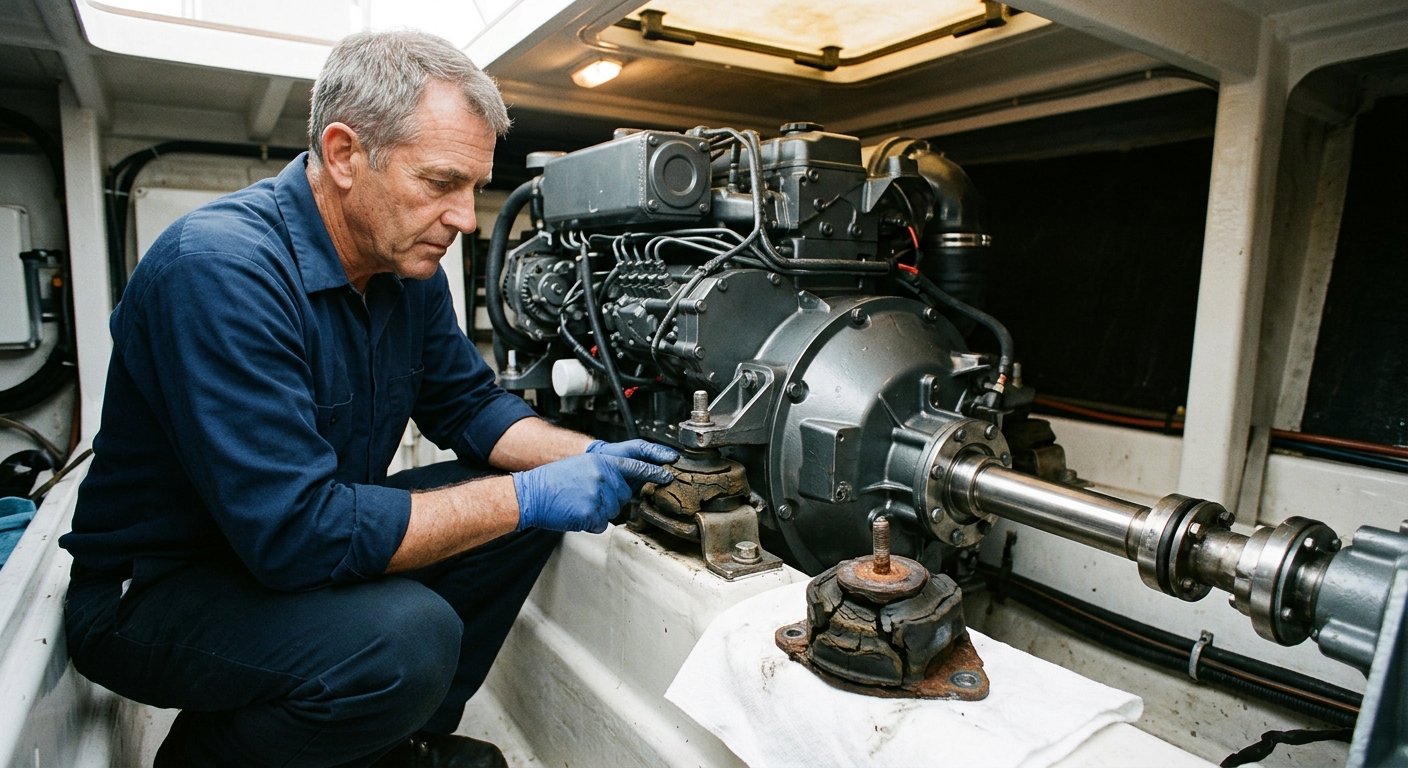
Worn engine mounts are one of the most overlooked sources of vibration, misalignment, and drivetrain damage on diesel-powered vessels. When rubber isolators degrade, they stop absorbing torque and shock, transferring stress directly to the hull, shaft, and coupling. Boat owners in Southeast Florida and the Caribbean should inspect mounts annually and replace them at the first sign of deterioration—before secondary damage compounds the cost.
- Failed engine mounts cause progressive shaft misalignment, which can damage couplings, cutlass bearings, and seals.
- Visible rubber cracking, oil saturation, and engine “walking” under load are the clearest signs of wear.
- Replacement almost always requires realigning the engine to the shaft—this is precision work, not a shortcut job.
- Factory-authorized technicians carry mount specifications for MAN, Volvo Penta, Cummins/Onan, John Deere, Kohler, Northern Lights, and Westerbeke engines.
- Catching worn mounts early is far less expensive than repairing a bent shaft or damaged transmission.
What Engine Mounts Actually Do
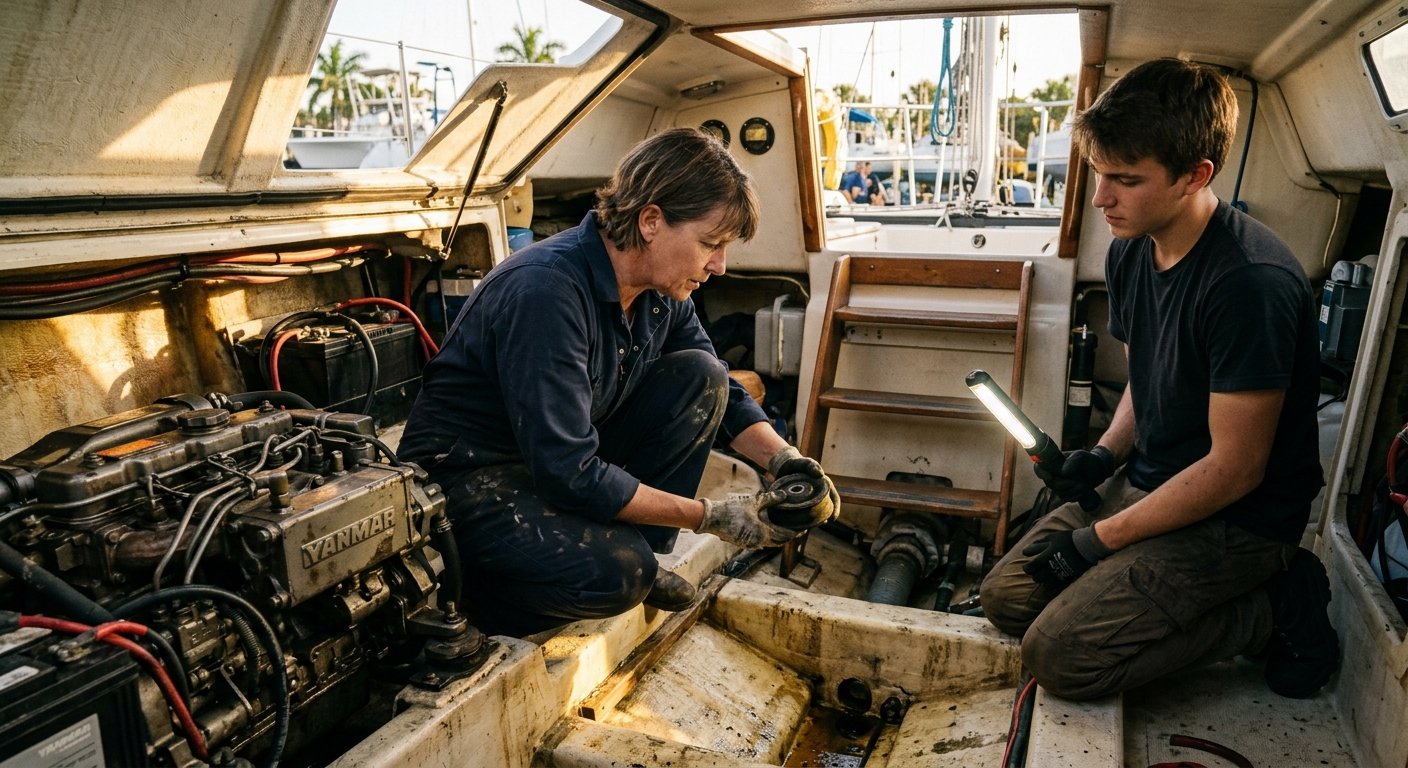
Every marine diesel engine sits on a set of mounts—typically four, though some larger installations use six—that serve two distinct functions simultaneously. First, they support the engine’s weight and hold it at the precise height and angle required for correct shaft alignment. Second, their rubber isolator cores absorb combustion vibration and torque pulses, preventing those forces from transmitting into the stringers and hull. When both functions work correctly, the vessel runs smoothly and the drivetrain operates within design tolerances.
Marine mounts differ from their automotive counterparts in a critical way: they must resist not just vertical load but also the rotational torque of a diesel turning a heavy shaft and propeller. Saltwater exposure, oil contamination, and the constant thermal cycling of a working engine accelerate the breakdown of the rubber compound. In Southeast Florida’s operating environment—where vessels often run year-round in humid, salt-laden air—mounts can degrade faster than owners expect.
Ignoring worn engine mounts doesn’t just create vibration—it puts your shaft seal, cutlass bearing, and transmission coupling at risk. Secondary damage from misalignment almost always costs significantly more to correct than the mount replacement itself.
Signs Your Engine Mounts Are Failing
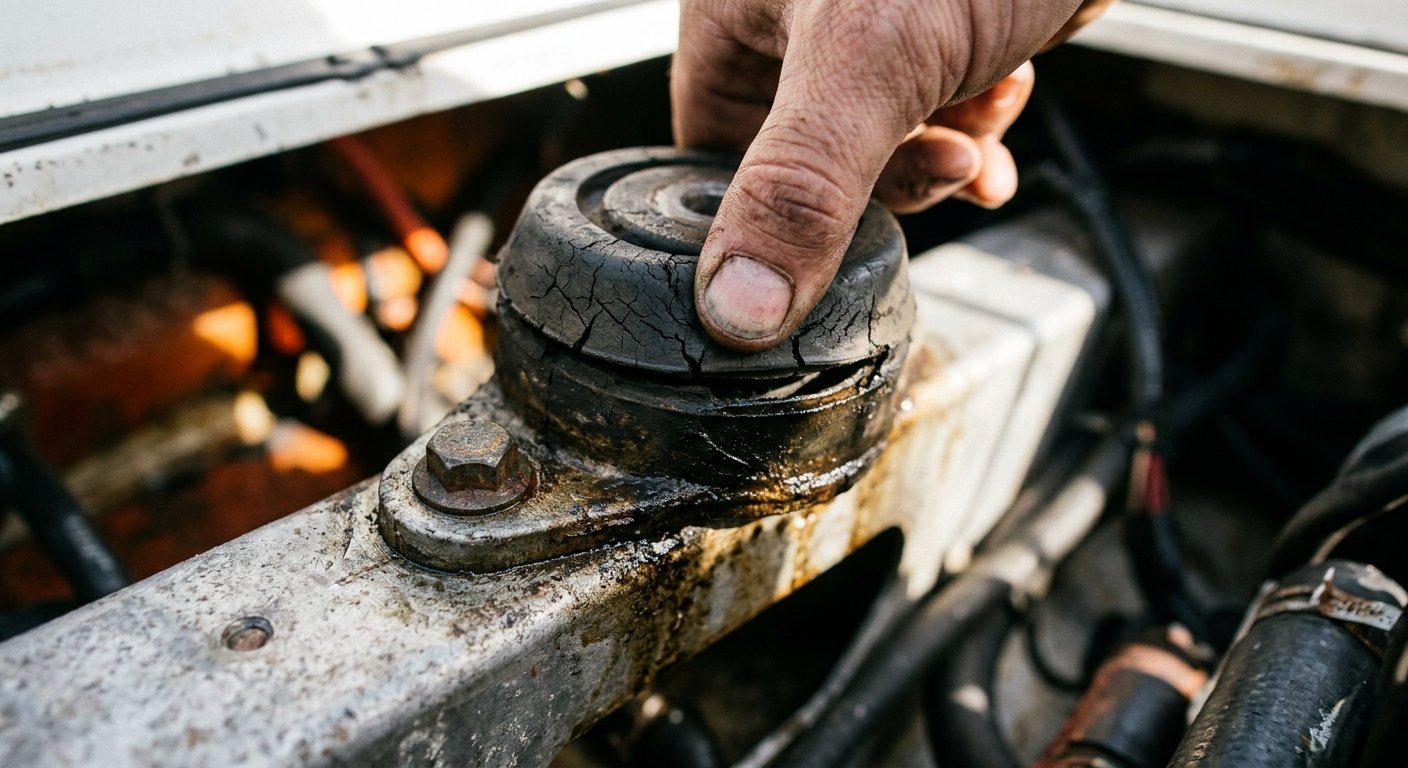
Engine mounts rarely fail catastrophically. They degrade gradually, which is why periodic inspection matters more than waiting for an obvious symptom. Here are the most reliable indicators that it’s time to schedule a professional evaluation:
Increased or Changed Vibration Pattern
A noticeable increase in vibration felt through the helm, sole, or throttle controls is one of the earliest signs. This is distinct from normal diesel character—if the vibration is new, has worsened over a season, or changes with RPM in unexpected ways, mounts should be among the first components inspected. Boat engine vibration that shows up specifically at cruising RPM often points to a mount that has lost its isolation capacity.
Visual Rubber Deterioration
With a flashlight and a mirror, you can often see cracked, split, or oil-soaked rubber around the mount body. Rubber that appears shiny, compressed flat, or has separated from the metal plate has lost its elasticity and can no longer isolate effectively. Any visible degradation is cause for replacement—there is no partial fix for compromised rubber.
Engine Movement Under Load
A properly mounted engine stays in position when you engage the transmission or throttle up. If you can see or feel the engine shifting—even slightly—when thrust is applied, the mounts are no longer holding geometry correctly. This movement directly affects marine engine alignment and accelerates wear on every component between the engine and the propeller.
Alignment Drift
If your vessel has required shaft realignment more than once in a short period without an obvious external cause (grounding, debris strike), deteriorating mounts are a likely contributor. A shaft that repeatedly falls out of alignment is telling you the engine’s foundation is moving.
A shaft that repeatedly falls out of alignment is telling you the engine’s foundation is moving—not that the shaft itself is the problem.
Unusual Coupling or Transmission Noise
Clunking at engagement, a grinding sensation at the coupling, or unusual transmission noise can all originate at the mounts. Once the engine is no longer sitting in its correct position, the angular misalignment at the coupling creates uneven loading on every rotating component downstream.
The Replacement Process: What to Expect
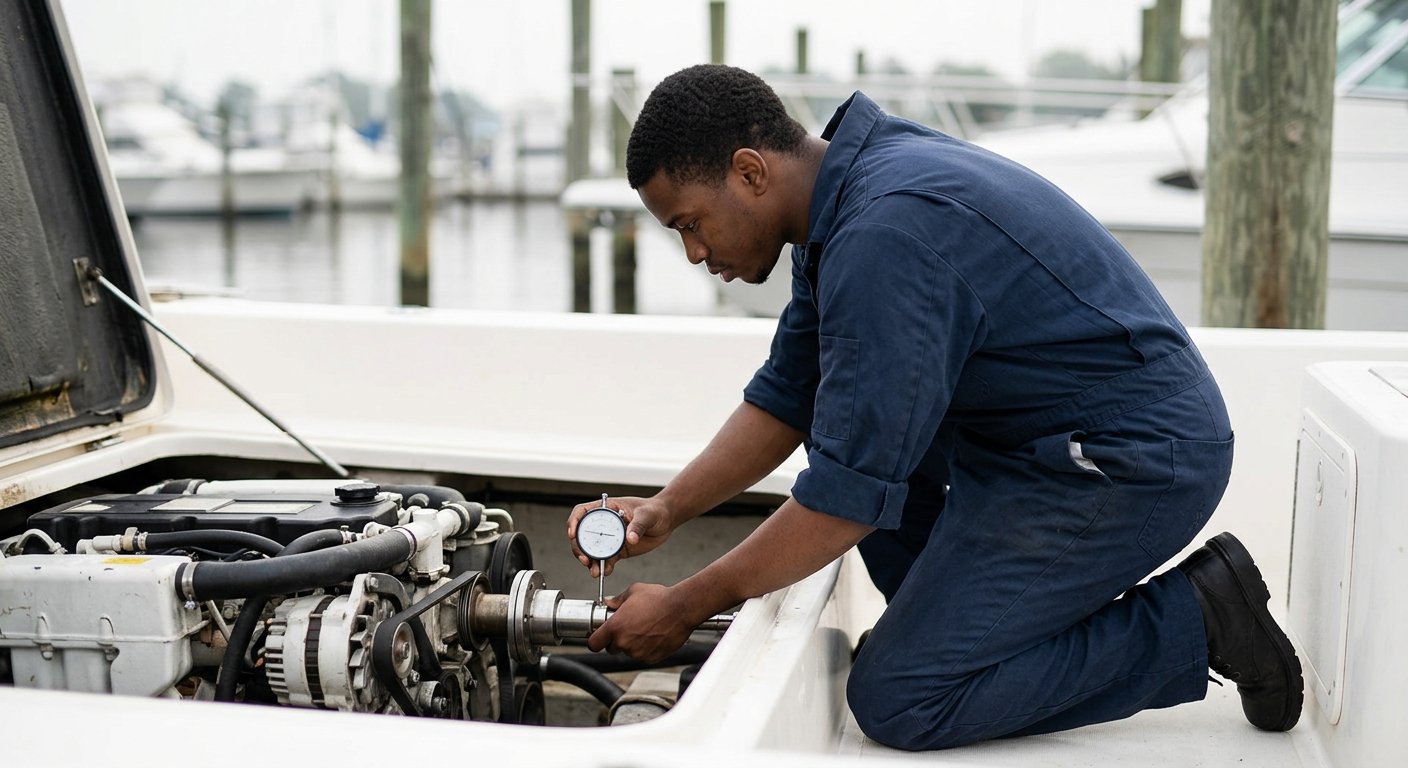
Engine mount replacement on a marine diesel is a structured, multi-step process. The steps below describe what a professional service visit involves—understanding the sequence helps you have a productive conversation with your technician and set realistic expectations.
Baseline Alignment Check
Before any mount is touched, a technician measures the existing shaft-to-coupling alignment. This documents how far the engine has drifted from its original position and establishes the target for after replacement.
Engine Support & Mount Removal
The engine must be safely supported—often with jack stands or a temporary lift—before old mounts are removed. Attempting to swap mounts one at a time without proper support risks dropping the engine onto the stringers or damaging the shaft.
Stringer and Bed Inspection
With mounts removed, the technician inspects the engine bed for stress cracking, delamination, or corrosion. A deteriorated engine bed compromises new mount performance immediately—any issues found here must be addressed before installation continues.
New Mount Installation
Replacement mounts are installed to manufacturer torque specifications. For factory-authorized service on brands like Volvo Penta, MAN, or Cummins/Onan, this means using OEM-specified hardware and mount ratings matched to the engine’s weight and torque output.
Precision Shaft Alignment
This is the most technically demanding step. The engine position is adjusted—using the mount adjustment bolts—until the coupling faces are perfectly parallel and centered. Acceptable runout tolerances are typically within a few thousandths of an inch, per ABYC marine engineering standards.
Sea Trial Verification
Alignment should be rechecked after the vessel has been underway, as thermal expansion and normal load-settling can shift readings. A proper sea trial confirms the work before the job is closed.
Choosing the Right Replacement Mounts
Not all marine mounts are interchangeable. Mount selection depends on the engine’s weight, torque rating, installation angle, and the manufacturer’s specified isolator durometer (rubber stiffness). Using an undersized or incompatible mount—even a visually similar one—can result in premature failure or inadequate vibration isolation.
For engines serviced by DSOA—including MAN, Volvo Penta, John Deere, Cummins/Onan, Kohler, Northern Lights, and Westerbeke—factory-specified mounts ensure that the replacement meets the original design intent. The National Marine Manufacturers Association provides guidance on marine drivetrain standards that underscore why OEM-compatible components matter for long-term reliability. DSOA’s worldwide parts shipping capability means that the correct OEM mount for your specific engine can be sourced and delivered efficiently, regardless of where your vessel is based in the Caribbean.
If your vessel has been in service for more than five years without a mount inspection, schedule one before your next extended cruise—not after. Catching soft or cracked mounts at the dock is always better than discovering the problem offshore.
Maintenance Intervals and Prevention
Engine mount inspection should be part of every annual diesel marine engine service. A visual check takes minutes and can catch early deterioration before it progresses. The general guidance from marine engine manufacturers is to inspect mounts annually and replace them based on condition—not on a fixed hour interval—because exposure conditions vary so significantly between vessels.
Proper diesel engine maintenance that keeps oil leaks controlled also extends mount life, since petroleum contamination accelerates rubber breakdown. Keeping bilge water levels managed and ensuring adequate ventilation around the engine bay reduces the humid, corrosive conditions that attack both rubber and metal mount components.
For owners of multiple-engine vessels or those with generator installations, mounts on both propulsion engines and generators need equal attention. DSOA provides dockside service throughout Palm Beach and Broward counties, making it practical to schedule mount inspections without pulling your vessel out of the water unnecessarily.
Frequently Asked Questions
How often should marine diesel engine mounts be replaced?
There is no universal fixed interval. Inspect mounts annually and replace them when rubber shows visible cracking, oil saturation, or compression set, or when vibration or alignment issues appear. In high-use vessels in saltwater environments, mounts may need replacement every five to eight years, but condition is the determining factor—not calendar time.
Can I replace engine mounts without realigning the shaft?
No. Any time engine mounts are replaced, the engine position changes and shaft alignment must be rechecked and adjusted. Skipping alignment after mount replacement is one of the most common causes of premature coupling and bearing failure. Alignment is not optional—it is part of the job.
What causes engine mounts to fail faster than expected?
Oil contamination from engine leaks is the leading accelerant of rubber degradation. Bilge flooding, ozone exposure, and operating the engine at sustained high loads without correct mount ratings for the application also shorten service life. Keeping the engine bay clean and dry significantly extends mount longevity.
Is dockside engine mount replacement possible, or does my boat need to be hauled?
In most cases, engine mount inspection and replacement can be performed with the vessel in the water. DSOA technicians routinely perform this work dockside throughout Palm Beach and Broward counties. Some installations with restricted access may require haul-out, but this is the exception rather than the rule.
Will new engine mounts fix my boat’s vibration problem?
If worn mounts are the confirmed cause of the vibration, replacement combined with proper shaft alignment will typically resolve or substantially reduce the problem. However, vibration can also originate from propeller damage, cutlass bearing wear, or transmission issues. A proper diagnostic evaluation is essential before assuming mounts are the sole source.
Schedule a Mount Inspection or Engine Service
DSOA’s factory-authorized technicians serve Palm Beach and Broward county boaters with dockside convenience—and can source OEM mounts worldwide for every brand we service.

About DSOA
DSOA provides factory-authorized marine diesel engine and generator maintenance, repair, and parts services to boat and yacht owners throughout Southeast Florida and the Caribbean. With four decades of expertise servicing premium brands including MAN, Volvo Penta, John Deere, Cummins/Onan, Kohler, Northern Lights, and Westerbeke, DSOA combines authoritative technical knowledge with convenient dockside service. The company serves both experienced yacht owners and newer boaters with professional, educational guidance on proper engine care and preventive maintenance, backed by worldwide parts shipping capability. Visit dieselservicesofamerica.com →
