
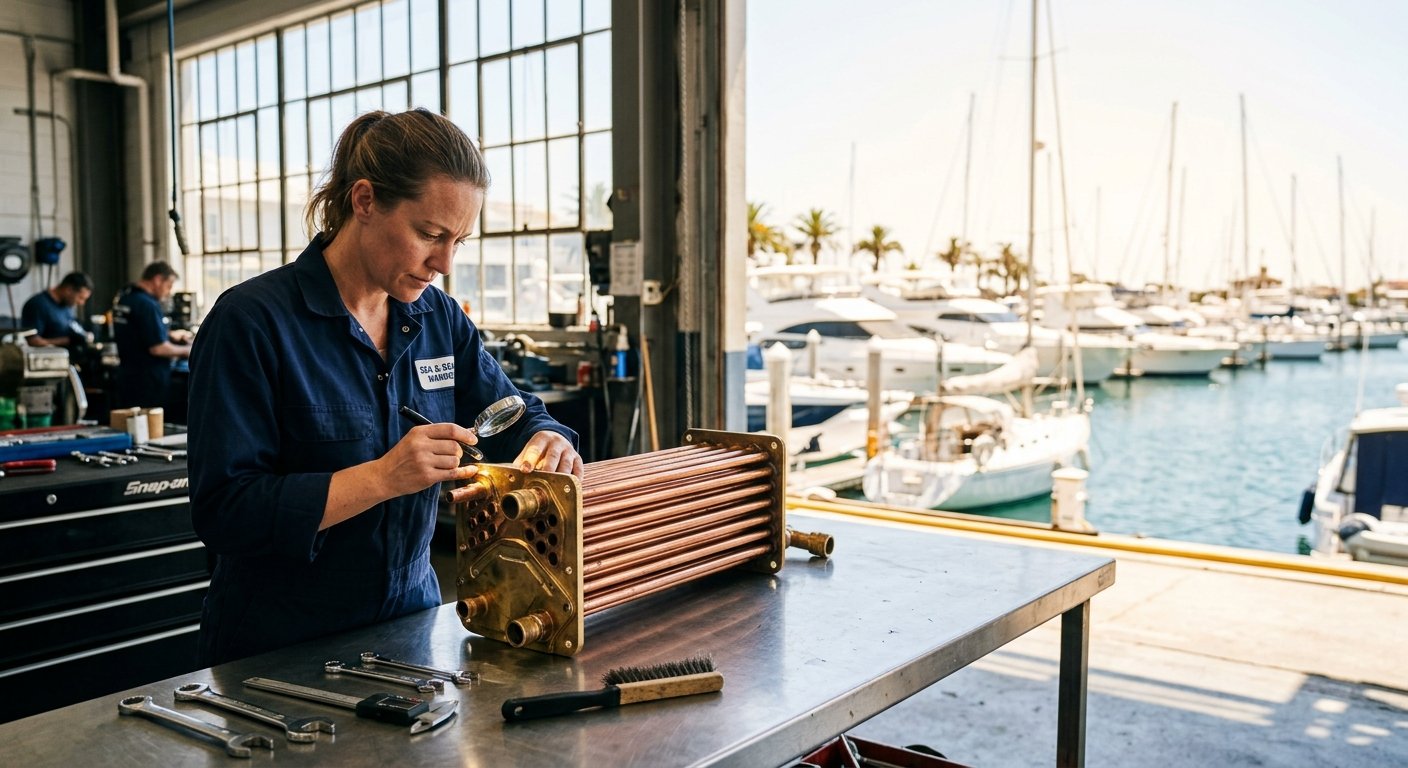
A marine diesel heat exchanger removes excess engine heat by transferring it from coolant to raw seawater, keeping your engine within safe operating temperatures. Without regular maintenance, scale buildup, corrosion, and blocked tubes silently erode cooling performance until the damage becomes costly. Yacht and boat owners throughout Palm Beach and Broward County should inspect and service heat exchangers at every major service interval.
- Heat exchangers are the heart of a closed-loop marine cooling system — neglect them and overheating follows.
- Scale deposits, zinc depletion, and raw-water tube corrosion are the three most common failure pathways.
- Annual inspection is the baseline; vessels operating in warm South Florida waters may need more frequent attention.
- Factory-authorized service ensures the correct replacement materials and torque specifications for your specific engine brand.
- Catching a failing heat exchanger early almost always costs less than replacing a head gasket or cylinder head damaged by overheating.
What a Heat Exchanger Actually Does
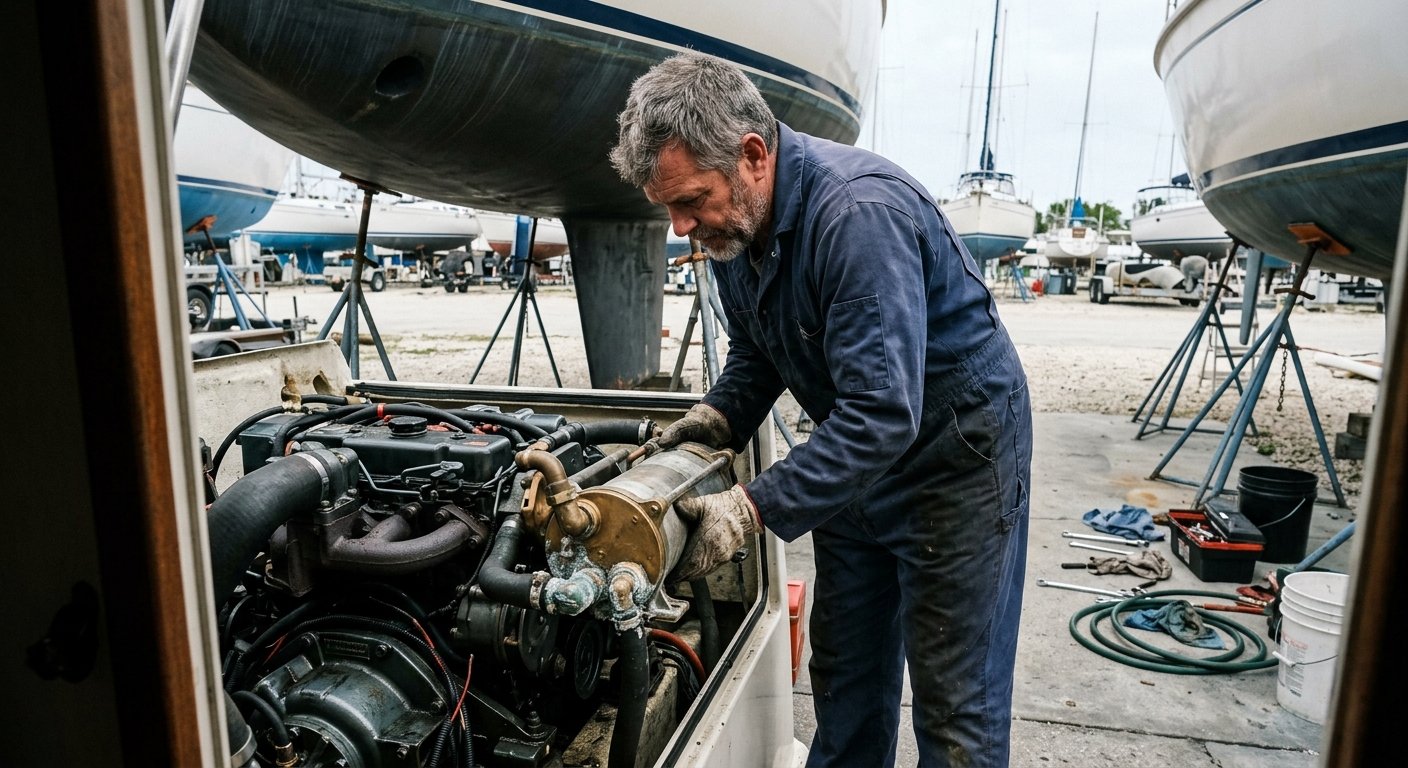
Most marine diesel engines use a closed-loop freshwater cooling system. Engine coolant circulates through the engine block, absorbing heat, then passes through the heat exchanger where raw seawater drawn from outside the hull pulls that heat away. The two fluids never mix — they pass on either side of a bundle of brass or cupronickel tubes sealed inside an aluminum or cast-iron housing. This design protects the engine from the corrosive effects of direct salt water contact while still using the virtually unlimited cooling capacity of the sea.
Generators aboard your vessel operate on the same principle. Brands like Cummins/Onan, Kohler, Northern Lights, and Westerbeke all rely on heat exchangers to keep onboard power generation stable during long passages or extended dockside use. Understanding how this component works makes it far easier to recognize when something is wrong.
Some commercial vessels use keel coolers — external hull-mounted tubes that shed heat directly to surrounding water. Heat exchangers perform the same function internally and are standard on most yacht-grade engines including MAN, Volvo Penta, and John Deere marine diesels. Both systems require periodic inspection, but the maintenance procedures differ significantly.
Common Heat Exchanger Problems
Scale and Mineral Deposit Buildup
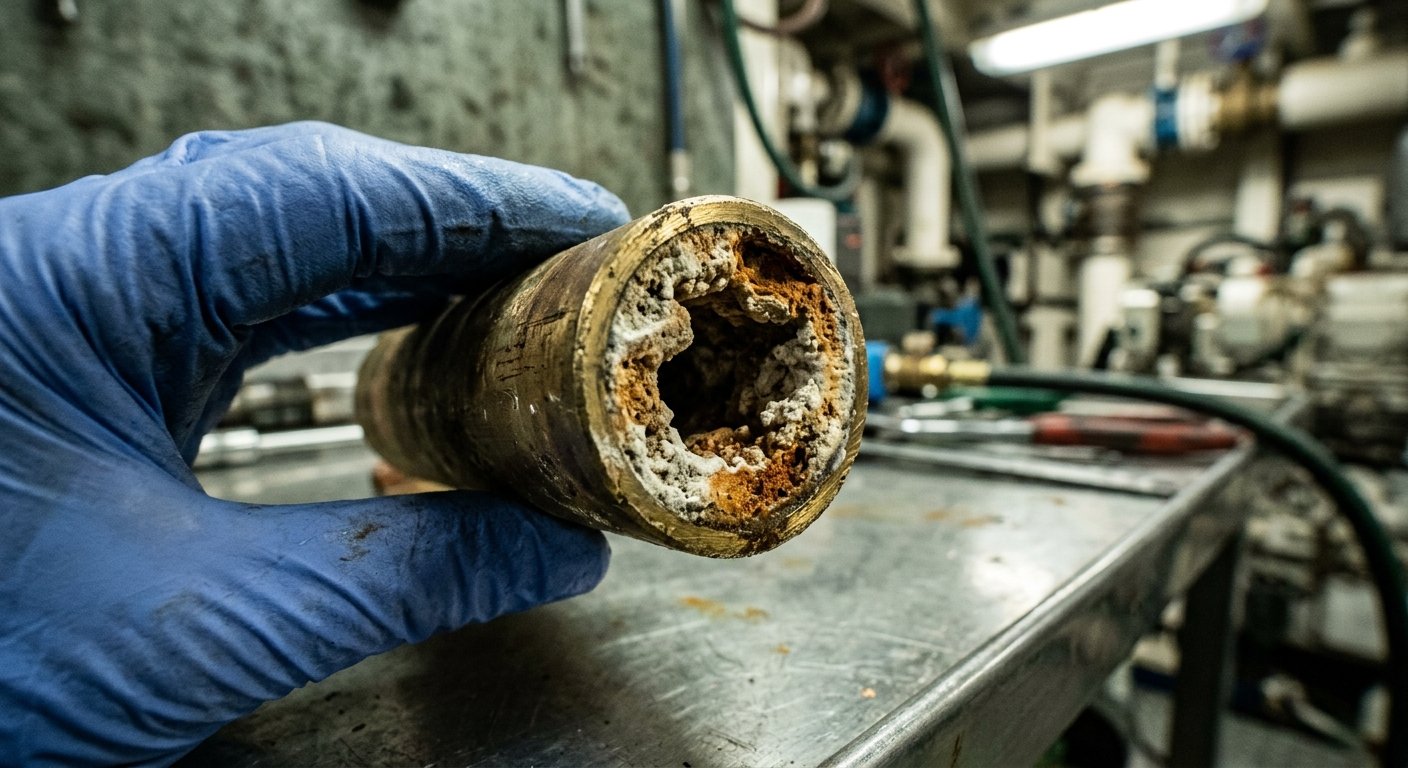
Raw seawater carries dissolved minerals that deposit on tube surfaces over time, much like limescale in a home water heater. These deposits act as insulation, reducing heat transfer efficiency. As the exchanger works harder to compensate, coolant temperatures creep upward. Left unchecked, the engine’s thermostat struggles to maintain normal operating range, and overheating events become increasingly likely. A chemical descaling treatment, performed by a qualified marine diesel technician, clears these deposits without damaging the tube bundle.
Zinc Anode Depletion
Heat exchangers on most marine diesel engines include sacrificial zinc anodes inside the raw-water circuit. These zincs corrode preferentially, protecting the brass or cupronickel tubes from galvanic corrosion. When zincs deplete completely, the tubes themselves become the sacrificial material. According to the BoatUS Foundation’s corrosion guidance, galvanic corrosion in saltwater environments can progress far faster than most boat owners expect — making zinc inspection a non-negotiable part of any preventive marine engine maintenance routine.
Tube Blockage and Raw-Water Restriction
Marine organisms, debris, and sediment enter through the raw-water intake and can partially block heat exchanger tubes. Even a modest restriction reduces flow enough to compromise cooling. Symptoms include higher-than-normal coolant temperatures, inconsistent temperature gauge readings, or a coolant overflow reservoir that repeatedly needs topping up. Any of these signs warrants prompt attention from a technician familiar with your specific engine brand.
External Corrosion and Housing Leaks
The heat exchanger housing — typically aluminum or cast iron — is vulnerable to corrosion from both the coolant side and the raw-water side. Pinhole leaks allow coolant to contaminate raw water or vice versa. A milky appearance in engine oil is often the first indicator that coolant has entered the lubrication system through a compromised exchanger or related gasket, though the same symptom can indicate a blown head gasket. Either way, the engine should be removed from service immediately.
A milky appearance in engine oil means the engine comes out of service — full stop. The cause determines the repair, and a heat exchanger leak is among the more manageable diagnoses.
Maintenance Schedule and What It Involves
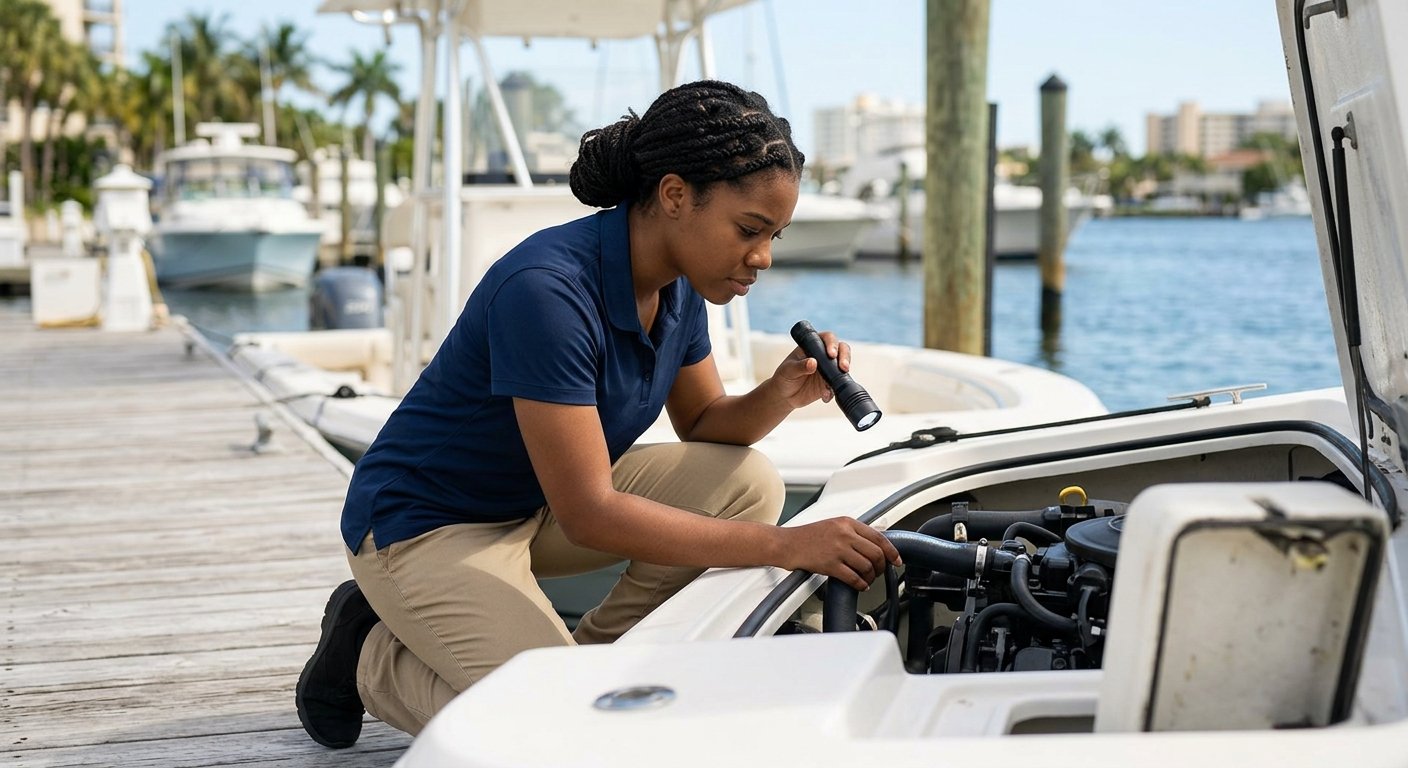
The right service interval depends on your engine brand, hours of operation, and how frequently your vessel operates in South Florida’s warm, biologically active coastal waters. As a general framework, heat exchanger maintenance follows this sequence:
Visual Inspection
At every service visit, a technician checks for external corrosion, staining around fittings, and hose condition on both the coolant and raw-water sides. This takes minutes but catches early-stage issues before they become repairs.
Zinc Anode Check and Replacement
Zincs should be inspected at least annually and replaced when they reach approximately 50% depletion. In aggressive saltwater environments, semi-annual inspection is advisable. Your factory-authorized service provider will specify the correct zinc alloy for your engine model.
Tube Bundle Removal and Cleaning
Annually, or every 500 hours depending on manufacturer guidance, the tube bundle should be removed, inspected under good lighting, and cleaned chemically or mechanically. Tube condition — including wall thickness and any pitting — is assessed at this stage.
Pressure Testing
After reassembly, a pressure test confirms the system holds without leaks before the engine returns to service. Skipping this step after any repair involving the heat exchanger is a false economy.
Coolant Analysis and Replacement
Coolant chemistry degrades over time, reducing its corrosion inhibitor effectiveness. Manufacturer-recommended coolant change intervals apply to the heat exchanger circuit as well as the broader cooling system.
For brand-specific intervals, always defer to the manufacturer’s documentation. Volvo Penta, MAN, and John Deere all publish detailed maintenance schedules that a factory-authorized service center like DSOA follows precisely. Generic intervals that ignore manufacturer guidance create gaps that warranty coverage — where applicable — may not bridge. Our marine diesel service and repair technicians work from factory documentation for every engine brand in our authorized portfolio.
Using extended-life coolants beyond their rated service life reduces corrosion inhibitor concentration below the threshold needed to protect aluminum heat exchanger housings. Check your engine’s coolant specification — not all extended-life formulas are compatible with all marine diesel systems, and an incompatible coolant can accelerate internal corrosion rather than prevent it. The EPA’s guidance on water chemistry underscores why mineral content and pH matter in any closed-loop fluid system.
Recognizing the Early Warning Signs
Heat exchanger problems rarely announce themselves dramatically. Instead, they show up as subtle deviations from normal behavior. Boat owners who know their vessel’s baseline are far better positioned to catch problems early. Watch for:
- Coolant temperature running consistently higher than the normal operating band
- Coolant loss without any visible external leak
- Oil with a milky or frothy appearance on the dipstick
- Raw-water discharge that is hotter than usual or reduced in volume
- White or sweet-smelling exhaust smoke that doesn’t clear after warm-up
- Unexplained increases in fuel consumption (an engine working harder than it should)
Any of these symptoms warrants professional marine diesel troubleshooting before the next voyage. For vessels in Palm Beach or Broward County, DSOA’s dockside service capability means a technician can come to your slip for diagnostic work — reducing the time your vessel is out of commission. Learn more about our on-site diesel marine engine service for details on how dockside visits work.
When Replacement Is the Right Call
Not every heat exchanger can be restored through cleaning. Tube wall pitting beyond serviceable limits, housing cracks, or end-cap thread damage can make replacement the more economical path. DSOA’s worldwide parts shipping capability means sourcing OEM-specification replacement components for MAN, Volvo Penta, John Deere, Cummins/Onan, Kohler, Northern Lights, or Westerbeke engines — even for older models or vessels currently in Caribbean waters — is straightforward. Using OEM or factory-approved replacement parts preserves the engineering tolerances the engine was designed around.
Aftermarket heat exchangers are available at lower price points, but material specifications — particularly for tube alloy and housing metallurgy — may not match OEM standards. In a marine environment, those differences compound over time. The NACE International corrosion resource library offers technical background on why alloy selection matters in seawater-adjacent applications. Our diesel marine engine repair team can advise on the correct specification for your engine’s heat exchanger before any parts are ordered.
Factory-authorized service centers have access to technical service bulletins that may update maintenance intervals or specify revised replacement parts for known issues. An independent shop working from general reference materials may not have this information. For complex cooling system work, that access matters.
Frequently Asked Questions
How often should a marine diesel heat exchanger be serviced?
Most manufacturers recommend annual inspection with tube bundle cleaning, though high-use vessels or those operating in warm, biologically active waters may require more frequent attention. Always follow the engine manufacturer’s published maintenance schedule rather than a generic interval, as recommendations vary across brands like Volvo Penta, MAN, and Cummins.
What are the symptoms of a failing heat exchanger?
Common indicators include rising coolant temperatures, unexplained coolant loss, milky or frothy engine oil, reduced or hot raw-water discharge, and white or sweet-smelling exhaust smoke that persists after warm-up. Any of these symptoms warrants professional marine diesel troubleshooting before continuing to operate the vessel.
Can heat exchangers be repaired, or do they need replacement?
Many heat exchangers can be restored through professional cleaning, zinc replacement, and pressure testing if the tube walls and housing remain within serviceable condition. Severely pitted tubes, cracked housings, or damaged end caps typically make replacement the more reliable and cost-effective path. A factory-authorized technician can assess serviceability accurately.
Why does zinc anode condition matter for heat exchangers?
Sacrificial zinc anodes inside the raw-water circuit protect brass and cupronickel heat exchanger tubes from galvanic corrosion. When zincs deplete completely, the tubes themselves corrode — accelerating failure. Inspecting and replacing zincs before full depletion is one of the highest-value steps in preventive marine engine maintenance.
Can DSOA service my heat exchanger at my dock?
Yes. DSOA offers dockside service throughout Palm Beach County and Broward County, meaning diagnostic work, zinc inspection, and certain maintenance tasks can be performed at your slip. More involved work such as tube bundle removal and pressure testing may require a facility visit depending on the scope. Contact DSOA to discuss your specific situation.
Schedule Your Heat Exchanger Inspection
DSOA’s factory-authorized technicians serve Palm Beach County and Broward County with dockside convenience and OEM-grade parts sourcing for every engine in our authorized portfolio.

About DSOA
DSOA provides factory-authorized marine diesel engine and generator maintenance, repair, and parts services to boat and yacht owners throughout Southeast Florida and the Caribbean. With four decades of expertise servicing premium brands including MAN, Volvo Penta, John Deere, Cummins/Onan, Kohler, Northern Lights, and Westerbeke, DSOA combines authoritative technical knowledge with convenient dockside service. The company serves both experienced yacht owners and newer boaters with professional, educational guidance on proper engine care and preventive maintenance, backed by worldwide parts shipping capability. Visit dieselservicesofamerica.com →
