
Marine diesel engine oil degradation happens faster than most boat owners realize. Unlike automotive engines that operate in controlled environments, marine diesels work under constant load, elevated temperatures, and exposure to moisture—all factors that accelerate oil breakdown. Understanding the correct oil change interval for your specific engine can mean the difference between decades of reliable operation and catastrophic engine failure.
The straightforward answer: most marine diesel engines require oil changes every 100-200 hours of operation or annually, whichever comes first. However, this baseline recommendation varies significantly based on engine manufacturer, operating conditions, fuel quality, and your vessel’s specific use profile.
Why Marine Diesel Engines Need Different Oil Change Schedules
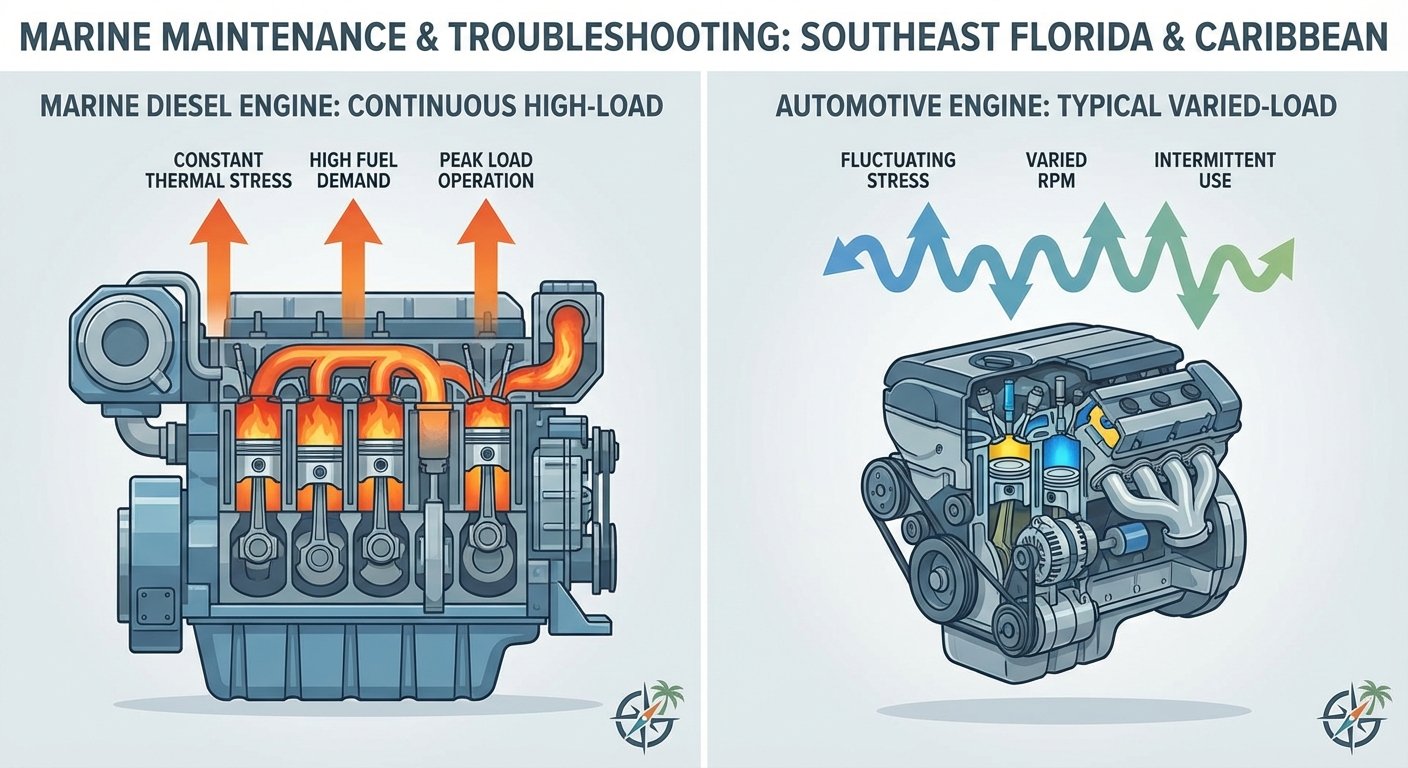
Marine diesel engines operate fundamentally differently from their automotive counterparts. Your vessel’s engine runs under continuous load conditions that would be equivalent to towing a trailer uphill in a car—for hours at a time. This sustained high-load operation generates more combustion byproducts, heat, and mechanical stress that quickly degrade lubricating oil.
Additionally, the marine environment introduces moisture into the crankcase through temperature cycling and humid air. This moisture combines with combustion byproducts to create acidic compounds that corrode internal engine components. Fresh oil contains additives specifically designed to neutralize these acids, but these additives become depleted over time.
Manufacturer-Specific Oil Change Intervals
Each engine manufacturer establishes oil change intervals based on extensive testing of their specific designs. Following these guidelines is essential for maintaining warranty coverage and ensuring optimal engine longevity.
MAN Marine Diesel Engines
MAN engines typically require oil changes every 500 hours for recreational use or annually. However, commercial applications or continuous-duty cycles may require changes every 250 hours. MAN’s advanced engine designs often include oil quality sensors that can extend or shorten intervals based on actual oil condition—a feature that requires factory-authorized service to properly interpret.
Volvo Penta Marine Engines
Volvo Penta recommends oil changes every 100-200 hours depending on the specific engine model and application. Their IPS drive systems require particular attention to both engine oil and transmission fluid intervals. Volvo Penta’s newer D-series engines feature improved oil filtration systems that can safely extend to 200-hour intervals under optimal conditions.
John Deere Marine Powerplants
John Deere marine applications typically follow 250-hour oil change intervals for recreational use. Commercial fishing or charter applications should reduce this to 150 hours due to higher sustained loads. John Deere engines are known for their robust construction, but they require high-quality diesel engine oil meeting specific API classifications.
Cummins Marine Diesel Engines
Cummins recommends 250-hour intervals for most recreational marine applications, with oil analysis potentially extending this to 500 hours for engines equipped with bypass filtration systems. Cummins QSB and QSC series engines dominate the yacht market throughout Southeast Florida and the Caribbean, making proper maintenance schedules critical for the region’s boating community.
Operating Conditions That Accelerate Oil Change Needs
Standard manufacturer intervals assume normal operating conditions. Several factors can significantly shorten the optimal oil change interval for your marine diesel engine:
Frequent Short Trips and Idling
Engines that never reach full operating temperature accumulate moisture and fuel in the crankcase. If you regularly run your engines for less than 30 minutes, consider changing oil every 50-75 hours rather than following extended intervals.
High-Load Operation
Charter vessels, fishing boats, and yachts that regularly operate at cruise speed or higher generate extreme heat and combustion byproducts. These applications benefit from 100-150 hour oil change intervals regardless of manufacturer recommendations.
Poor Fuel Quality
Fuel quality varies dramatically throughout the Caribbean islands. Sulfur content in diesel fuel creates sulfuric acid during combustion, which contaminates engine oil. When cruising areas known for questionable fuel quality, reduce oil change intervals by 25-30% and conduct oil analysis to monitor contamination levels.
Tropical Climate Considerations
The consistently warm temperatures in Fort Lauderdale and throughout the Caribbean affect oil viscosity and evaporation rates. While heat generally doesn’t require shorter intervals, the humidity accelerates moisture contamination in engines that sit idle for extended periods between uses.
The Critical Importance of Oil Analysis
Professional oil analysis provides objective data about your engine’s internal condition and oil quality. This laboratory testing examines wear metals, contamination levels, and remaining additive packages to determine if oil can safely remain in service or requires immediate replacement.
For yacht owners who operate on varied schedules, oil analysis removes the guesswork from maintenance timing. A sample sent to a qualified laboratory costs $30-50 but can prevent a $50,000 engine rebuild by identifying problems before they become catastrophic failures.
Oil analysis is particularly valuable for:
- Engines with extended oil change intervals (over 250 hours)
- Vessels that sit idle for months between operating periods
- High-value engines where downtime costs exceed preventive maintenance expenses
- Establishing baseline oil change intervals for new-to-you vessels
- Detecting early signs of component wear or coolant contamination
What Happens When You Skip Oil Changes
Postponing marine diesel service creates a cascade of problems that compound over time. Initially, depleted additives allow acids to attack bearings and cylinder walls. Sludge accumulates in oil passages, restricting flow to critical components. Eventually, increased friction generates excessive heat that warps precision-machined surfaces.
The financial consequences are severe. A routine engine oil change service costs $300-800 depending on engine size and oil capacity. Rebuilding a marine diesel engine damaged by inadequate lubrication starts at $25,000 and easily exceeds $75,000 for larger yacht engines. The math strongly favors preventive marine engine maintenance over reactive repairs.
Choosing the Right Oil for Your Marine Diesel
Oil selection matters as much as change intervals. Marine diesel engines require oils meeting specific API (American Petroleum Institute) classifications. Most modern engines require API CK-4 or the newer API FA-4 specifications, which provide improved oxidation resistance and wear protection compared to older classifications.
Viscosity selection depends on operating temperatures and manufacturer recommendations. Most marine diesels in warm climates use 15W-40 oil, though some newer engines specify 10W-30 or even 5W-40 for improved cold-start protection and fuel economy.
Never substitute automotive oil in marine applications. Marine-grade oils contain additional additives for moisture resistance and enhanced anti-wear properties necessary for sustained high-load operation. The cost difference between automotive and marine oil is minimal compared to the engine damage caused by using incorrect lubricants.
Generator Oil Change Requirements
Marine generators from Onan, Kohler, Northern Lights, and Westerbeke follow different maintenance schedules than propulsion engines. Most manufacturers recommend 100-150 hour intervals for generator oil changes, with annual changes for lightly-used units.
Generators often accumulate minimal hours annually but experience frequent start-stop cycles that are particularly hard on engine oil. Even if your Kohler or Northern Lights generator shows only 50 hours since the last service, annual oil changes prevent moisture accumulation and additive depletion during storage periods.
The Value of Factory-Authorized Service
Professional yacht engine service provides benefits beyond simply draining and refilling oil. Factory-authorized technicians understand the specific requirements of MAN, Volvo Penta, John Deere, Cummins, and other marine diesel brands. They know which filters require replacement, how to properly dispose of waste oil, and what additional inspection points should be checked during service intervals.
Dockside service eliminates the hassle of trailering boats to service centers or attempting DIY maintenance in cramped engine rooms. Professional technicians bring the correct tools, genuine OEM filters, and manufacturer-specified oils directly to your vessel, completing maintenance while you focus on other priorities.
Creating Your Personalized Maintenance Schedule
Develop a maintenance schedule based on your specific usage patterns rather than relying solely on manufacturer recommendations. Track engine hours meticulously using your vessel’s hour meter, and consider these guidelines:
- Weekend recreational use: 150-200 hour intervals or annual service
- Charter or commercial applications: 100-150 hour intervals
- Extended cruising: 200-250 hour intervals with oil analysis
- Seasonal use with long storage periods: Annual service regardless of hours
Document all boat engine maintenance in Fort Lauderdale or wherever service is performed. Detailed maintenance records increase resale value and help diagnose problems if they arise. Many buyers specifically seek vessels with documented professional maintenance histories.
Frequently Asked Questions
Can I extend oil change intervals if I use synthetic oil?
Synthetic oils offer superior protection and longer service life compared to conventional oils. However, you should only extend intervals if your engine manufacturer specifically approves synthetic oil and provides extended interval recommendations. Many manufacturers allow 1.5x standard intervals with approved synthetics, but always verify with factory specifications.
How do I know if my engine oil needs immediate replacement?
Check your dipstick regularly. Oil that appears black and opaque, smells like diesel fuel, or shows a milky appearance (indicating coolant contamination) requires immediate replacement regardless of hours since the last change. These conditions indicate serious problems requiring professional diagnosis.
Should I change oil before or after long-term storage?
Change oil before storage periods exceeding one month. Fresh oil prevents acidic compounds present in used oil from corroding internal components during storage. This practice is particularly important in humid climates where moisture contamination accelerates during idle periods.
Professional Marine Diesel Service in Southeast Florida
Proper oil change intervals represent one of the most cost-effective investments in your vessel’s longevity. Whether you operate throughout Fort Lauderdale’s waterways or cruise the Caribbean extensively, establishing and maintaining appropriate service schedules protects your investment and ensures reliable operation when you need it most.
DSOA provides factory-authorized marine diesel service for MAN, Volvo Penta, John Deere, Cummins, Onan, Kohler, Northern Lights, and Westerbeke engines throughout Southeast Florida and the Caribbean. Our certified technicians offer convenient dockside service and maintain worldwide parts shipping capabilities for vessels requiring immediate support anywhere they cruise. Contact DSOA today to schedule your preventive marine engine maintenance and establish a customized service schedule tailored to your vessel’s specific needs.
