
A marine diesel engine’s cooling system operates under far more demanding conditions than its automotive counterpart, battling corrosive saltwater, biological growth, and constant vibration. When cooling system failures occur offshore, they can quickly escalate from minor inconveniences to catastrophic engine damage costing tens of thousands in repairs. Understanding how these systems work and maintaining them properly isn’t just good seamanship—it’s essential protection for your substantial investment in marine power.
How Marine Diesel Cooling Systems Work
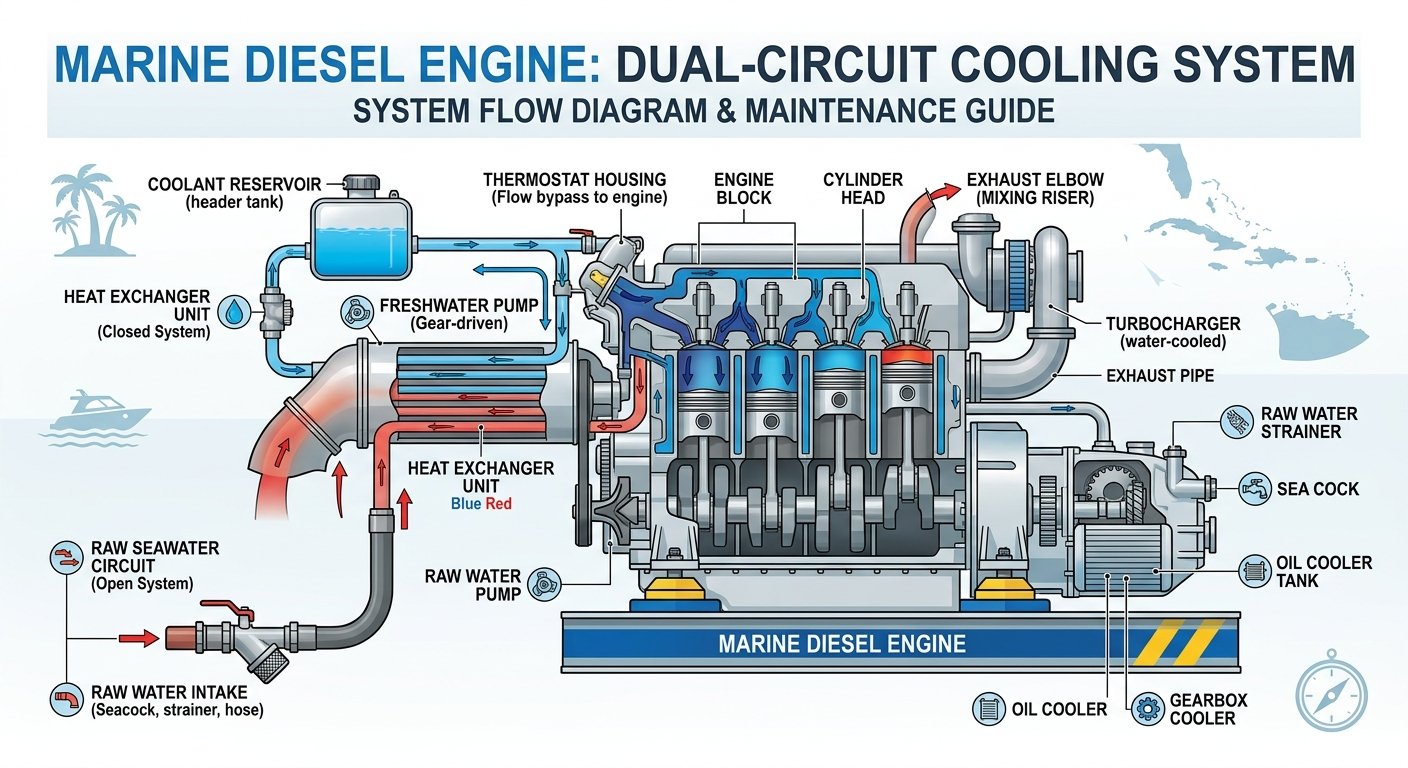
Most recreational and commercial vessels use a heat exchanger cooling system that combines the benefits of freshwater and raw water cooling. The engine’s internal components are cooled by a closed freshwater circuit containing coolant, similar to a car. This freshwater absorbs heat from the engine block, cylinder heads, and exhaust manifolds, then passes through a heat exchanger where raw seawater removes the heat before being discharged overboard.
This dual-circuit design protects internal engine components from corrosive saltwater while providing efficient heat rejection. The raw water circuit—which draws seawater through a through-hull fitting, pumps it through the heat exchanger and sometimes directly through the aftercooler or oil cooler, then expels it through the exhaust—takes the brunt of corrosive exposure.
Major manufacturers like MAN, Volvo Penta, John Deere, and Cummins have refined these systems over decades, but each brand incorporates specific engineering details that require proper understanding for effective maintenance. Factory-authorized marine diesel service ensures technicians understand these manufacturer-specific nuances.
Common Cooling System Problems and Warning Signs
Recognizing early warning signs of cooling system trouble can prevent minor issues from becoming expensive failures. High coolant temperature is the most obvious indicator, but several subtler symptoms deserve attention.
Raw Water Flow Issues
Reduced or absent water flow from the exhaust discharge represents one of the most common marine engine cooling problems. Causes include clogged raw water strainers, failed impellers, blocked intake screens, or obstructed through-hull fittings. Marine growth accumulates rapidly in warm waters throughout Southeast Florida and the Caribbean, making regular inspection critical.
A failing raw water pump impeller—often made of rubber or neoprene—shows warning signs before complete failure. Reduced discharge flow, occasional high temperature alarms, or small rubber pieces in the strainer basket all indicate impeller deterioration. Most manufacturers recommend annual impeller replacement as part of preventive marine engine maintenance, though vessels operating in debris-laden waters may require more frequent service.
Heat Exchanger Fouling
Heat exchangers gradually accumulate scale, salt deposits, and biological growth that reduces cooling efficiency. This fouling occurs on both the raw water side and the coolant side, though raw water passages deteriorate faster. Symptoms include progressively higher operating temperatures despite adequate flow, especially under load.
Heat exchanger cores eventually require professional cleaning or replacement. During routine boat engine maintenance Fort Lauderdale technicians can pressure-test heat exchangers, check for internal corrosion, and determine remaining service life before failures occur offshore.
Coolant System Contamination
The freshwater cooling circuit should remain sealed, but failures happen. A leaking heat exchanger allows raw water to enter the coolant system, causing rapid corrosion of engine internals. Signs include rising coolant levels, coolant that smells salty, or visible separation in the coolant reservoir.
Conversely, coolant entering the raw water side—usually through a leaking heat exchanger or aftercooler—creates milky discharge water and depletes coolant levels. This cross-contamination requires immediate attention to prevent serious engine damage.
Thermostat Failures
Marine thermostats regulate coolant temperature by controlling flow through the heat exchanger. A stuck-closed thermostat causes rapid overheating, while a stuck-open thermostat prevents the engine from reaching optimal operating temperature, reducing efficiency and increasing wear.
Quality thermostats designed for marine applications include fail-safe designs that default to the open position, preventing catastrophic overheating if the thermostat fails. Using proper marine-grade components specified by manufacturers like Volvo Penta or Northern Lights ensures reliable operation.
Essential Cooling System Maintenance Tasks
A comprehensive preventive marine engine maintenance program addresses cooling system components on regular intervals matched to operating hours and conditions.
Raw Water Strainer Service
The raw water strainer represents your first line of defense against debris entering the cooling system. Inspect and clean strainers before every voyage and after operating in areas with floating vegetation or debris. Replace deteriorated basket screens and ensure the strainer housing seals properly to prevent air intrusion, which can cause pump cavitation and overheating.
Impeller Inspection and Replacement
Annual impeller replacement provides inexpensive insurance against cooling failure. However, don’t wait for scheduled replacement if you notice performance changes. During replacement, inspect the impeller housing for wear grooves, check the wear plate condition, and examine the cam for damage. A quality marine engine inspection includes documenting impeller condition even when replacement isn’t due, tracking degradation patterns that might indicate other system issues.
When servicing engines from manufacturers like Westerbeke or Kohler generators, always use OEM impellers designed for specific pump models. Aftermarket impellers may not meet the same material specifications or dimensional tolerances, leading to premature failure.
Coolant Testing and Exchange
Marine diesel coolant serves multiple purposes beyond heat transfer—it provides freeze protection (even in tropical climates during transport), corrosion inhibition, and lubricates water pump seals. Coolant degrades over time as inhibitor packages deplete, typically requiring replacement every two to three years regardless of hours.
Professional coolant testing measures pH, freeze point, and inhibitor concentrations. Low pH indicates acidity that accelerates corrosion, while high pH suggests contamination. Many marine diesel service facilities use refractometers and test strips to verify coolant condition during routine service.
Always use coolant formulations approved by the engine manufacturer. MAN, John Deere, and other manufacturers specify particular coolant types compatible with the metals and gasket materials in their engines. Mixing incompatible coolants can cause seal degradation and reduce corrosion protection.
Zinc Anode Replacement
Heat exchangers and aftercoolers incorporate sacrificial zinc anodes (pencil zincs) that corrode preferentially, protecting more expensive components from galvanic corrosion. These zincs should be inspected during every oil change and replaced when 50% depleted. Completely dissolved zincs indicate overdue service, leaving expensive components vulnerable to corrosion.
Zinc consumption rates vary with water conditions—brackish water and marinas with stray electrical currents accelerate zinc depletion. Vessels moored in Southeast Florida marinas may experience faster zinc consumption than those at anchor in open water.
Hose and Clamp Inspection
Cooling system hoses endure temperature extremes, chemical exposure, and constant vibration. Inspect all cooling hoses during every marine engine inspection for cracking, softness, swelling, or hardening. Squeeze hoses when cool—they should feel firm but pliable. Replace any questionable hoses before they fail.
Double-clamp all below-waterline connections using marine-grade stainless steel clamps. Replace clamps showing rust or corrosion. A failed raw water hose below the waterline can sink a vessel in minutes.
Professional Service and Factory Authorization
While owners can perform certain maintenance tasks like strainer cleaning and visual inspections, comprehensive cooling system service requires specialized knowledge and equipment. Factory-authorized service technicians receive specific training on manufacturer systems, access to technical bulletins, and proper diagnostic tools.
Complex tasks like heat exchanger pressure testing, coolant system chemical cleaning, and troubleshooting mysterious overheating issues benefit from professional expertise. Technicians familiar with specific brands—whether Volvo Penta’s electronically controlled cooling systems or Cummins QSB configurations—diagnose problems faster and more accurately than generalists.
Professional dockside service eliminates the need to haul vessels to shore facilities, saving time and money while providing convenient access to your engines in their operating environment. This proves particularly valuable in Southeast Florida and throughout the Caribbean, where distances to service facilities can be substantial.
Seasonal and Lay-Up Considerations
Even in tropical climates, vessels experience periods of inactivity requiring special cooling system care. Before extended lay-up, run engines to operating temperature, then inspect for leaks and proper operation. Consider whether to leave coolant in the system or drain it completely based on storage conditions and duration.
For vessels that cruise between northern and southern waters, remember that coolant freeze protection becomes critical even if your home port never freezes. Vessels transiting to northern climates require adequate antifreeze concentration—typically 50/50 coolant-to-water ratio—providing protection to approximately -34°F.
Parts Quality and Availability
Cooling system reliability depends heavily on component quality. OEM parts from manufacturers like Northern Lights, Onan, or Westerbeke are engineered specifically for marine environments with appropriate materials, tolerances, and corrosion resistance. Aftermarket parts may appear identical but use inferior materials that fail prematurely under marine conditions.
Access to genuine parts becomes critical when cooling problems occur far from major ports. Worldwide parts shipping capabilities ensure that whether you’re cruising the Bahamas or heading south to the Lesser Antilles, needed components can reach you quickly, minimizing downtime.
Establishing a Maintenance Schedule
Create a cooling system maintenance calendar based on operating hours, manufacturer recommendations, and operating conditions. A typical schedule includes:
- Before each voyage: Visual inspection, strainer check, coolant level verification
- Every 50 hours: Detailed visual inspection of hoses, clamps, and connections
- Every 100 hours: Zinc anode inspection and coolant testing
- Annually: Impeller replacement, comprehensive system inspection
- Every 2-3 years: Coolant replacement, heat exchanger service evaluation
Vessels operating in harsh conditions—continuous high loads, debris-laden waters, or extreme temperatures—require more frequent service intervals.
Protect Your Investment With Proper Cooling System Care
Marine diesel cooling systems represent complex engineering designed to handle extreme demands, but they require consistent attention to deliver reliable service. Understanding how these systems work, recognizing warning signs, and maintaining components on proper schedules prevents the vast majority of cooling-related failures.
Whether you operate a sportfishing yacht powered by MAN diesels, a cruising vessel with Volvo Penta engines, or rely on Kohler or Northern Lights generators for onboard power, professional maintenance ensures these investments deliver years of dependable service. Factory-authorized technicians bring manufacturer-specific expertise that generic service providers cannot match, diagnosing problems accurately and servicing systems to factory specifications.
Don’t wait for warning lights and alarm bells to address cooling system maintenance. Contact Diesel Services of America for comprehensive marine diesel service from factory-trained technicians serving Southeast Florida and the Caribbean. Our dockside service brings expertise directly to your vessel, and our worldwide parts shipping ensures you’re never left waiting for critical components. Protect your engines with preventive marine engine maintenance that keeps you running reliably, wherever your voyages take you.
