
When your marine diesel engine temperature gauge climbs into the red zone, you’re facing one of the most serious operational threats to your vessel. Overheating accounts for nearly 30% of all marine diesel engine failures, and in Southeast Florida’s warm waters, the problem becomes even more critical. Understanding what causes your engine to overheat and how to address it quickly can mean the difference between a minor repair and catastrophic engine damage costing tens of thousands of dollars.
Why Marine Diesel Engines Overheat in Tropical Waters
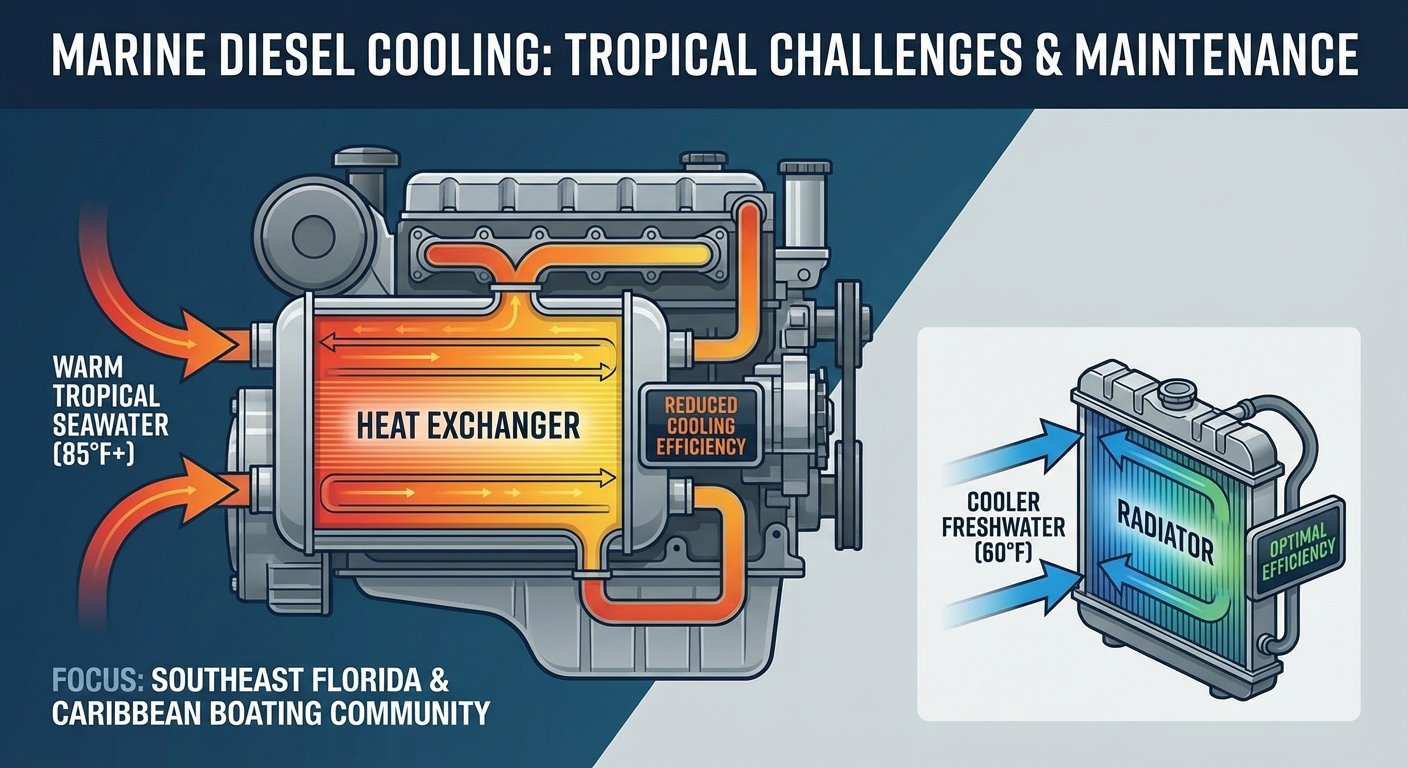
Marine diesel engines operate in a fundamentally different environment than their land-based counterparts. Your engine relies on seawater to remove heat from the cooling system, and when ambient water temperatures in Southeast Florida reach 85°F or higher during summer months, your cooling system works overtime. The reduced temperature differential between the cooling water and engine components means less efficient heat transfer, pushing your system closer to its operational limits.
Modern marine diesels from manufacturers like MAN, Volvo Penta, and Cummins are engineered to handle tropical conditions, but only when every component of the cooling system functions properly. A single failure point can cascade into a complete system breakdown within minutes of operation.
Critical Cooling System Components
Understanding your engine’s cooling architecture helps you identify where problems originate. Most marine diesels use a heat exchanger system that separates raw water (seawater) from the closed freshwater circuit that actually cools the engine.
Raw Water Circuit
The raw water system draws seawater through a hull-mounted intake, passes it through the heat exchanger, and discharges it through the exhaust. This circuit includes:
- Seacock and intake strainer
- Raw water pump with impeller
- Heat exchanger
- Exhaust elbow or mixing chamber
Each component represents a potential failure point. Marine growth, deteriorated impellers, or corroded passages can restrict flow and trigger overheating.
Closed Freshwater Circuit
The freshwater side circulates coolant through the engine block, cylinder heads, and heat exchanger. Key components include:
- Freshwater pump (usually belt-driven)
- Thermostat
- Expansion tank or header tank
- Coolant passages within the engine
Problems here often develop more gradually but can be equally destructive.
Common Causes of Marine Diesel Overheating
Impeller Failure: The Number One Culprit
Raw water pump impellers wear out predictably, yet impeller failure remains the leading cause of marine engine cooling problems. These rubber components degrade from heat, chemical exposure, and mechanical stress. In Southeast Florida’s saline environment, deterioration accelerates.
A failing impeller shows warning signs: reduced water flow from the exhaust, steam in the exhaust discharge, or gradual temperature increases during operation. Complete impeller failure stops raw water circulation entirely, causing rapid temperature spikes that can warp cylinder heads or crack engine blocks within minutes.
Factory-authorized service schedules typically call for annual impeller replacement, but vessels operating in shallow, debris-laden waters should inspect impellers every six months. This simple maintenance task prevents the majority of overheating emergencies.
Heat Exchanger Blockages
Heat exchangers contain narrow passages where raw seawater flows around tubes carrying engine coolant. Scale buildup, marine growth, and sediment accumulation restrict these passages, reducing cooling efficiency. In tropical waters with high biological activity, fouling occurs faster than in temperate regions.
Symptoms develop gradually: the engine runs progressively hotter under load, requires longer cooldown periods, or reaches operating temperature unusually quickly. Professional cleaning involves chemical descaling or mechanical rodding—procedures best performed by certified technicians familiar with your specific engine model.
Thermostat Malfunctions
Marine thermostats regulate coolant flow through the heat exchanger, maintaining optimal operating temperature. A stuck-closed thermostat prevents coolant circulation, causing immediate overheating. A stuck-open thermostat makes the engine run too cold, reducing efficiency and increasing wear.
Thermostats have defined service lives and should be replaced according to manufacturer specifications. John Deere, Westerbeke, and other manufacturers provide specific replacement intervals based on operating hours—guidance that factory-authorized technicians follow precisely.
Cooling System Leaks
Even minor coolant leaks compromise system performance. As coolant level drops, air enters the system, creating pockets that prevent proper circulation. The engine overheats even though the pump operates normally and water flows through the heat exchanger.
Leak sources include deteriorated hoses, corroded heat exchanger end caps, failed gaskets, or cracked expansion tanks. Pink or green coolant stains in the bilge, persistent low coolant levels, or steam from the engine compartment indicate active leaks requiring immediate attention.
Seacock and Strainer Restrictions
Before water reaches your pump, it passes through the hull seacock and intake strainer. Plastic bags, seagrass, jellyfish, and sediment commonly block these entry points. In Southeast Florida’s coastal waters and throughout the Caribbean, floating debris and marine life create constant challenges.
Regular strainer inspection—ideally before each voyage—prevents most intake blockages. However, complete seacock servicing requires hauling out and should be part of annual maintenance schedules.
Diagnosing Overheating Problems
Systematic troubleshooting identifies problems quickly and prevents misdiagnosis that leads to unnecessary repairs.
Immediate Checks When Temperature Rises
If your temperature gauge shows overheating during operation:
- Reduce engine load immediately—throttle back to idle
- Check exhaust discharge for water flow; absence indicates raw water system failure
- Verify the temperature gauge reading with an infrared thermometer if available
- Check coolant level in expansion tank (only when engine cools)
- Inspect bilge for coolant leaks or unusual water accumulation
Never continue operating an overheating engine. Damage occurs within minutes at excessive temperatures, and the repair costs dramatically exceed preventive maintenance expenses.
Professional Diagnostic Procedures
Factory-authorized technicians use systematic approaches to identify root causes:
- Pressure testing cooling systems to locate leaks
- Flow testing to measure raw water circulation rates
- Heat exchanger efficiency testing using temperature differentials
- Thermostat function verification in controlled conditions
- Inspection of coolant condition for contamination or degradation
For complex marine diesel troubleshooting, specialized diagnostic equipment and manufacturer-specific technical knowledge separate accurate diagnosis from guesswork. Brands like MAN, Volvo Penta, and Cummins each have unique system designs requiring specific expertise.
Preventive Maintenance for Cooling Systems
Proactive maintenance prevents the vast majority of marine engine cooling problems. A comprehensive cooling system maintenance schedule includes:
Annual Services
- Impeller replacement regardless of apparent condition
- Zinc anode inspection and replacement in heat exchangers
- Coolant testing and replacement per manufacturer specifications
- Belt tension and condition verification
- Hose inspection for cracks, softening, or swelling
- Heat exchanger cleaning or chemical descaling
Seasonal or Pre-Voyage Checks
- Visual inspection of all cooling system hoses and connections
- Strainer cleaning
- Coolant level verification
- Belt condition visual check
- Confirmation of proper exhaust water flow
Operating Hour Milestones
Manufacturers like Kohler, Northern Lights, and Westerbeke specify maintenance intervals based on operating hours rather than calendar time. For vessels with high utilization, hour-based service schedules become critical. Professional service providers track these intervals and schedule maintenance proactively.
The Value of Factory-Authorized Service
Marine diesel engines represent significant investments, and their reliable operation affects both safety and vessel value. Factory-authorized technicians bring manufacturer-specific training, access to technical service bulletins, and relationships with parts suppliers that ensure correct diagnosis and proper repairs.
When addressing marine diesel service needs, working with certified professionals familiar with your engine’s specific requirements prevents costly misdiagnosis. Generic repairs often miss subtle system issues that trained specialists identify immediately.
For boat owners throughout Southeast Florida—from Miami through Fort Lauderdale to Palm Beach—and across the Caribbean, dockside service eliminates the complexity of transporting your vessel for repairs. Professional mobile technicians bring diagnostic equipment and parts inventory directly to your slip, minimizing downtime.
When to Call for Professional Help
Certain situations require immediate professional intervention:
- Sudden temperature spikes without obvious cause
- Coolant mixing with engine oil (milky oil appearance)
- Steam or excessive heat from the engine compartment
- Repeated overheating after impeller replacement
- Coolant leaks you cannot locate
- Unusual noises from water pumps or belt systems
Professional diesel marine engine repair addresses not just immediate symptoms but underlying causes. Comprehensive diagnosis prevents recurring problems and identifies secondary issues before they cause failures.
Parts Quality Matters
Using genuine manufacturer parts versus aftermarket alternatives significantly affects cooling system reliability. OEM impellers use compound formulations engineered for specific pumps and operating conditions. Generic impellers may fit physically but fail prematurely under tropical operating conditions.
The same principle applies to thermostats, gaskets, hoses, and heat exchanger components. Factory parts meet exact specifications and carry warranties that aftermarket alternatives don’t provide. For critical cooling system components, the modest cost difference between OEM and generic parts becomes insignificant compared to potential failure consequences.
Worldwide parts shipping capabilities ensure that even vessels cruising remote Caribbean destinations can access genuine components quickly. Proper parts sourcing separates temporary fixes from lasting repairs.
Protect Your Investment
Marine diesel engine overheating threatens your vessel’s operational reliability and represents a serious safety concern. Understanding your cooling system, recognizing early warning signs, and maintaining proactive service schedules protect your investment and ensure trouble-free operation.
Whether you’re dealing with an immediate overheating situation or planning preventive maintenance for the coming season, professional diagnosis and factory-authorized service provide peace of mind that generic repairs cannot match. For vessel owners seeking expert boat engine repair Fort Lauderdale services or throughout Southeast Florida and the Caribbean, partnering with certified technicians familiar with MAN, Volvo Penta, John Deere, Cummins/Onan, Kohler, Northern Lights, and Westerbeke systems ensures your engine receives the specialized care it requires.
Don’t wait for an overheating emergency to address cooling system maintenance. Contact factory-authorized marine diesel specialists who can perform comprehensive system inspections, provide transparent maintenance recommendations, and deliver professional service at your dock. Your engine’s reliability depends on expertise, genuine parts, and proper maintenance—investments that pay dividends in worry-free operation season after season.
