
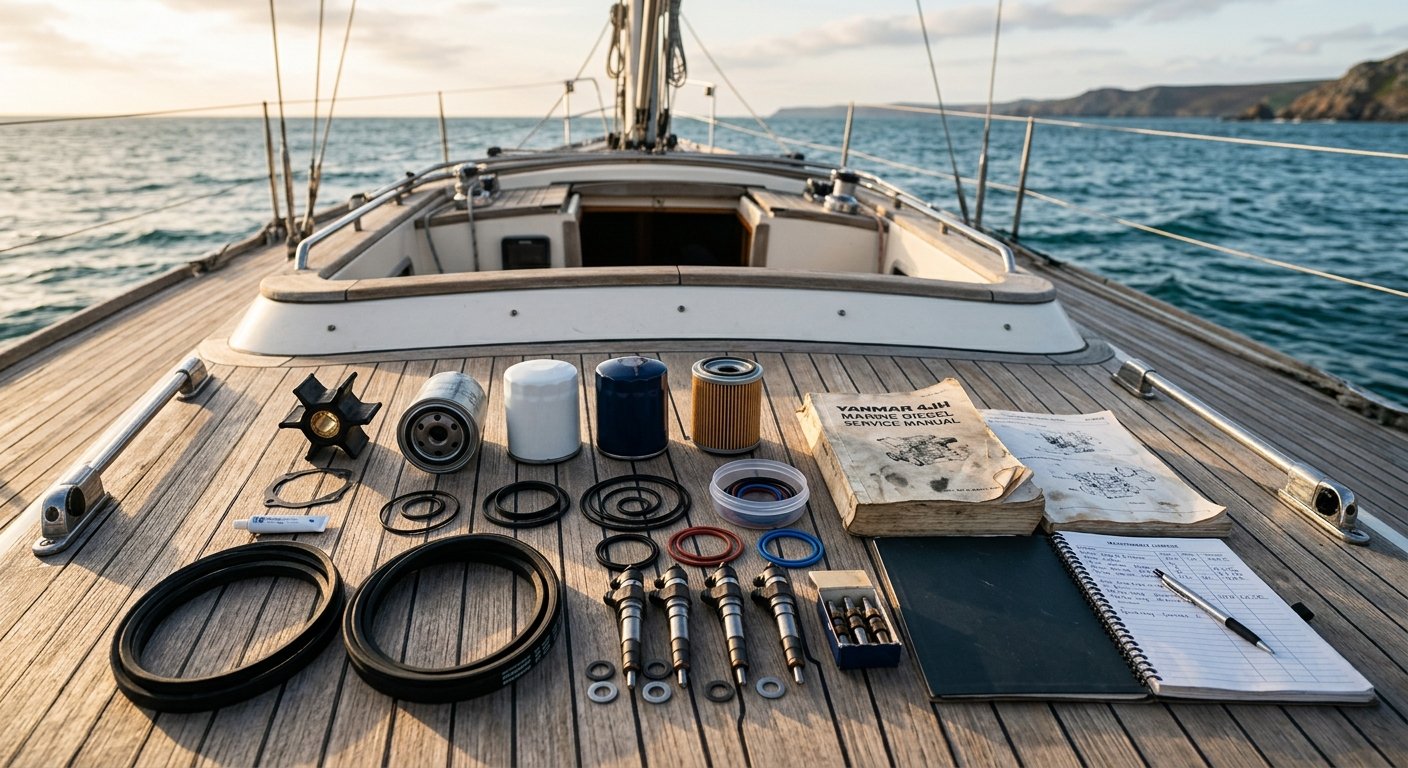
A fuel filter clogged with contaminated diesel. A raw water impeller that gives out thirty miles offshore. A serpentine belt that fails on a Sunday morning with no marina in sight. These aren’t worst-case hypotheticals—they’re the situations that separate prepared yacht owners from stranded ones. Knowing which marine diesel engine parts to keep onboard isn’t just smart seamanship; it’s the difference between a minor inconvenience and a serious emergency.
This guide covers the essential spare parts every diesel-powered vessel should carry, why each one matters, and how a thoughtful onboard inventory complements—rather than replaces—a relationship with a qualified marine diesel service provider.
Why Spare Parts Planning Matters for Marine Diesel Owners
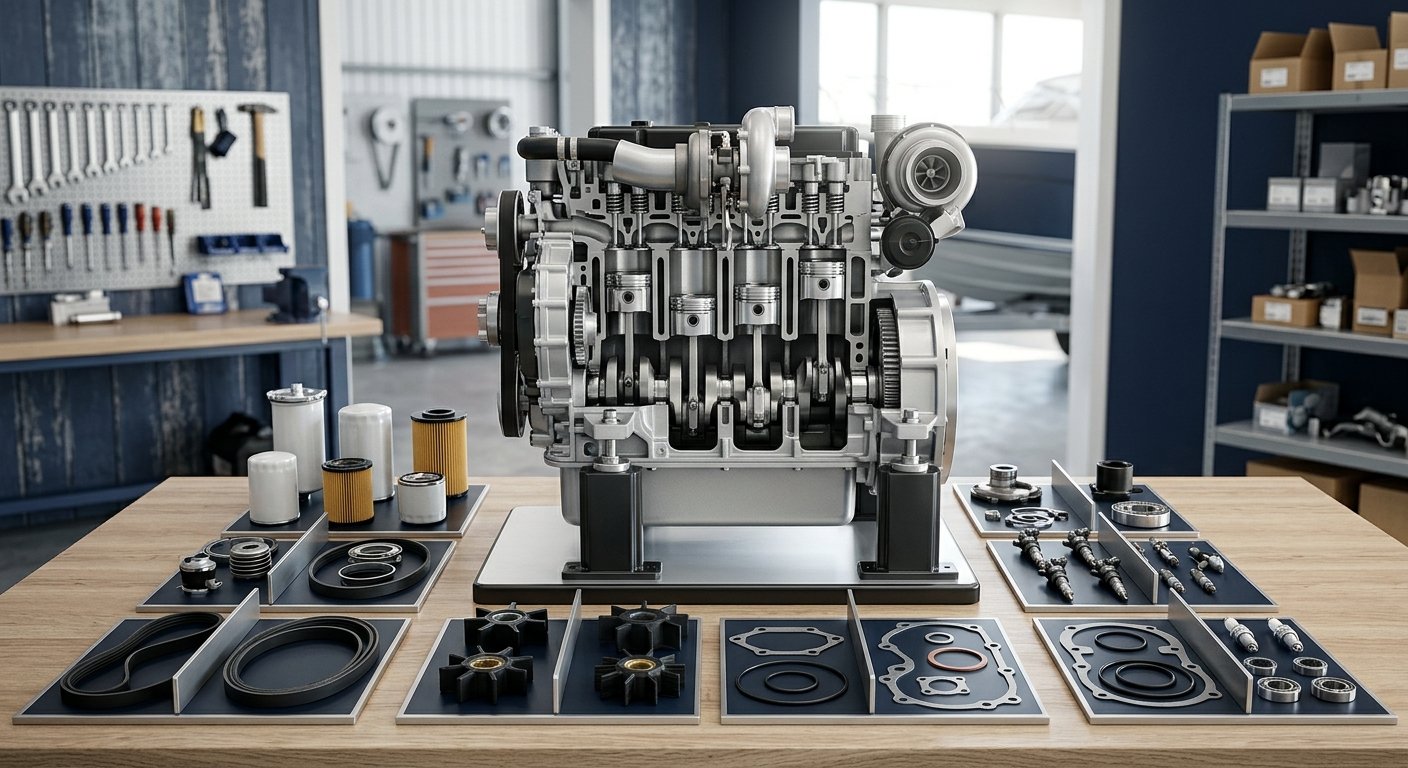
Marine diesel engines are built for durability. Brands like MAN, Volvo Penta, Cummins/Onan, and Kohler engineer their powerplants to run tens of thousands of hours under demanding conditions. But no engine is immune to wear, contamination, or the occasional component failure—especially in the salt-air environment of Southeast Florida and Caribbean waters.
The challenge is that when something fails at sea, you can’t simply pull into the nearest auto parts store. Dockside service technicians can reach you, but they need time to mobilize. Having the right parts onboard means a qualified technician—or in some cases, a trained crew member—can address common issues quickly and get you underway again.
According to the U.S. Coast Guard, mechanical failure remains one of the leading causes of boating distress calls each year. Many of these incidents involve fuel system issues or cooling system failures—problems that are often manageable with the right components onboard.
Filtration: Your First Line of Defense
Marine diesel filters are arguably the single most important category of spare parts to stock. Fuel contamination—particularly water intrusion and microbial growth common in warm Caribbean and South Florida waters—can clog primary and secondary fuel filters quickly and without warning.
Fuel Filters
- Primary fuel filter/water separator elements: Carry at least two replacement elements. These are your engine’s first defense against contaminated fuel.
- Secondary (fine) fuel filter elements: These protect the injection system directly. Stocking one to two spares is standard practice.
- Bleed screws and O-rings: Small components, but critical when you need to prime a fuel system after a filter change.
Oil and Air Filters
- One or two oil filter cartridges appropriate to your specific engine model
- An air filter element, particularly important in dusty marina environments or during Bahamas passages
Always source filters from authorized dealers or directly from your engine manufacturer’s parts network. Using non-OEM filtration on a MAN or Volvo Penta engine can void warranty coverage and compromise performance. DSOA’s marine diesel parts department stocks OEM-quality filtration components for all major brands and ships worldwide.
Cooling System Components
The raw water cooling system is one of the most common sources of engine trouble in marine environments. Impellers degrade over time, heat exchangers accumulate scale, and hoses become brittle from exposure to heat and saltwater. Engine cooling parts should be a priority in any onboard spare parts kit.
Raw Water Impeller
This is the single most commonly replaced cooling component on a marine diesel. Impellers are rubber vanes that push raw seawater through your heat exchanger. They can fail from running dry even briefly, or simply from age and fatigue. Carry at least one spare impeller—ideally two—and the appropriate gasket and O-ring for your specific raw water pump housing.
Belts and Hoses
Diesel engine belts—particularly the alternator/raw water pump drive belt—should be stocked in the correct size for your engine. A broken belt can simultaneously disable your alternator and your raw water pump, creating a compounded problem. Include:
- One or two spare drive belts in the correct OEM specification
- Several lengths of marine-grade coolant hose with appropriate clamps
- Hose repair tape for temporary fixes
Thermostat and Housing Gasket
A failed thermostat can cause chronic overheating or, conversely, an engine that never reaches operating temperature. Carrying a spare thermostat and housing gasket—both specific to your engine model—is inexpensive insurance against a frustrating failure.
Fuel Injection System Components
Fuel injection parts require more technical knowledge to service, but that doesn’t mean you shouldn’t carry basic spares. Injection system issues are best addressed by a factory-authorized technician, but having components available when a technician arrives significantly reduces downtime.
- Injector return line fittings and O-rings: These small components are prone to cracking and can cause hard starting or rough running.
- Lift pump diaphragm kit: If your engine has a mechanical lift pump, a rebuild kit takes up almost no space and can save you from a no-start situation.
- Fuel line sections and fittings: Carry enough to fabricate a short repair section in the appropriate diameter for your engine’s fuel system.
The American Boat and Yacht Council (ABYC) publishes standards for marine fuel systems that provide excellent guidance on fuel system integrity and maintenance expectations for recreational vessels.
Gaskets, Seals, and Hardware
Marine engine gaskets are consumable components that get replaced during scheduled service intervals—but they also fail unexpectedly. A leaking valve cover gasket or oil pan seal can cause messy, potentially damaging situations. A basic gasket and seal kit for your engine model should include:
- Valve cover gasket
- Raw water pump gasket set
- Exhaust manifold gasket (particularly important on high-hour engines)
- A selection of common O-rings and copper washers for banjo fittings
- RTV gasket maker appropriate for marine use
For marine generator owners—especially those running Cummins/Onan, Kohler, Northern Lights, or Westerbeke units—maintain a parallel spare parts kit for your generator following the same categories. Generators often run under heavier sustained loads than propulsion engines and may need attention more frequently.
Marine Engine Pumps
Beyond the raw water impeller already discussed, several other marine engine pumps deserve attention in your spares inventory:
- Freshwater circulating pump: Carries coolant through the engine block. A failed circulating pump leads to rapid overheating. Carry a spare unit or at minimum a rebuild kit.
- Engine-driven fuel pump rebuild kit: Where applicable by engine model.
- Bilge pump spares: While not an engine component, bilge pump failure in conjunction with a cooling system leak can compound into an emergency quickly.
Electrical and Ancillary Components
Engine-related electrical failures are common and often straightforward to address with the right parts onboard:
- Spare alternator (or at minimum a spare voltage regulator for your alternator model)
- Engine temperature sender and oil pressure sender
- Assorted marine-grade fuses and relay switches
- Zincs appropriate to your engine’s heat exchanger and shaft system
- Engine stop solenoid (a surprisingly common failure point that can leave you unable to shut down or start your engine)
Organizing Your Onboard Parts Kit
A parts kit is only useful if you can find what you need quickly. Use waterproof, labeled containers organized by system—fuel, cooling, electrical. Keep a laminated parts list with part numbers inside each container. Store the kit in a location accessible without moving heavy gear.
Before any offshore passage or extended cruise from Palm Beach County or Broward County, review your inventory, replace anything that was used, and confirm that all parts match your current engine configuration. Engines get rebuilt, components get upgraded—make sure your spare parts reflect your current installation.
For those heading into Caribbean waters, DSOA’s worldwide parts shipping capability means that even when you’re at anchor in a remote location, critical components can be expedited to the nearest hub for local delivery.
Frequently Asked Questions
How often should I replace my raw water impeller as a preventive measure?
Most marine diesel manufacturers and service professionals recommend inspecting and replacing raw water impellers annually or every 200 to 300 engine hours—whichever comes first. In Southeast Florida’s year-round boating environment, annual replacement is the practical standard for most vessels.
Can I use aftermarket filters on my Volvo Penta or MAN engine?
Using non-OEM filters on factory-warranted engines can void your warranty coverage and may not meet the filtration specifications required by your engine manufacturer. Always source filters from authorized dealers to protect your engine and maintain warranty validity.
What parts should I prioritize if I have limited storage space onboard?
Focus first on the components most likely to strand you: raw water impeller (with gasket and O-rings), primary and secondary fuel filter elements, and drive belts. These three categories address the most common causes of unexpected diesel engine failure at sea.
Does DSOA help boat owners identify the correct spare parts for their specific engine?
Absolutely. As a factory-authorized service center for MAN, Volvo Penta, John Deere, Cummins/Onan, Kohler, Northern Lights, and Westerbeke, DSOA’s parts team can identify the correct OEM components for your engine by serial number and ship them worldwide. Contact us before your next offshore passage to build the right inventory.
Should I carry spare parts for my marine generator separately?
Yes. Your generator operates independently from your propulsion engines and has its own maintenance schedule and wear components. A separate generator-specific parts kit—mirroring the categories above—ensures you’re prepared for issues in both systems.
Partner With Experts Who Know Your Engine
Stocking the right marine diesel engine parts is sound preparation—but it works best as part of a broader maintenance strategy. Regular service by factory-authorized technicians catches developing problems before they become failures, and it ensures your onboard spare parts inventory is actually matched to your current engine configuration.
DSOA serves yacht owners throughout Palm Beach County and Broward County with comprehensive marine diesel engine repair and maintenance services, and our dockside service team can come to you when it matters most. Whether you need help building a smart onboard parts kit, sourcing hard-to-find components, or scheduling your next service interval, we’re ready to support you.
Contact DSOA today to speak with a factory-authorized marine diesel specialist about your vessel’s needs—before you need us at sea.
