
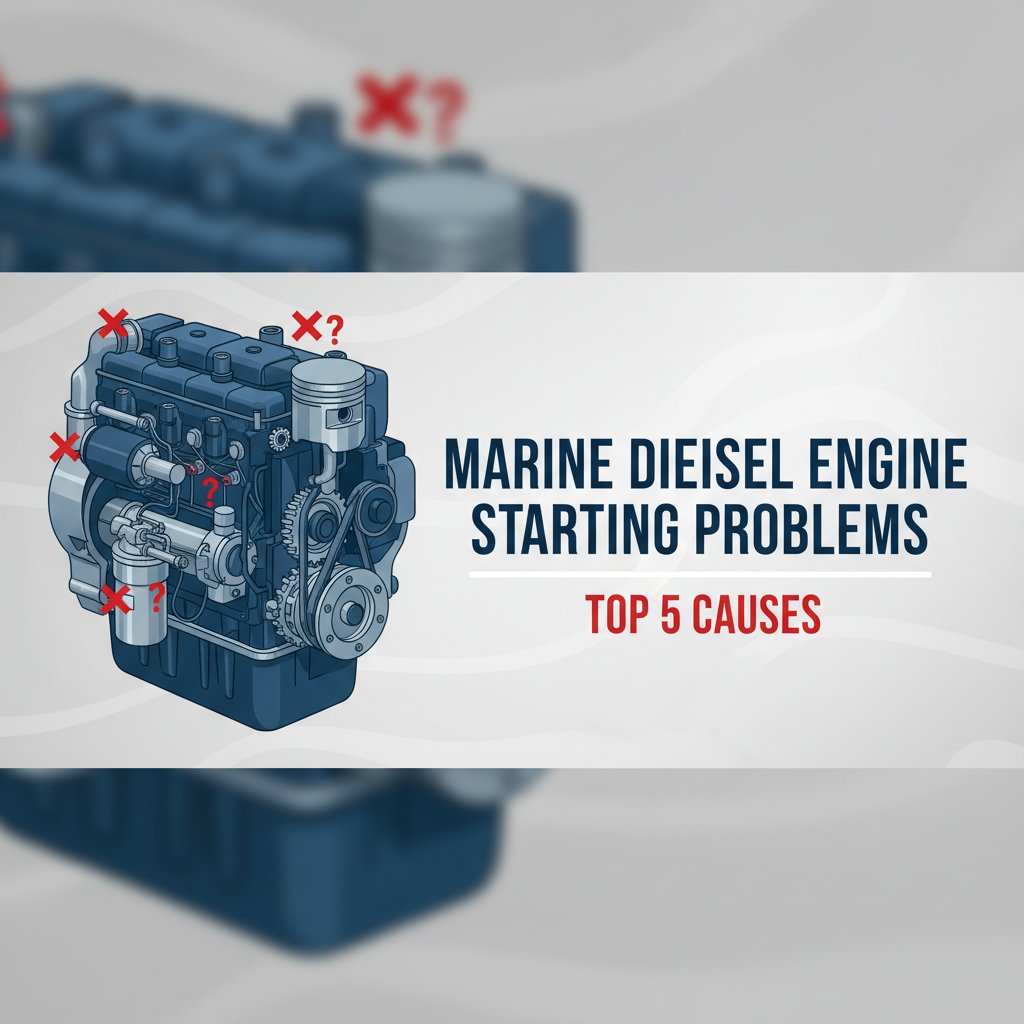
When you turn the key and nothing happens—or worse, the engine cranks endlessly without firing—the frustration is immediate. Marine diesel engine starting problems can derail your entire day on the water, strand you at the dock, or compromise critical systems aboard your vessel. Understanding the root causes of these issues isn’t just about getting back out on the water faster; it’s about preventing costly damage and ensuring your vessel’s reliability when you need it most.
Marine diesel engines are remarkably durable, but their starting systems involve multiple interdependent components working in precise harmony. When one element fails, the entire starting sequence breaks down. For yacht owners in Southeast Florida and throughout the Caribbean, where vessels often sit for extended periods between uses and operate in harsh saltwater environments, starting problems represent one of the most common service calls technicians receive.
1. Battery and Electrical System Failures
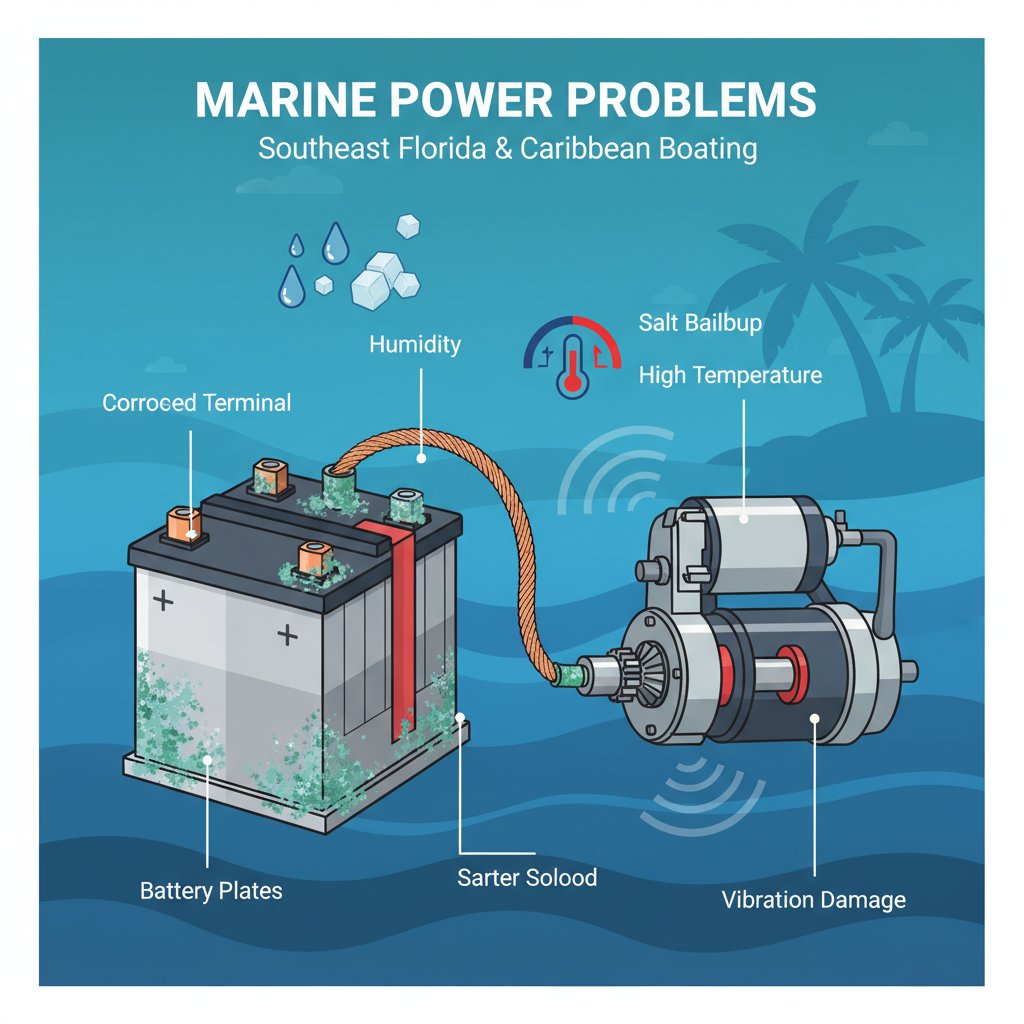
The most frequent culprit behind boat engine not starting issues traces back to the electrical system. Unlike automotive applications, marine batteries face uniquely challenging conditions—constant vibration, temperature fluctuations, humidity, and the corrosive effects of saltwater exposure. These factors accelerate battery degradation and create electrical connection problems that prevent reliable starting.
Battery Condition and Capacity
Marine diesel engines require substantial cranking power, particularly larger engines from manufacturers like MAN, Cummins, and Volvo Penta. A weakened battery may show sufficient voltage when tested without load but fail to deliver the amperage needed during actual cranking. As batteries age, their internal resistance increases while their capacity to deliver surge current decreases. In warm climates like South Florida, battery life typically ranges from three to five years, with heat accelerating the chemical degradation process.
Cold cranking amps (CCA) ratings matter significantly for diesel marine engine repair scenarios. Even in tropical environments, a battery with insufficient CCA rating for your specific engine will struggle during starting, especially after the vessel has been idle. The compression ratios in diesel engines demand more from starting systems than gasoline engines require.
Connection Points and Corrosion
Corroded battery terminals and cable connections create resistance that prevents adequate current flow to the starter motor. White, green, or blue crystalline deposits at battery posts indicate corrosion that must be addressed. Beyond the obvious battery terminals, marine diesel troubleshooting requires inspecting the full electrical path—negative ground connections to the engine block, positive cable runs to the starter solenoid, and all intermediate junction points.
Professional technicians examine these connections systematically, using voltage drop testing to identify problematic resistance points that might not be visually apparent. Factory-authorized service ensures these inspections follow manufacturer specifications for your specific engine brand.
2. Fuel System Complications
Diesel fuel delivery problems represent the second most common cause of starting failures. Unlike gasoline engines that use spark ignition, diesels depend entirely on proper fuel atomization and compression heating for combustion. Any interruption in fuel supply prevents starting, regardless of how well other systems function.
Air in the Fuel System
Air infiltration into diesel fuel systems creates a condition where the engine cranks normally but refuses to fire. This occurs when fuel filters are changed improperly, when connections develop small leaks on the suction side of the fuel system, or when fuel tanks run too low. Air pockets prevent adequate fuel pressure from reaching injectors, making starting impossible until the system is properly bled.
Bleeding procedures vary significantly between engine manufacturers. Volvo Penta, John Deere, and Westerbeke engines each have specific bleeding sequences that must be followed correctly. Attempting to bleed fuel systems without proper knowledge can introduce additional air or damage sensitive components. This is precisely why boat engine repair Fort Lauderdale professionals emphasize factory-authorized service—technicians trained on specific brands understand the nuances of each system.
Contaminated or Gelled Fuel
Fuel quality issues plague marine diesel engines, particularly in the Caribbean where vessels may bunker fuel from various sources. Water contamination promotes microbial growth that clogs filters and creates sludge throughout the fuel system. In rare cold snaps, even in subtropical climates, diesel fuel can gel if its cloud point isn’t appropriate for temperature conditions.
Clogged fuel filters restrict flow to the point where the engine cannot start or runs roughly if it does fire. Primary and secondary fuel filters should be replaced according to manufacturer schedules, not just when problems occur. Preventive maintenance catches developing fuel quality issues before they strand you at the dock.
3. Starter Motor and Solenoid Problems
The starter motor itself can fail or develop problems that prevent it from cranking the engine with sufficient speed for starting. Marine starters endure harsh conditions, and their location low in the engine compartment often exposes them to moisture, heat, and occasional water intrusion during rough seas or flooding events.
Starter Motor Degradation
Internal wear in the starter motor—worn brushes, degraded armature windings, or damaged bearings—reduces cranking power. You might hear a slow, labored cranking sound rather than the robust rotation needed for diesel starting. In some cases, the starter engages but slips without turning the engine flywheel effectively, indicating worn drive mechanism components.
Testing starter draw current reveals whether the motor operates within specifications or demands excessive amperage due to internal problems. This diagnostic step requires proper equipment and knowledge of normal operating parameters for your specific engine brand, whether MAN, Cummins/Onan, Kohler, or Northern Lights.
Solenoid and Relay Failures
The starter solenoid acts as a heavy-duty relay, engaging the starter motor when you turn the key. Solenoid failures manifest as clicking sounds without cranking, intermittent starting, or complete silence when the key is turned. Internal contact points can burn or corrode, preventing the solenoid from completing the high-current circuit to the starter motor.
Marine diesel service includes examining the entire starting circuit—from the ignition switch through neutral safety switches, solenoids, and the starter motor itself. Each connection point represents a potential failure location that systematic troubleshooting must evaluate.
4. Glow Plug and Cold Starting System Failures
Diesel engines use compression heat for ignition, but cold metal absorbs this heat during starting attempts. Glow plugs preheat combustion chambers to facilitate starting, particularly important in cooler morning temperatures or after extended idle periods. When glow plug systems fail, starting becomes difficult or impossible.
Individual Glow Plug Failures
Each cylinder typically has its own glow plug, and these can fail individually. A single failed glow plug in a six-cylinder engine might not prevent starting but will cause rough running until that cylinder warms sufficiently to fire consistently. Multiple glow plug failures make starting extremely difficult or impossible.
Testing glow plugs requires measuring their resistance and current draw, procedures that vary by manufacturer. Volvo Penta and John Deere engines, for example, use different glow plug technologies and control systems. Factory-authorized technicians have the diagnostic tools and knowledge specific to each brand.
Glow Plug Controller Problems
Modern marine diesels use electronic controllers to manage glow plug operation, cycling them on for predetermined periods based on engine temperature. Controller failures prevent glow plugs from energizing, even if the plugs themselves function correctly. Diagnosing these issues requires understanding the control logic and having access to manufacturer-specific diagnostic equipment.
5. Engine Mechanical Issues
While less common than electrical or fuel problems, mechanical issues within the engine itself can prevent starting. These typically develop over time rather than appearing suddenly, often preceded by warning signs that attentive owners and captains might notice.
Low Compression
Diesel engines require high compression ratios to generate the heat needed for fuel ignition. Worn piston rings, scored cylinder walls, or valve problems reduce compression to levels insufficient for starting. An engine with low compression typically cranks faster than normal—there’s less resistance when compression pressure is inadequate.
Compression testing reveals cylinder-by-cylinder conditions, identifying whether problems are widespread or isolated to specific cylinders. This diagnostic procedure should be performed by qualified technicians familiar with your engine brand’s specifications.
Seized or Restricted Components
Corrosion, lack of use, or lubrication failures can cause internal engine components to seize or move with excessive resistance. The engine may not crank at all, or cranking may be abnormally slow despite a healthy battery and electrical system. Internal saltwater leaks from failed heat exchangers or compromised seals can cause corrosion that leads to seizure.
Identifying mechanical problems requires experienced assessment. What appears to be an electrical issue—slow cranking—might actually indicate internal mechanical resistance that demands immediate attention to prevent catastrophic engine damage.
Preventive Maintenance: Your Best Defense
The overwhelming majority of marine diesel engine starting problems are preventable through proper maintenance schedules. Regular service intervals catch developing issues before they cause breakdowns. Factory-authorized maintenance ensures that technicians familiar with MAN, Volvo Penta, John Deere, Cummins/Onan, Kohler, Northern Lights, and Westerbeke engines apply brand-specific knowledge to your vessel’s unique requirements.
Professional marine diesel service includes systematic inspection of all starting-related components during routine maintenance visits. Batteries are load tested, electrical connections are cleaned and protected, fuel systems are monitored for contamination, and mechanical conditions are assessed through oil analysis and visual inspection. This proactive approach identifies weaknesses before they strand you.
For vessels operating in Southeast Florida and throughout the Caribbean, the convenience of dockside service eliminates the hassle of arranging engine removal or facility transport. Experienced technicians bring factory-authorized expertise directly to your vessel, performing diagnostics and repairs at your dock or mooring.
When to Call Professional Technicians
While understanding these common starting problems helps you communicate effectively with service providers, marine diesel troubleshooting requires specialized knowledge, diagnostic equipment, and experience. Modern marine diesels incorporate complex electronic controls, high-pressure fuel injection systems, and integrated monitoring that demand professional-level tools and training.
Attempting repairs without proper expertise risks causing additional damage that increases repair costs and extends downtime. Factory-authorized service protects your investment by ensuring correct diagnosis and repair procedures specific to your engine manufacturer.
When starting problems occur, professional assessment identifies the root cause rather than simply addressing symptoms. This comprehensive approach prevents recurring issues and ensures reliable operation when you need it most.
Keep Your Vessel Ready When You Are
Marine diesel engine starting problems don’t have to compromise your time on the water. Understanding these five common causes—electrical failures, fuel system issues, starter problems, glow plug malfunctions, and mechanical conditions—helps you recognize warning signs and communicate effectively with service professionals.
DSOA provides factory-authorized marine diesel service throughout Southeast Florida and the Caribbean, with convenient dockside service and worldwide parts shipping capabilities. Our technicians specialize in MAN, Volvo Penta, John Deere, Cummins/Onan, Kohler, Northern Lights, and Westerbeke engines, bringing manufacturer-specific expertise directly to your vessel.
Don’t wait for starting problems to strand you at the dock. Contact DSOA to schedule preventive maintenance that keeps your marine diesel engines reliable and ready. Professional service today prevents costly breakdowns tomorrow.
