
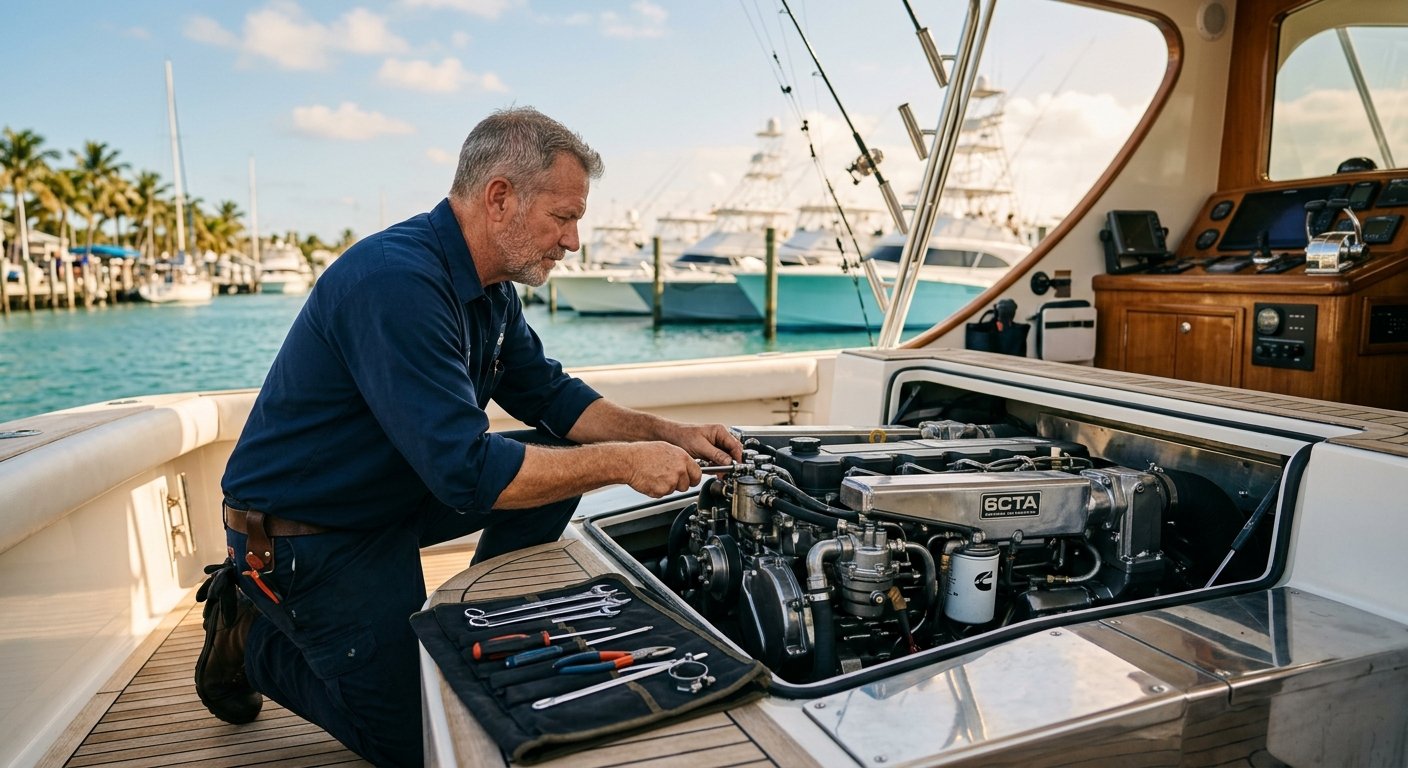
Your vessel is prepped, your crew is ready, and the engine turns over — but won’t fire. Before suspecting a major mechanical failure, consider one of the most common culprits in marine diesel troubleshooting: air trapped in the fuel system. Air locks are a frequent reason boat owners face a frustrating “engine not starting” scenario, and understanding the bleeding process — and when it demands professional attention — can save you time, money, and a ruined day on the water.
This guide explains what fuel system bleeding means for marine diesel engines, why it matters, what causes air ingestion in the first place, and how factory-authorized technicians approach the process correctly across the diesel brands that power Southeast Florida and Caribbean yachts.
What Is Fuel System Bleeding and Why Does It Matter?
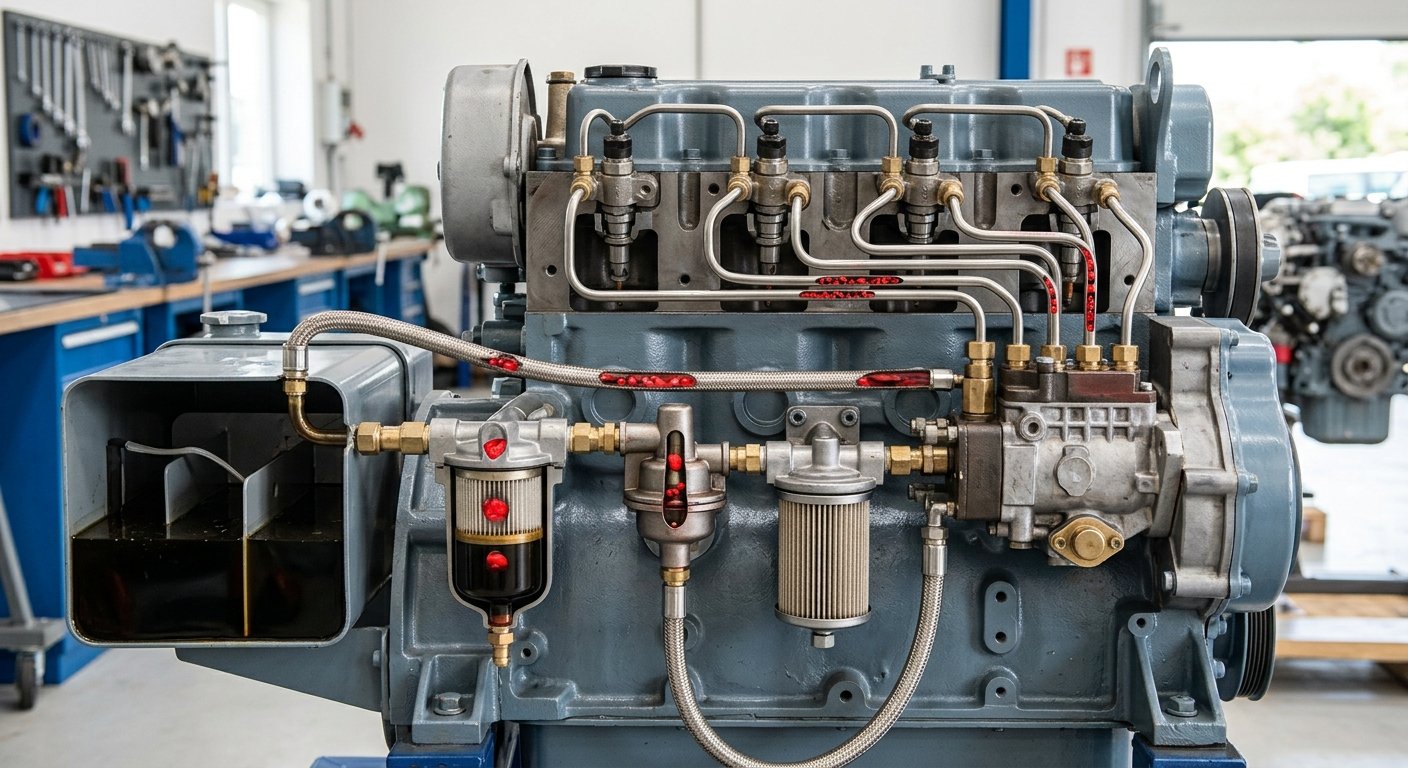
Marine diesel engines are compression-ignition systems — they rely on precisely metered, pressurized fuel delivery to combust efficiently. Unlike gasoline engines, diesel powerplants have no spark plugs to compensate for inconsistencies. The fuel injection system must deliver fuel at the right pressure, at the right moment, in the right quantity. Air bubbles in the fuel circuit disrupt this precision entirely.
“Bleeding” the fuel system refers to the process of purging trapped air from fuel lines, filters, lift pumps, injection pumps, and injector lines so that only clean, uninterrupted diesel flows through the system. When air is present, the engine either cranks without starting, runs roughly and misfires, or shuts down unexpectedly under load — all of which are textbook symptoms in marine diesel troubleshooting.
According to BoatUS, air in the fuel system is one of the leading causes of diesel engine failure to start aboard recreational vessels. It’s a problem that disproportionately affects boats that sit idle for extended periods — a reality for many Palm Beach County and Broward County yacht owners who leave their vessels at the dock for weeks between uses.
Common Causes of Air in a Marine Diesel Fuel System
Understanding why air enters the system helps prevent repeat occurrences. The most frequent causes include:
- Running the fuel tank to empty: When a tank runs dry, air is drawn through the entire fuel circuit, from tank to injectors. Refueling doesn’t automatically purge that air.
- Fuel filter replacement: Any time a primary or secondary fuel filter is changed — even as part of routine maintenance — air is introduced into the system. Proper bleeding must follow.
- Loose or cracked fuel line fittings: Even small leaks on the suction side of the lift pump allow air to be drawn in during engine operation. This can cause intermittent stalling and hard starting.
- Long periods of inactivity: Fuel can drain back toward the tank from elevated filter housings or injection components, creating an air pocket that must be displaced before the engine will start reliably.
- Injector or injection pump service: Any work involving the high-pressure side of the system requires careful bleeding before the engine is returned to service.
These causes are common across the major marine diesel brands — MAN, Volvo Penta, John Deere, Cummins/Onan, Kohler, Northern Lights, and Westerbeke — though the specific bleeding procedures and component locations vary significantly by manufacturer and engine model.
The Bleeding Process: How Professional Technicians Approach It
It’s important to understand that bleeding procedures are not universal. Each engine manufacturer publishes specific protocols that must be followed in sequence. Factory-authorized service technicians are trained to those exact specifications, which is why attempting to bleed a fuel system without proper knowledge of the engine in question can lead to incomplete purging, damaged components, or injury from pressurized fuel.
That said, understanding the general stages of the process helps yacht owners recognize what’s involved and why it requires professional execution on modern diesel systems.
Stage 1: Low-Pressure Circuit Priming
Most marine diesel fuel systems have a hand-operated priming pump — either built into the primary fuel filter housing or the lift pump itself. The technician uses this pump to manually push fuel through the low-pressure circuit: from the tank, through the primary filter, through the secondary filter, and toward the injection pump. Bleed screws at the filter housings are opened to allow air to escape as fuel fills the circuit.
On engines like Volvo Penta and Cummins marine models, this priming pump is straightforward to access. On larger MAN or John Deere marine installations, the circuit architecture may be more complex, with multiple filter stages and remote-mounted components that require systematic approach.
Stage 2: Injection Pump and High-Pressure Lines
Once the low-pressure circuit is purged, attention moves to the injection pump and the high-pressure lines feeding each injector. This stage requires greater care because high-pressure diesel fuel is a serious safety hazard — injection pressures on modern common-rail systems can exceed 30,000 PSI, capable of penetrating skin and causing severe injury.
The CDC’s National Institute for Occupational Safety and Health categorizes high-pressure fluid injection injuries as medical emergencies. This is one of the most important reasons that high-pressure fuel system work belongs exclusively in the hands of trained, factory-authorized technicians — not as a dockside DIY project.
On mechanically injected engines (common on older Westerbeke, Northern Lights generators, and some John Deere marine configurations), loosening injector line fittings slightly while cranking allows air to escape. On modern common-rail engines, the engine management system often handles high-pressure circuit priming electronically once the low-pressure circuit is solid — but a technician must verify system pressure with diagnostic tools before clearing the engine for service.
Stage 3: Verification and Test Start
After all bleed points are secured, the technician performs a controlled start sequence, monitoring for smooth idle, absence of white smoke (a hallmark of air-in-fuel combustion), and stable oil and fuel pressure readings. Any roughness at idle after bleeding may indicate incomplete purging or an underlying issue such as a failing lift pump or compromised injector.
When Bleeding Alone Doesn’t Solve the Problem
If an engine fails to start or continues to run rough after a thorough bleeding procedure, air ingestion is likely symptomatic of a deeper issue rather than the root cause. Common culprits include:
- A failing or weak mechanical lift pump unable to maintain adequate suction
- A cracked or deteriorated fuel hose on the suction side of the system
- A faulty check valve allowing fuel to drain back to the tank
- Contaminated fuel introducing water or particulates that damage injectors or the injection pump
- A clogged primary filter restriction so severe the lift pump cannot draw adequate volume
These conditions require comprehensive diesel marine engine repair, not simply a repeat bleeding. A qualified technician will use pressure testing, vacuum testing on the suction side, and fuel quality analysis to identify the underlying fault.
For yacht owners in Palm Beach County and Broward County, DSOA’s dockside service capability means a factory-authorized technician can come to your vessel — eliminating the need to transport the boat to a yard for diagnosis and bleeding procedures.
Preventive Maintenance: Reducing Air Lock Risk
The most effective strategy for avoiding air-related starting failures is a disciplined marine diesel service schedule. Key preventive measures include:
- Replacing primary and secondary fuel filters at manufacturer-specified intervals — and always bleeding the system properly afterward
- Keeping fuel tanks adequately filled, particularly when the vessel will sit idle
- Inspecting fuel line connections, hose condition, and filter housing O-rings during each service visit
- Using quality diesel fuel and appropriate fuel stabilizers for extended storage periods
- Scheduling pre-season inspections to identify degraded components before they cause problems underway
Quality marine diesel engine parts also play a direct role in system integrity. DSOA maintains inventory and offers worldwide parts shipping for all brands in its factory-authorized portfolio — ensuring that filter elements, O-rings, lift pump diaphragms, and other fuel system components meet OEM specifications rather than aftermarket alternatives of uncertain quality.
Frequently Asked Questions
Why does my boat engine crank but not start after sitting at the dock?
Fuel drainage from filter housings and lines during extended inactivity is a frequent cause. Air replaces the fuel that drains back toward the tank, creating an air lock that prevents the injection system from building pressure. A professional bleeding procedure typically resolves this, though a technician will also check for any underlying leak or check-valve issues that allowed drainage to occur.
How do I know if air in the fuel system is the problem versus something else?
Classic air-in-fuel symptoms include: cranking without starting, white or grayish smoke from the exhaust during brief starts, rough idle with misfires, and unexpected shutdown at low load. A factory-authorized technician can confirm air ingestion through fuel pressure testing on the low-pressure circuit and suction-side vacuum readings before and after priming.
Can I bleed my marine diesel engine myself?
Low-pressure priming with a hand pump is something experienced owners familiar with their specific engine may perform. However, any work involving the high-pressure injection circuit — including loosening injector lines — poses serious safety risks from pressurized fuel and should be performed only by trained professionals. Additionally, improper bleeding can leave residual air that causes engine damage on startup.
How often should marine diesel fuel filters be changed?
Most manufacturers recommend primary and secondary fuel filter replacement every 250–500 operating hours or annually, whichever comes first — but always consult your engine’s specific service manual. Filter change intervals may need to shorten in areas with lower fuel quality or when operating in tropical climates where microbial growth in fuel tanks is more common.
Does DSOA stock marine diesel fuel system parts for immediate service?
Yes. DSOA maintains parts inventory for all brands in its factory-authorized service portfolio, including MAN, Volvo Penta, John Deere, Cummins/Onan, Kohler, Northern Lights, and Westerbeke. Worldwide parts shipping is available for vessels not located in Southeast Florida.
Schedule Marine Diesel Service with DSOA
An air-locked fuel system is a solvable problem — but it’s also a signal worth taking seriously. Whether your vessel needs a straightforward bleeding procedure, a thorough fuel system inspection, or a more complex repair, DSOA’s factory-authorized technicians bring four decades of hands-on expertise to every service call across Palm Beach County and Broward County.
Don’t let a fuel system issue keep your yacht at the dock. Contact DSOA to schedule dockside service or speak with a technician about your engine’s symptoms — and get back on the water with confidence.
