
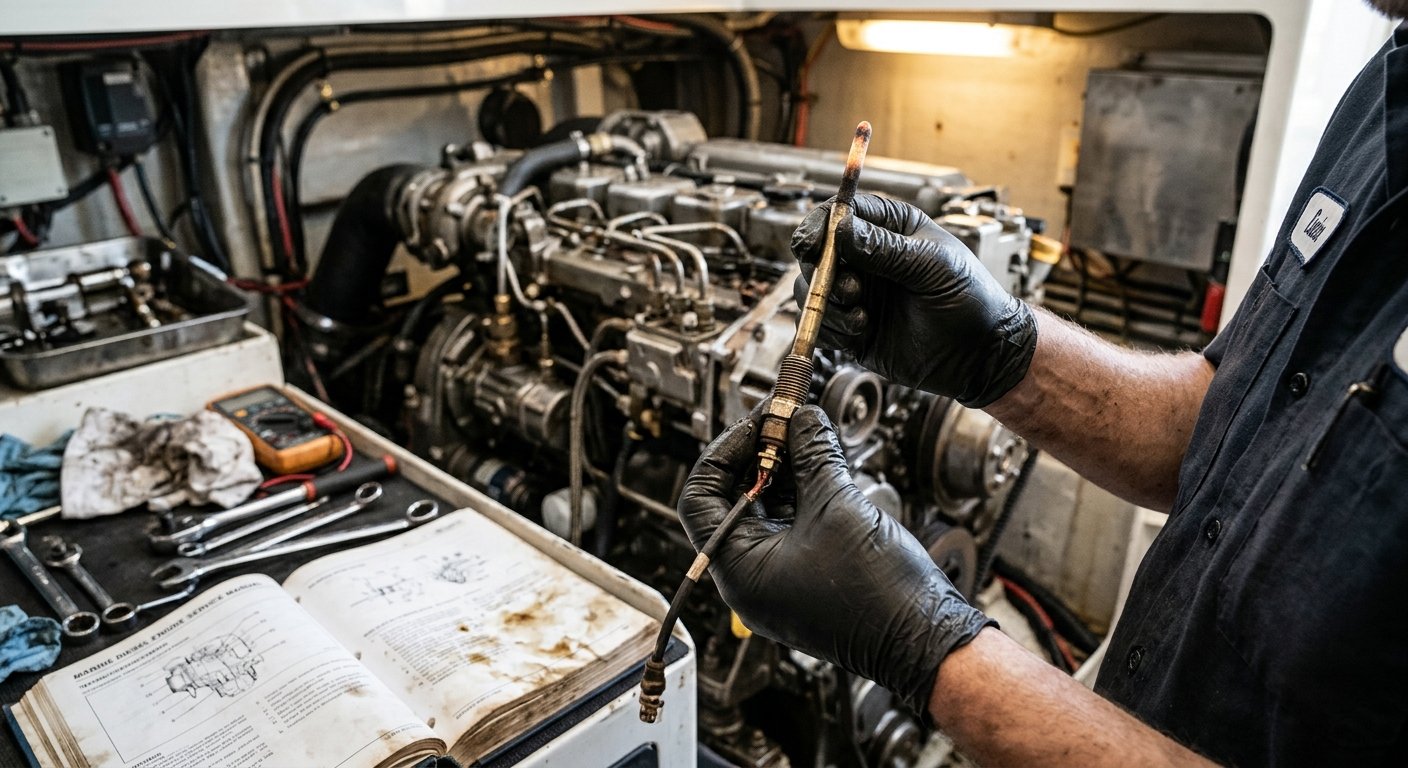
Glow plugs are electrically heated elements inside diesel engine cylinders that pre-warm the combustion chamber so fuel can ignite reliably during cold starts. When they fail, your marine diesel engine may crank but refuse to fire—or start roughly and emit excessive white or grey smoke. Understanding how they work and when to replace them is essential preventive care for any diesel-powered vessel.
- Glow plugs heat the combustion chamber before and during startup, compensating for low cylinder temperatures that prevent diesel ignition.
- Hard starting, white exhaust smoke, misfires, and illuminated glow plug warning lights are the clearest signs of failure.
- Replacing glow plugs on schedule—and with OEM-specified parts—protects injectors, turbochargers, and other downstream components.
- Marine diesel engines and generators from brands like Volvo Penta, Cummins/Onan, John Deere, and Westerbeke each have specific plug specifications that must be matched exactly.
- Factory-authorized technicians have the tools and training to test, diagnose, and replace glow plugs without damaging the cylinder head threads.
What Glow Plugs Actually Do
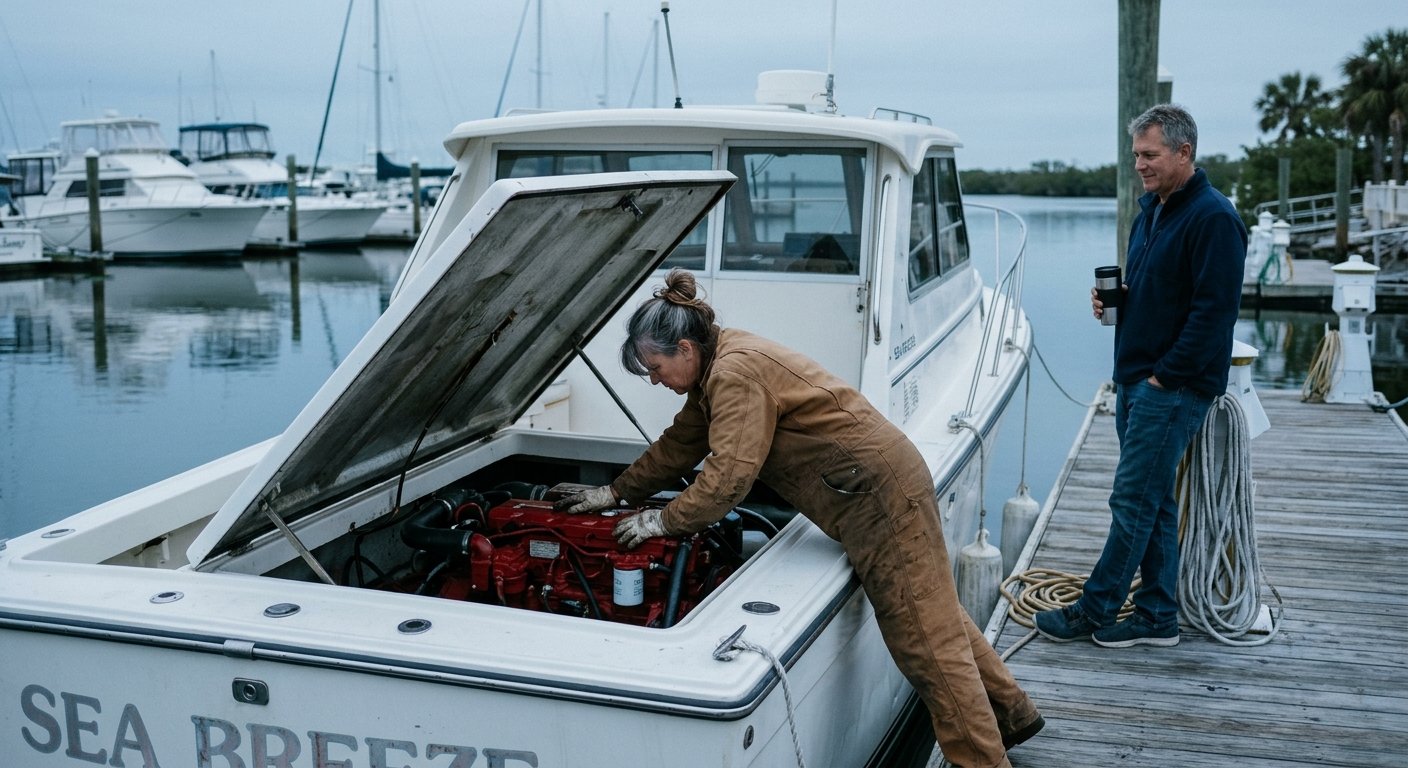
Unlike gasoline engines, diesel engines have no spark plugs. Combustion relies entirely on the heat generated when air is compressed inside the cylinder—a process called compression ignition. At normal operating temperature, the metal mass of the engine block retains enough heat to support this process. But during a cold start, especially after the vessel has sat idle, cylinder temperatures can drop well below the threshold needed for reliable diesel combustion.
That’s where glow plugs come in. Each plug is a pencil-shaped heating element threaded directly into the cylinder head, with its tip extending into the prechamber or directly into the combustion chamber depending on engine design. When you turn the key or push the start button, the glow plug controller sends current through the plug’s internal coil, raising its tip temperature rapidly—often to 850°C or higher, according to Bosch Automotive’s glow plug technical documentation. This intense heat ignites the injected fuel mist reliably, even when the block itself is cold.
Modern engines use “self-regulating” or pressure-sensor glow plugs that remain active beyond the initial crank phase, supporting combustion through the first several minutes of operation. This is especially relevant for marine diesels operating in the variable conditions common across Southeast Florida and the Caribbean, where engines may sit unused between charters or seasonal voyages.
Marine diesel engines often run at lower RPM under sustained load compared to automotive applications, which means combustion quality during warmup has a measurable impact on injector and piston ring longevity. A glow plug that’s merely “weak” rather than fully failed can still degrade long-term engine health by causing incomplete combustion during those critical early minutes of operation.
Common Signs Your Glow Plugs Are Failing
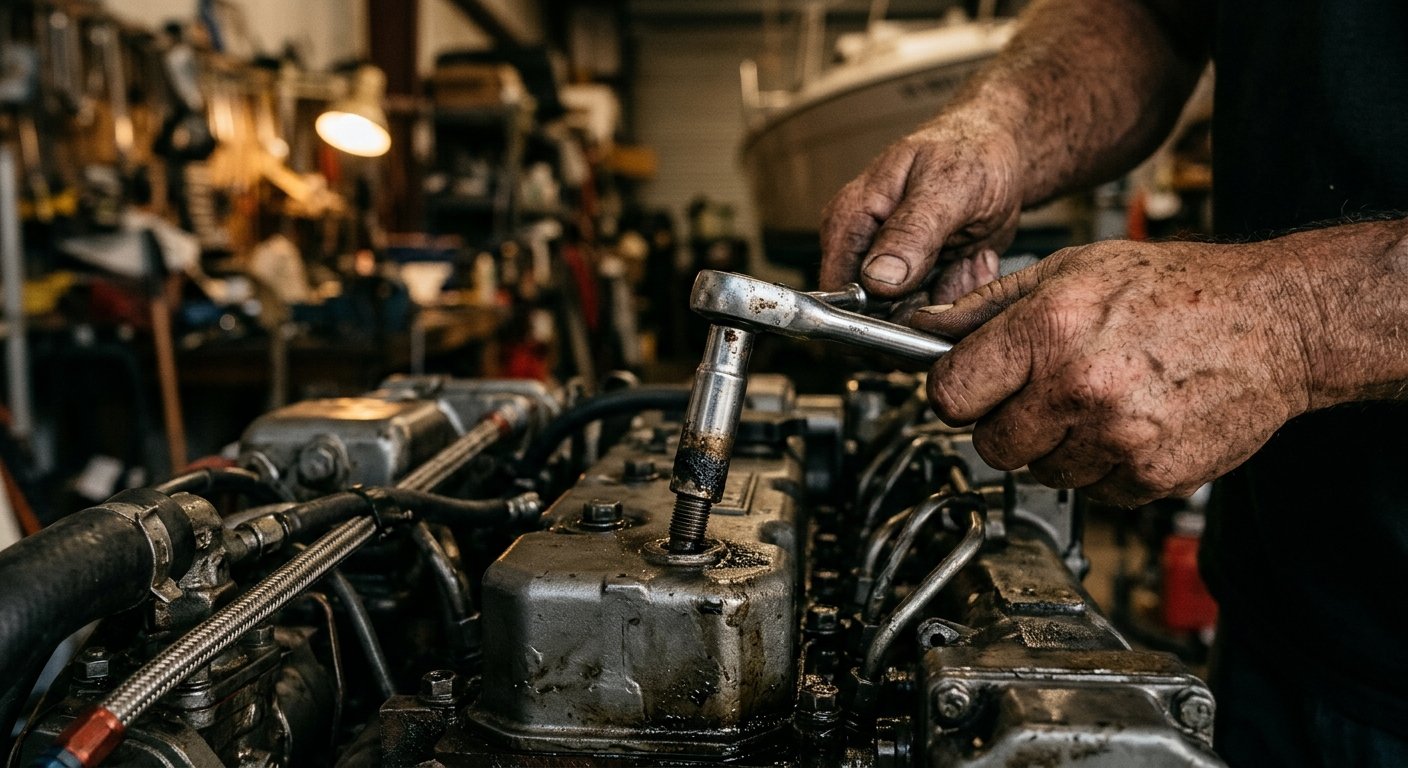
Glow plug failure is rarely sudden. It typically presents as a cluster of symptoms that worsen gradually. Recognizing these early means the difference between a quick parts swap and a more expensive downstream repair. A boat engine not starting after prolonged downtime is one of the most common complaints traced back to glow plug issues—but it’s not the only one.
- Hard or extended cranking before startup: The engine turns over repeatedly before catching, particularly when the block is cold.
- White or grey exhaust smoke during warmup: Unburned fuel passes through the cylinder due to incomplete ignition and exits as visible smoke that should clear as the engine warms—but with failed plugs, it may persist.
- Rough idle immediately after startup: Misfires in one or more cylinders during the warmup phase cause a lumpy, uneven idle that typically smooths once the engine reaches operating temperature.
- Glow plug warning light staying on: Many engines equipped with electronic glow plug controllers will illuminate a dashboard indicator if the system detects a failed plug or open circuit.
- Increased fuel consumption during warmup: Inefficient combustion during the cold-start phase can translate to measurably higher fuel use before the engine comes up to temperature.
If your vessel is experiencing any of these, a marine engine inspection should be scheduled promptly. Left unaddressed, poor combustion during startup places additional stress on injectors, pistons, and the turbocharger—components that are far more expensive to service than glow plugs.
Attempting to force-start a diesel repeatedly when glow plugs are failing can hydraulically lock the engine if unburned fuel accumulates in a cylinder. This is a serious mechanical event that can bend connecting rods or crack the block. If your engine cranks but won’t fire after two or three attempts, stop and call for professional diagnosis.
How Long Do Marine Diesel Glow Plugs Last?

Service life varies by engine design, operating environment, and how often the vessel is used. The NGK technical guidance on glow plug maintenance notes that many modern glow plugs are rated for approximately 100,000 engine-start cycles, though marine environments introduce additional factors. Saltwater humidity, vibration, and irregular use patterns can accelerate wear. Engines that sit for extended periods between uses tend to cycle glow plugs harder than those run regularly.
As a practical guideline, most factory maintenance schedules for marine diesels from brands like Volvo Penta, John Deere, and Westerbeke recommend inspecting glow plugs as part of a comprehensive service interval—typically aligned with major coolant or injection system service. Always defer to the OEM service manual for your specific engine model, as specifications vary significantly across brands and engine families.
A glow plug that’s merely “weak” rather than fully failed can still degrade long-term engine health by causing incomplete combustion during the critical first minutes of operation.
The Replacement Process: What to Expect
Replacing marine diesel glow plugs requires more precision than the job might suggest. The plugs are threaded into the cylinder head under significant torque, and in engines with high hours or corrosion exposure—common in saltwater environments—removing them without damaging the head threads is the most critical step of the job.
Electrical Testing First
Before any physical removal, a technician tests each plug’s resistance with a multimeter. A plug with an open circuit (infinite resistance) or a short to ground is confirmed failed. This step also identifies whether the glow plug controller itself has failed—a separate component that can mimic plug symptoms.
Pre-Soak and Careful Extraction
Penetrating lubricant is applied around each plug body and allowed to dwell, particularly on engines with substantial hours or known corrosion. This is critical on marine engines in saltwater service. Plugs are removed slowly, often in stages, to avoid snapping the plug body and leaving the threaded section embedded in the head.
Thread Inspection and Cleaning
Once plugs are out, the threads in the cylinder head are inspected for damage or carbon buildup. Thread repair inserts may be needed on high-hour engines. Clean threads are essential for achieving the correct installation torque on the new plugs.
OEM-Matched Replacement Installation
New plugs—matched exactly to the OEM specification for your engine—are installed to the manufacturer’s torque value. Under-torquing causes combustion leaks; over-torquing risks stripping threads or damaging the plug body. A calibrated torque wrench is non-negotiable.
System Test and Verification
After installation, the glow plug circuit is tested under load, the engine is started, and combustion quality is observed. White smoke at startup should clear quickly. Any persistent issues point to a related problem—injectors, compression, or the controller—rather than the plugs themselves.
This is not a job where using non-OEM parts saves money in the long run. Each engine family—whether a Cummins/Onan generator set, a MAN propulsion engine, or a Kohler genset—has specific plug geometries, heat ranges, and electrical characteristics. Substituting an incorrect plug risks misfires, detonation, or physical contact with the piston at TDC.
Why Factory-Authorized Service Matters Here
The detail that separates a factory-authorized technician from a general mechanic isn’t necessarily experience alone—it’s access. Authorized service centers receive OEM technical service bulletins, updated torque specifications, and revised part numbers as manufacturers identify field issues. For yacht owners in Palm Beach County and Broward County, this matters when a manufacturer like Volvo Penta or John Deere updates a glow plug specification mid-production run.
Skipping professional service on what seems like a minor component is one of the patterns explored in our look at what happens when marine diesel maintenance is deferred—the downstream costs consistently exceed what the original service would have cost. DSOA’s dockside service capability means technicians come to your slip in Southeast Florida with the correct tools, OEM parts, and diagnostic equipment, rather than requiring you to haul the vessel.
For owners evaluating engine platforms or considering upgrades, understanding how different engines approach cold-start systems is relevant context—our comparison of Volvo Penta versus competing engine platforms covers design philosophy differences that affect long-term serviceability.
Frequently Asked Questions
Can I run my marine diesel with one failed glow plug?
Technically, a multi-cylinder diesel will still run with one failed plug, but doing so causes incomplete combustion in that cylinder during warmup, increasing stress on injectors and piston rings over time. It also typically worsens startup difficulty and increases exhaust smoke. Replacement should not be deferred once a failed plug is identified.
Do marine generator sets use glow plugs too?
Yes. Diesel generator sets—including those from Cummins/Onan, Kohler, Northern Lights, and Westerbeke—use glow plugs or equivalent preheat systems for the same reason as propulsion engines. Generator sets that are started infrequently or sit on standby for extended periods are particularly susceptible to glow plug-related start failures.
How do I know if it’s the glow plugs or the fuel system causing hard starts?
The diagnostic distinction usually comes down to whether the engine starts normally when fully warm (suggesting a cold-start system issue like glow plugs) versus struggling to start even at operating temperature (pointing toward fuel delivery, lift pump, or injector problems). A marine engine inspection by a qualified technician using resistance testing and fuel pressure measurement will confirm the cause.
What happens if a glow plug breaks off during removal?
A broken plug body lodged in the cylinder head is a serious situation requiring specialized extraction tools and potentially a thread repair insert. This risk is significantly higher on high-hour marine engines with saltwater exposure, which is why professional pre-soak technique and controlled extraction procedure are critical—not a step to rush or skip.
Does DSOA ship glow plugs for diesel marine engines worldwide?
Yes. DSOA offers worldwide parts shipping for OEM-specified components including glow plugs for all authorized brands. Owners in the Caribbean or other locations who need the correct OEM part shipped to their location can contact DSOA directly through the website to confirm fitment and arrange shipping.
Schedule a Marine Diesel Inspection in Southeast Florida
DSOA’s factory-authorized technicians serve Palm Beach County and Broward County with dockside service—and ship OEM parts worldwide. Contact us to arrange a glow plug test, diagnosis, or complete marine diesel service at your slip.

About DSOA
DSOA provides factory-authorized marine diesel engine and generator maintenance, repair, and parts services to boat and yacht owners throughout Southeast Florida and the Caribbean. With four decades of expertise servicing premium brands including MAN, Volvo Penta, John Deere, Cummins/Onan, Kohler, Northern Lights, and Westerbeke, DSOA combines authoritative technical knowledge with convenient dockside service. The company serves both experienced yacht owners and newer boaters with professional, educational guidance on proper engine care and preventive maintenance, backed by worldwide parts shipping capability. Visit dieselservicesofamerica.com →
