
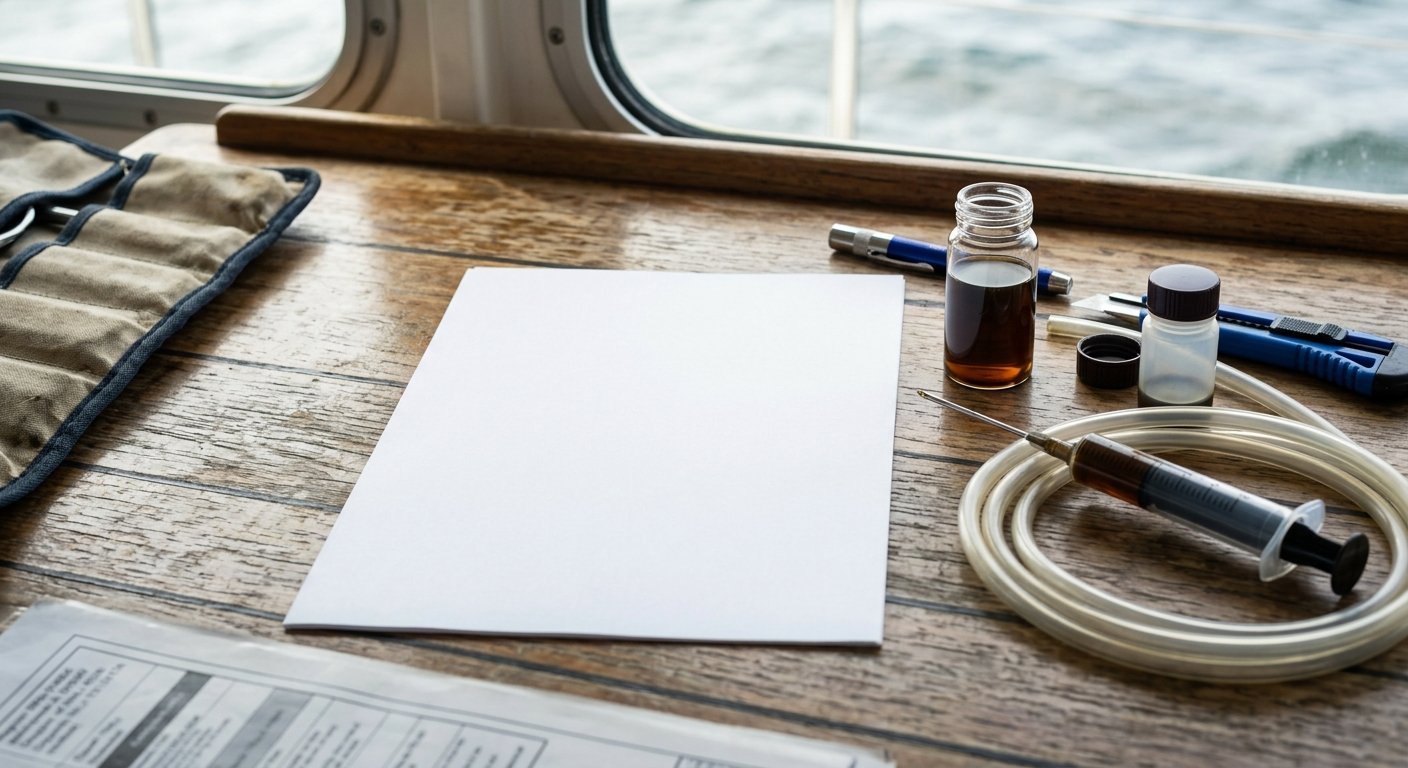
Marine diesel oil analysis is a laboratory test that examines a used oil sample for wear metals, contaminants, and fluid properties to reveal what is happening inside your engine before symptoms appear. For boat and yacht owners in Southeast Florida and the Caribbean, it is one of the most cost-effective tools in preventive marine engine maintenance—catching problems in their early stages rather than after serious damage has occurred.
- Oil analysis reads wear metals, viscosity, and contamination—each category points to a different class of problem.
- Elevated iron, copper, or aluminum levels signal specific component wear before you notice any performance change.
- Water and fuel dilution in oil are among the most destructive findings—and among the easiest to miss without testing.
- Results only become actionable when trended across multiple samples from the same engine over time.
- A factory-authorized technician can translate lab numbers into a prioritized service plan specific to your engine model.
Why Oil Analysis Belongs in Every Maintenance Plan
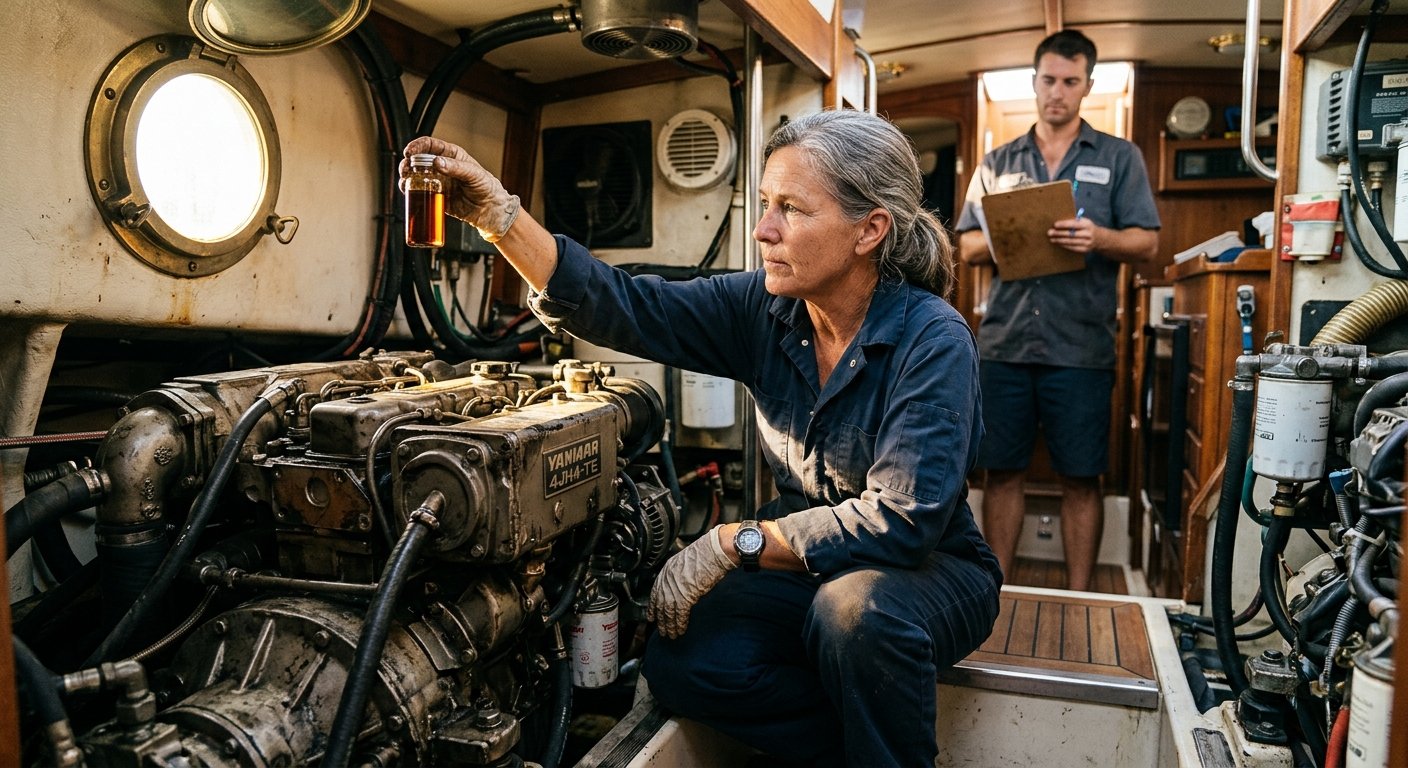
Engine oil circulates through every moving part of your marine diesel, picking up microscopic evidence of what each component is doing. By the time a pressure gauge drops or an alarm sounds, wear is often already advanced. Oil analysis intercepts that process early, giving you a window into bearing journals, cylinder liners, injector sleeves, and gear surfaces—without disassembly.
The test is straightforward: a sample of used oil (typically 60–100 ml) is drawn at the normal service interval, sealed in a laboratory vial, and sent to an accredited analysis lab. Results usually return within a few business days. What you receive is a report organized into three broad categories: wear metals, oil condition, and contamination. Understanding what each section is actually telling you is where most boat owners need guidance.
Always sample at the same point in the oil change interval—ideally just before the oil is drained—and record the exact hours on the oil and on the engine. Labs use those numbers to calculate metals in parts-per-million per hour, which is the comparison that matters most.
Wear Metals: The Most Telling Category
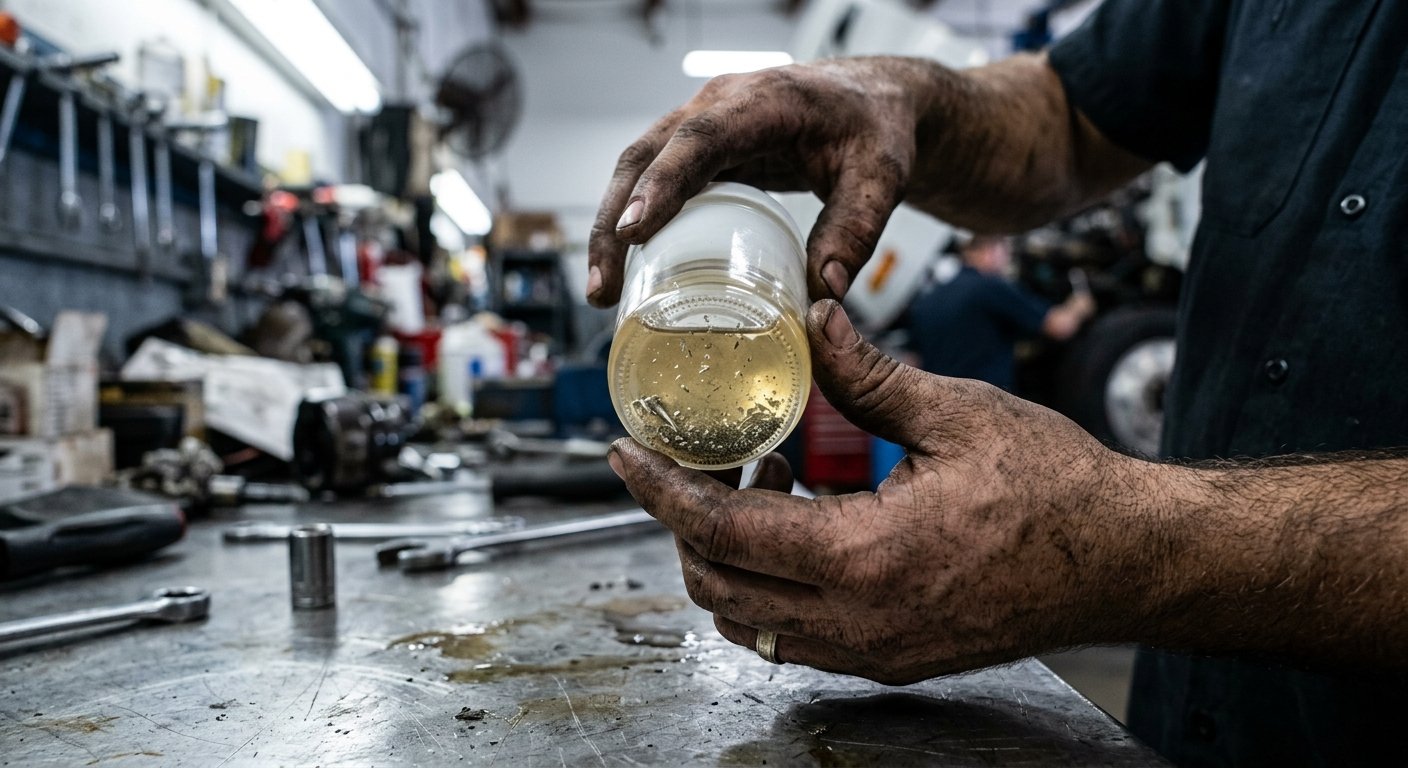
Wear metals are trace elements ground off internal surfaces during normal and abnormal operation. Labs measure them in parts per million (ppm). The key is not a single high number—it is a rising trend across samples, or a sudden spike, that indicates a developing problem. The ASTM D6595 standard governs the rotary disc electrode method most labs use to quantify these elements.
Iron (Fe)
Iron is the most common wear metal and comes from cylinder liners, crankshaft journals, camshafts, and piston rings. A gradual increase across multiple samples suggests normal wear within acceptable limits. A sudden spike—especially combined with elevated chromium or lead—points toward liner or bearing surface distress that warrants a hands-on marine engine inspection before the next voyage.
Copper (Cu) and Lead (Pb)
Copper often originates from bronze bushings, thrust washers, and cooler tubes. Lead typically comes from bearing overlays. Together, elevated copper and lead are a classic indicator of bearing wear. On engines like MAN and Cummins, where bearing tolerances are tight by design, these numbers deserve immediate attention from a technician familiar with the specific platform.
Aluminum (Al)
Aluminum points to piston skirt wear or degradation in aluminum alloy components. In a turbocharged engine—Volvo Penta and John Deere diesels, for example—a rising aluminum trend alongside silicon can indicate that dust or abrasive material is entering through the air intake, accelerating wear across multiple surfaces simultaneously.
Silicon (Si)
Silicon is not always a wear metal—it also appears as a contamination marker. Low silicon that tracks consistently may just be additive package residue. Rising silicon, however, often signals dirt or sand ingestion, a degraded air filter, or a compromised seal. In Southeast Florida marina environments, airborne particulates can be a genuine concern during certain seasons.
| Wear Metal | Primary Source | Likely Problem if Elevated |
|---|---|---|
| Iron (Fe) | Liners, crankshaft, camshaft | Cylinder or bearing wear |
| Copper (Cu) | Bronze bushings, cooler tubes | Bushing or cooler degradation |
| Lead (Pb) | Bearing overlays | Bearing surface wear |
| Aluminum (Al) | Piston skirts, housings | Piston wear or abrasive ingestion |
| Silicon (Si) | Dirt, sealants, additives | Air filtration failure or contamination |
Oil Condition: Viscosity and Additives

Viscosity is the resistance of the oil to flow. Your engine’s manufacturer specifies an oil grade—say, 15W-40—because the lubrication film at operating temperature depends on that property being within range. Labs measure viscosity at 100°C and compare it to the new-oil specification. Oil that has thinned significantly suggests fuel dilution or shear breakdown of the viscosity index improver. Oil that has thickened beyond spec indicates oxidation, soot loading, or the wrong oil was used.
Oxidation and nitration values tell you how chemically degraded the oil has become. High oxidation means the oil has been exposed to excessive heat or extended service hours. High nitration is common in engines with blowby issues, where combustion gases bypass the rings and enter the crankcase. Both conditions shorten the protective life of the remaining additive package.
Total Base Number (TBN) measures the oil’s remaining ability to neutralize acids produced during combustion. As TBN depletes, acids attack metal surfaces. Most marine diesel manufacturers publish minimum TBN thresholds; when your lab result falls below that number, an oil change is overdue regardless of hours. Neglecting this is one of the most direct paths toward accelerated internal corrosion—and eventually a diesel engine overhaul that could have been avoided.
A single oil analysis result is a snapshot. A series of results from the same engine is a story—and the story is what saves your engine.
Contamination: Water and Fuel Dilution
Contamination findings are often the most urgent items on an oil analysis report. Two types dominate marine diesel concerns:
Water contamination is reported as a percentage. Even small amounts—above roughly 0.2%—can cause severe bearing damage, promote bacterial growth in the crankcase, and accelerate corrosion on polished metal surfaces. Water enters through a failing heat exchanger, a compromised head gasket, or a raw-water cooling system leak. In a marine environment, this pathway is always present, which is exactly why periodic oil analysis matters. The Noria Corporation’s lubrication resource library offers a detailed breakdown of how water attacks lubricant films at the molecular level.
Fuel dilution occurs when unburned diesel passes the rings and mixes with crankcase oil. It thins the oil, strips its load-bearing capacity, and washes lubrication from cylinder walls. Fuel dilution above 2% typically calls for immediate investigation—injector condition, injection timing, and ring integrity are all candidates. On Kohler and Northern Lights generators that run at partial load for extended periods, fuel dilution is a known risk that regular marine diesel service can catch early.
Do not dismiss a water or fuel contamination finding as a lab error. Retest with a fresh sample immediately and have a qualified technician inspect the cooling system and injectors before operating the engine under load.
How to Act on Your Results
Establish a baseline
The first sample from a well-maintained engine sets the benchmark. Without a baseline, the lab has no trend to compare against and can only flag values outside generic population averages—which may not match your specific engine build.
Sample consistently
Use the same sampling port, same interval, and same lab for every test. Switching labs or sampling points mid-sequence breaks the trend data and reduces diagnostic value significantly.
Read the trend, not just the number
An iron reading of 45 ppm may be fine if your last three samples were 40, 42, and 44 ppm. That same reading is alarming if the previous sample was 18 ppm. Rate of change matters more than absolute value.
Bring results to a factory-authorized technician
Lab reports flag abnormal values, but interpreting them within the context of a specific MAN, Volvo Penta, Westerbeke, or John Deere engine requires model-specific knowledge. A technician with factory authorization understands the normal wear characteristics and tolerances built into each platform.
Act before symptoms appear
The entire purpose of oil analysis is to move maintenance decisions upstream of failure. If results recommend inspection or early service, scheduling proactively is nearly always less disruptive and less expensive than waiting for a breakdown at sea or at the dock.
For a broader view of what neglecting this type of preventive work leads to, the detail in what happens when you skip marine diesel maintenance illustrates the real costs of deferred care across engine systems.
Oil analysis is also a useful companion to periodic hands-on inspection. A lab report pointing to elevated copper from cooler tubes, for example, becomes actionable the moment a technician can visually inspect the heat exchanger and confirm early-stage corrosion—well before a cooling system failure strands you offshore. DSOA’s dockside service capability means that follow-up inspection doesn’t require hauling your vessel; technicians come to where your boat is berthed throughout Palm Beach and Broward Counties.
Owners evaluating engine platforms for their next vessel may also find it useful to understand how different engines age under similar maintenance regimes. The comparison of Yanmar versus Volvo Penta marine diesel engines covers performance and long-term reliability factors relevant to this decision.
Frequently Asked Questions
How often should I send an oil sample for analysis?
Most marine diesel manufacturers recommend sampling at every oil change interval or every 250–500 engine hours, whichever comes first. For generators running long hours at partial load—such as Cummins/Onan or Kohler units—more frequent sampling can be worthwhile. Always follow your specific manufacturer’s guidance, which a factory-authorized service center can confirm for your engine model.
Can oil analysis replace regular oil changes?
No. Oil analysis tells you what is in the oil and how degraded it is, but it does not restore additive packages or remove combustion byproducts. Think of analysis as diagnostic intelligence that optimizes your maintenance decisions—it works alongside scheduled oil changes, not instead of them.
Which lab should I use for marine diesel oil analysis?
Choose an accredited laboratory that tests to ASTM standards and provides trend analysis across multiple samples. Several engine manufacturers also have preferred lab programs tied to their warranty and service documentation systems. Ask your authorized service center which lab they recommend for your specific engine brand.
What does a “normal” wear metal reading look like?
There is no single universal normal—acceptable ranges vary by engine model, oil type, and operating conditions. What matters most is consistency within your own engine’s history. Your factory-authorized technician can compare your results against manufacturer guidelines and your engine’s specific baseline trend to determine whether any value warrants action.
Is oil analysis relevant for marine generators, not just propulsion engines?
Absolutely. Marine generators—including Kohler, Northern Lights, Westerbeke, and Cummins/Onan units—run under demanding conditions and often accumulate hours quickly during extended cruising or liveaboard use. The same wear metal, viscosity, and contamination principles apply, and generator oil analysis can catch issues like fuel dilution and coolant leaks before they cause irreversible internal damage.
Put Your Oil Analysis Results in Expert Hands
DSOA’s factory-authorized technicians serving Palm Beach and Broward Counties can interpret your oil analysis report, perform dockside inspections, and develop a maintenance plan tailored to your specific engine—whether it’s a MAN, Volvo Penta, Cummins/Onan, or any other authorized platform. Worldwide parts shipping means no delays waiting on components.

About DSOA
DSOA provides factory-authorized marine diesel engine and generator maintenance, repair, and parts services to boat and yacht owners throughout Southeast Florida and the Caribbean. With four decades of expertise servicing premium brands including MAN, Volvo Penta, John Deere, Cummins/Onan, Kohler, Northern Lights, and Westerbeke, DSOA combines authoritative technical knowledge with convenient dockside service. The company serves both experienced yacht owners and newer boaters with professional, educational guidance on proper engine care and preventive maintenance, backed by worldwide parts shipping capability. Visit dieselservicesofamerica.com →
