
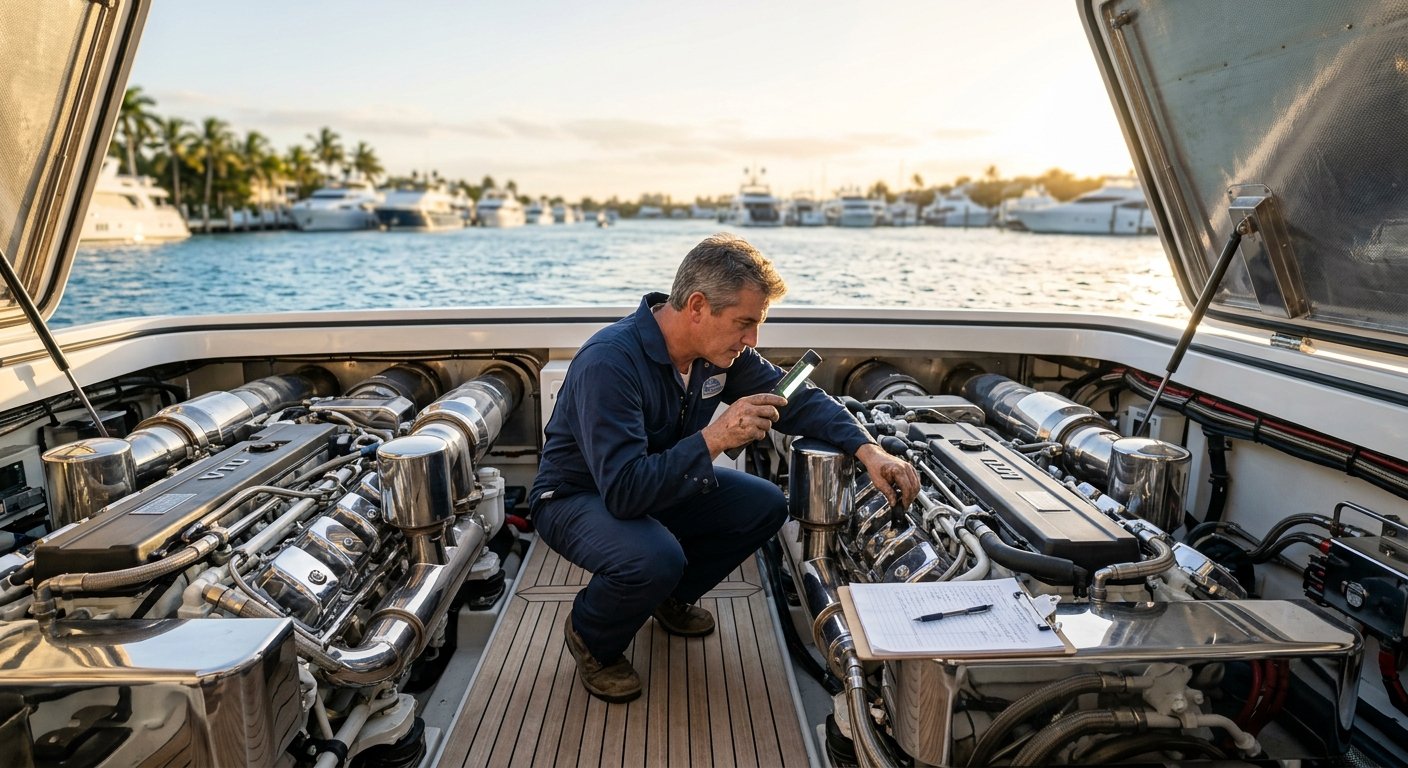
A pre-purchase marine diesel inspection is the single most reliable way to separate a sound yacht investment from an expensive liability. Engine problems missed before closing become the buyer’s cost after it. Factory-authorized technicians assess engine hours, fluid condition, sea-trial performance, and generator systems—giving buyers the documented facts needed to negotiate, require repairs, or walk away.
- Engine problems missed before closing become the buyer’s cost—get a thorough pre-purchase engine inspection.
- Mechanical failure is one of the leading causes of vessel incidents on U.S. waters, per the U.S. Coast Guard—many trace to deferred maintenance a inspection would catch.
- Factory-authorized technicians have access to proprietary diagnostic software and manufacturer specs that general mechanics may not.
- Oil sampling reveals wear metals, coolant contamination, and fuel dilution that no visual inspection can match.
- After the inspection you have three rational options: close with confidence, negotiate a price reduction, or walk away.
Why Pre-Purchase Inspections Are Non-Negotiable
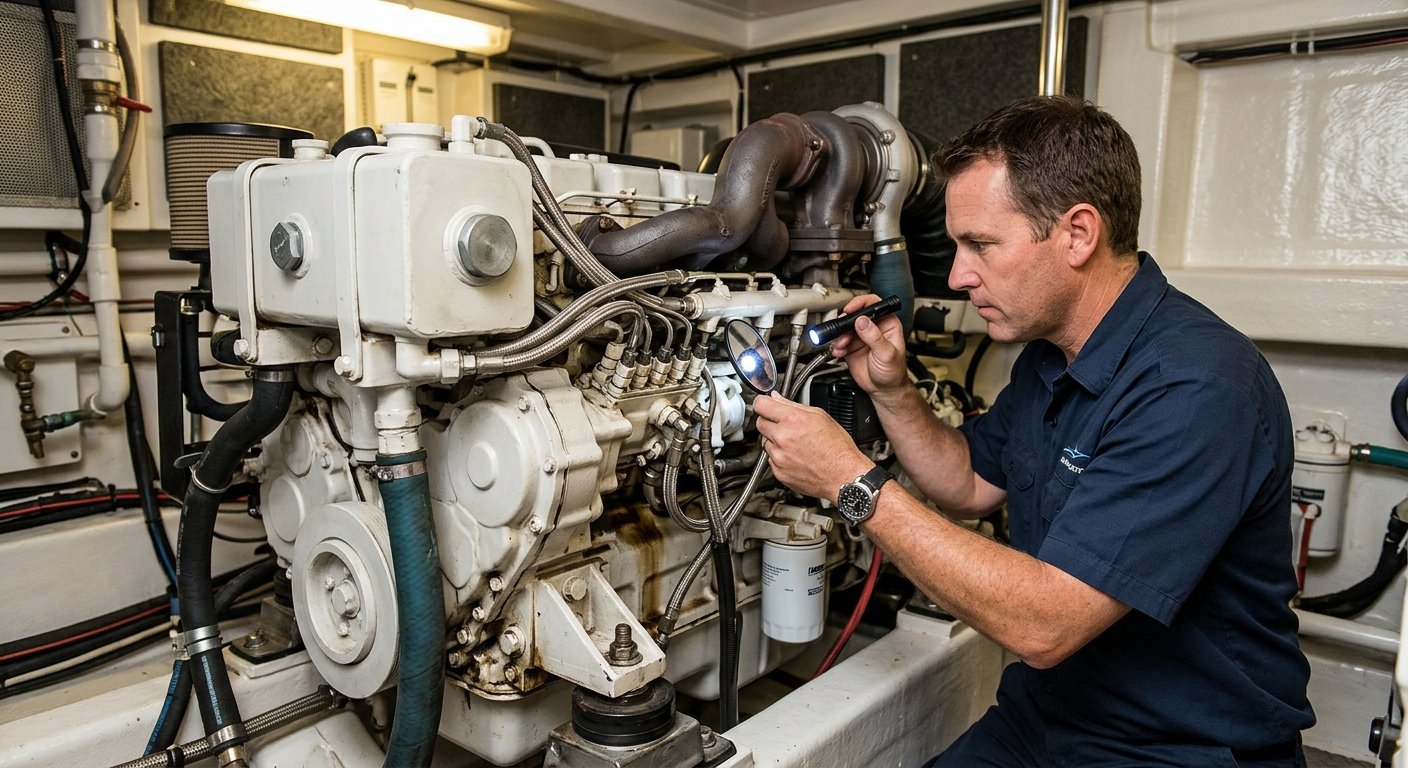
Marine diesel engines are robust, long-lived powerplants—but they’re also expensive to repair when problems are caught late. According to the U.S. Coast Guard’s Boating Safety Division, mechanical failure remains one of the leading causes of vessel incidents on U.S. waters. Many of those failures trace back to deferred maintenance or pre-existing issues that a professional inspection would have identified.
In the Southeast Florida market—Palm Beach County, Broward County—yacht transactions move quickly. Motivated sellers, competitive pricing, and the excitement of a new vessel can push buyers into hasty decisions. A credible marine engine inspection puts facts between your enthusiasm and your checkbook.
If you’re working with boat engine dealers in Fort Lauderdale or purchasing a used marine diesel engine through a private sale, insist on an independent inspection by a factory-authorized technician before closing. This single step routinely saves buyers from inheriting repair bills that dwarf inspection costs.
A well-maintained 3,000-hour MAN engine is far preferable to a neglected 800-hour engine. Hours tell part of the story; condition tells the rest.
What a Professional Inspection Covers
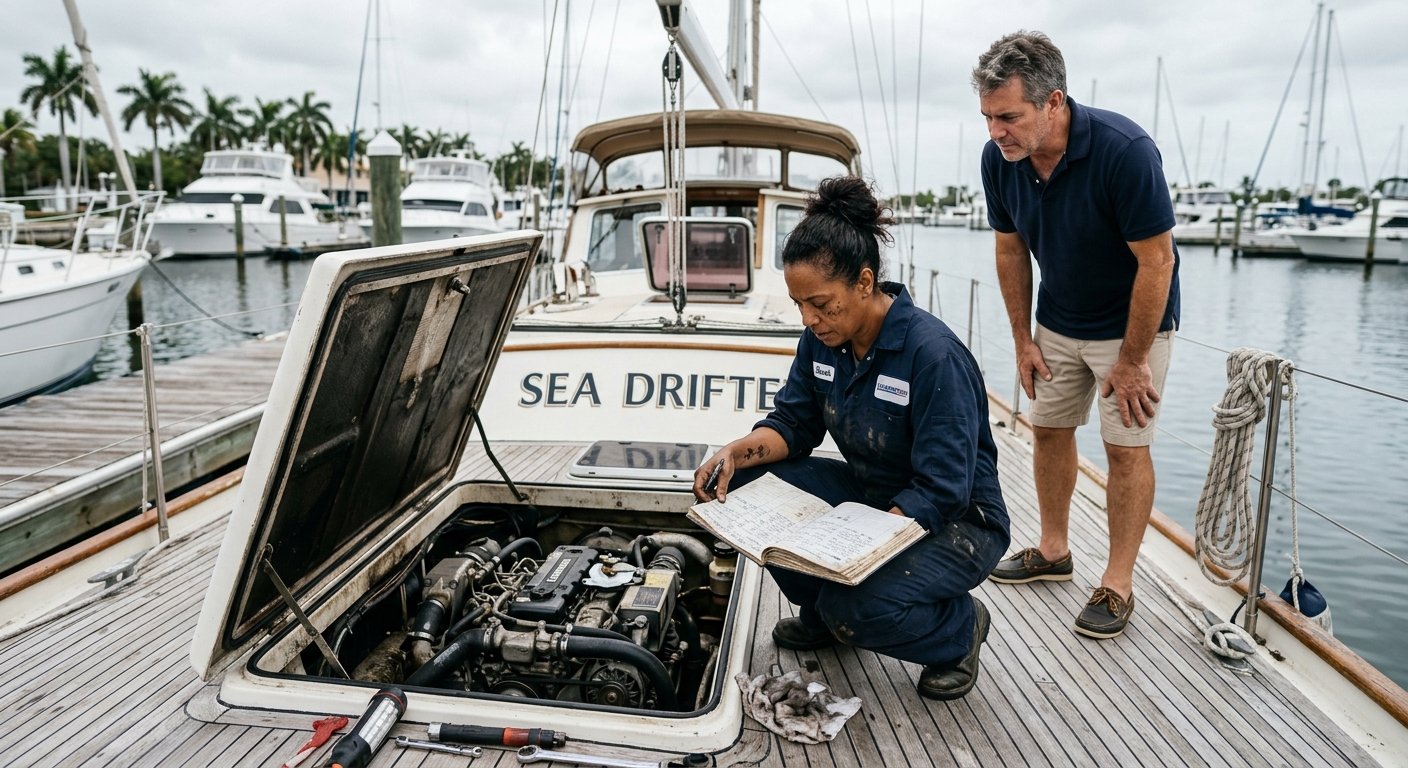
Engine Hours and Service History
The first thing a qualified marine technician reviews is documentation. How many hours are on the engine? Is there a complete service record? For engines like Cummins/Onan, John Deere, or Westerbeke, factory-recommended service intervals are well-established. Missing records are a yellow flag; gaps in critical service intervals are a red one.
Cross-reference the digital hour meter against physical wear indicators. High-hour engines aren’t automatically problematic—a well-maintained 3,000-hour MAN engine is far preferable to a neglected 800-hour engine. Hours tell part of the story; condition tells the rest.
Visual Engine Inspection
A systematic visual walkthrough covers:
- External oil leaks — around valve covers, heat exchangers, turbocharger fittings, and injector areas
- Coolant leaks — wet staining around hose clamps, manifold gaskets, and heat exchanger end caps
- Belt and hose condition — cracking, glazing, softness, or improper tension
- Exhaust system integrity — corrosion, leaks, or improper repairs at wet exhaust connections
- Mounting and alignment — soft mounts, cracked brackets, or evidence of hard impacts
- Bilge condition beneath engines — pooled oil or coolant indicates ongoing issues
Cosmetically clean engines aren’t always healthy engines. A pressure-washed engine bay can hide weeks of accumulated leaks. Experienced eyes know the difference.
Fluid Analysis
Oil sampling is one of the most diagnostic tools available in a pre-purchase scenario. Sending oil to a certified analysis lab reveals wear metals, coolant contamination, fuel dilution, and oxidation levels—providing a window into engine health that no visual inspection can replicate. The Society of Automotive Engineers has long recognized oil analysis as a cornerstone of predictive maintenance programs, and the same logic applies to marine diesel applications.
Coolant should also be tested for pH, freeze protection, and inhibitor depletion. Degraded coolant accelerates corrosion in aluminum components—a particularly costly failure mode in engines like Volvo Penta or Northern Lights marine generators.
Sea Trial Under Load
Static inspections tell half the story. A proper sea trial reveals how the engine behaves under actual operating conditions:
- Does it reach rated RPM at wide-open throttle?
- Are turbocharger boost levels within spec?
- Does exhaust smoke appear at startup, under load, or during deceleration?
- Are coolant and oil temperatures stable throughout the operating range?
- Does the engine respond cleanly to throttle input without hesitation or surging?
Black smoke under load typically points to fueling issues or turbocharger problems. Blue smoke suggests oil burning. White smoke at operating temperature can indicate coolant entering combustion—a serious concern that warrants immediate investigation.
Generator Inspection
Many yacht buyers focus exclusively on the main propulsion engines and overlook generators until they’re offshore without air conditioning. Kohler, Cummins/Onan, Northern Lights, and Westerbeke gensets require their own inspection protocol—separate from the main engines. Review generator hours, check for load bank test records, inspect raw water impellers, and verify that automatic transfer switches and control systems are functioning correctly.
Red Flags That Should Change Your Offer
Some findings warrant renegotiation; others warrant walking away entirely. Be particularly cautious if the inspection reveals:
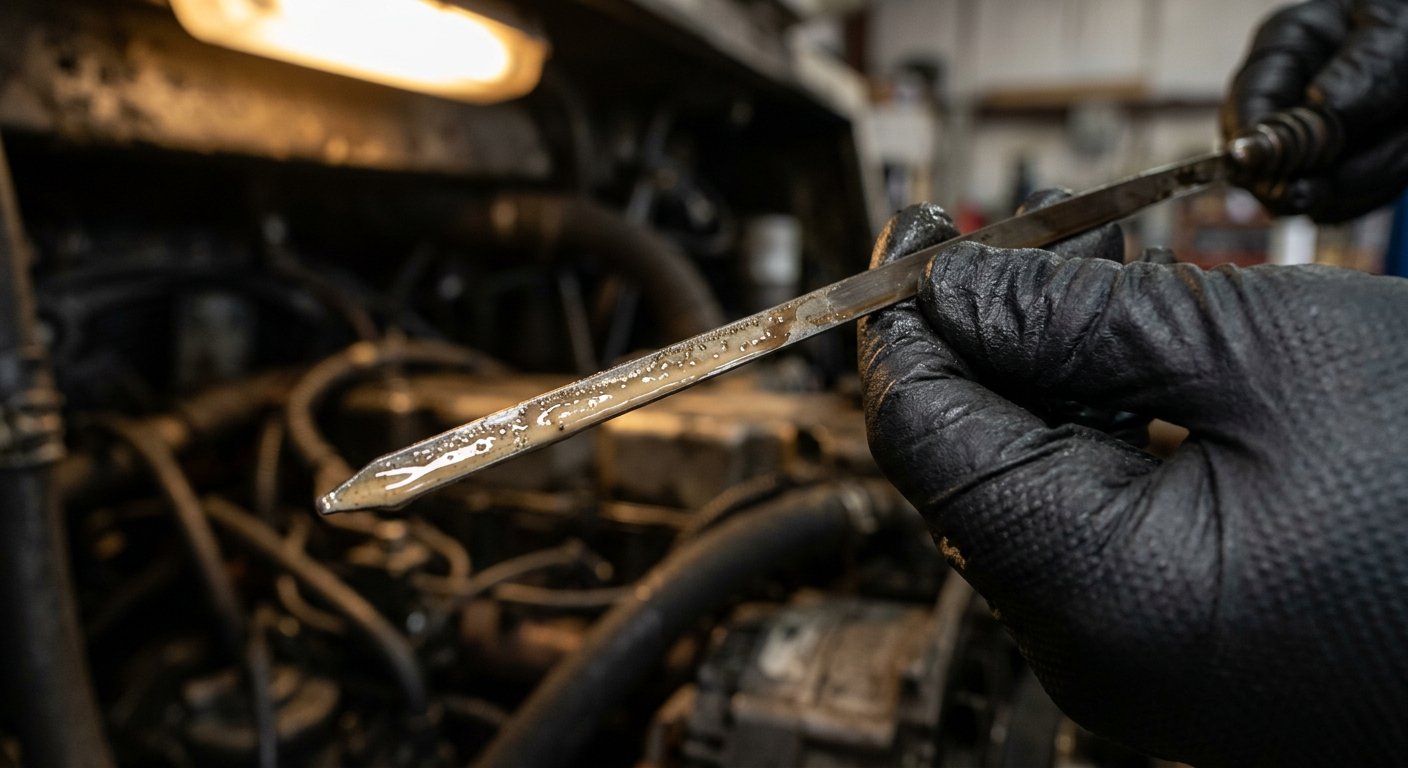
- Evidence of coolant in the oil — milky residue or elevated coolant metals in oil analysis suggests head gasket failure or cracked components
- Injector sleeve or cup corrosion — common in some John Deere and Cummins applications when coolant maintenance has been neglected
- Excessive crankcase pressure — often indicates worn piston rings or cylinder liner issues requiring significant overhaul work
- Non-factory repairs or unapproved parts — improvised fixes on marine diesel systems create liability and often mask larger problems
- Missing or altered serial numbers — creates verification challenges for warranty claims and parts sourcing
These findings don’t automatically disqualify a vessel, but they must be priced into the transaction. A credible repair estimate from a factory-authorized technician gives you negotiating leverage grounded in actual data.
The Value of Factory-Authorized Inspectors
There’s a meaningful difference between a general mechanic looking at a marine diesel and a factory-authorized technician who services that specific engine brand daily. Authorized service centers have access to manufacturer diagnostic tools, technical service bulletins, and brand-specific knowledge that independent shops may lack.
When assessing a marine diesel engine for sale, factory authorization matters in a second important way: it gives you confidence that inspection findings are being evaluated against the manufacturer’s actual specifications—not general estimates. This is especially relevant for sophisticated engines like MAN V8s and V12s, where factory diagnostic software provides data unavailable through generic tools.
| Inspection factor | Factory-authorized technician | General marine mechanic |
|---|---|---|
| Diagnostic software | Proprietary manufacturer tools | Generic or none |
| Specification reference | Manufacturer’s actual specs | General estimates |
| Technical service bulletins | Full access | May lack access |
| Brand-specific knowledge | Daily hands-on experience | Varies widely |
| Warranty & parts support | Factory-backed path | Not guaranteed |
DSOA’s technicians carry factory authorization across MAN, Volvo Penta, John Deere, Cummins/Onan, Kohler, Northern Lights, and Westerbeke—covering the majority of propulsion and generator systems you’ll encounter in the Southeast Florida and Caribbean yacht market. With dockside service available throughout Palm Beach County and Broward County, DSOA can conduct inspections where the vessel is located rather than requiring a haul or marina repositioning.
Learn more about DSOA’s comprehensive diesel marine engine repair services or explore convenient on-site diesel marine engine service options for pre-purchase evaluations at your marina.
After the Inspection: Next Steps
Once you have a complete inspection report in hand, you’re in a far stronger position—regardless of the outcome.
Close with confidence
If the vessel is in solid condition, you have documented proof to support your purchase decision and a clear baseline for future maintenance.
Negotiate a price reduction
If issues are identified, a credible repair estimate from a factory-authorized technician gives you leverage grounded in actual data to reduce the purchase price.
Require the seller to address findings
Make repairs a condition of closing, with verification from an authorized technician before funds change hands.
Walk away
Some vessels simply don’t pencil out. Walking away from the wrong boat is always cheaper than inheriting its problems.
If you’re sourcing a replacement engine rather than purchasing an existing vessel, DSOA’s marine engine sales inventory and worldwide parts shipping capability provide a reliable path to factory-quality replacements. The National Marine Manufacturers Association consistently emphasizes that sourcing engines through authorized dealers provides buyers with warranty protection and parts support that gray-market alternatives cannot match.
Frequently Asked Questions
How much does a marine diesel pre-purchase inspection typically cost?
Inspection costs vary based on the number of engines, generator systems, vessel size, and whether a sea trial is included. However, the cost is consistently modest relative to what it protects—a thorough inspection can identify repair needs worth tens of thousands of dollars before you assume ownership.
Can I use any marine mechanic for a pre-purchase inspection?
You can, but factory-authorized technicians provide a higher level of brand-specific diagnostic capability. For premium engines like MAN, Volvo Penta, or Cummins, factory authorization means access to proprietary diagnostic software and manufacturer specifications that general mechanics may not have.
What documents should I request from a seller before the inspection?
Request complete service records, previous survey reports, oil analysis history if available, any warranty documentation still in force, and records of major repairs or component replacements. Gaps in documentation don’t automatically disqualify a vessel but should prompt closer scrutiny during the physical inspection.
How do I evaluate a used marine diesel engine that’s been in storage?
Stored engines require additional attention—fuel system condition, injector health, raw water system integrity, and turbocharger bearing condition all degrade during extended lay-up. A factory-authorized technician should perform a recommissioning evaluation before any sea trial to avoid damaging systems during startup.
Is a pre-purchase inspection different from an annual survey?
A marine survey addresses the vessel structure, safety equipment, and systems broadly. A focused engine inspection goes deeper into mechanical condition, fluid analysis, and performance parameters. For significant purchases, both are advisable—they’re complementary, not interchangeable.
Get a Factory-Authorized Inspection Before You Sign
DSOA’s team serves Palm Beach County and Broward County with dockside inspection capabilities across MAN, Volvo Penta, John Deere, Cummins/Onan, Kohler, Northern Lights, and Westerbeke—four decades of marine diesel expertise, brought directly to your marina.

About DSOA
DSOA provides factory-authorized marine diesel engine and generator maintenance, repair, and parts services to boat and yacht owners throughout Southeast Florida and the Caribbean. With four decades of expertise servicing premium brands including MAN, Volvo Penta, John Deere, Cummins/Onan, Kohler, Northern Lights, and Westerbeke, DSOA combines authoritative technical knowledge with convenient dockside service. The company serves both experienced yacht owners and newer boaters with professional, educational guidance on proper engine care and preventive maintenance, backed by worldwide parts shipping capability. Visit dieselservicesofamerica.com →
