
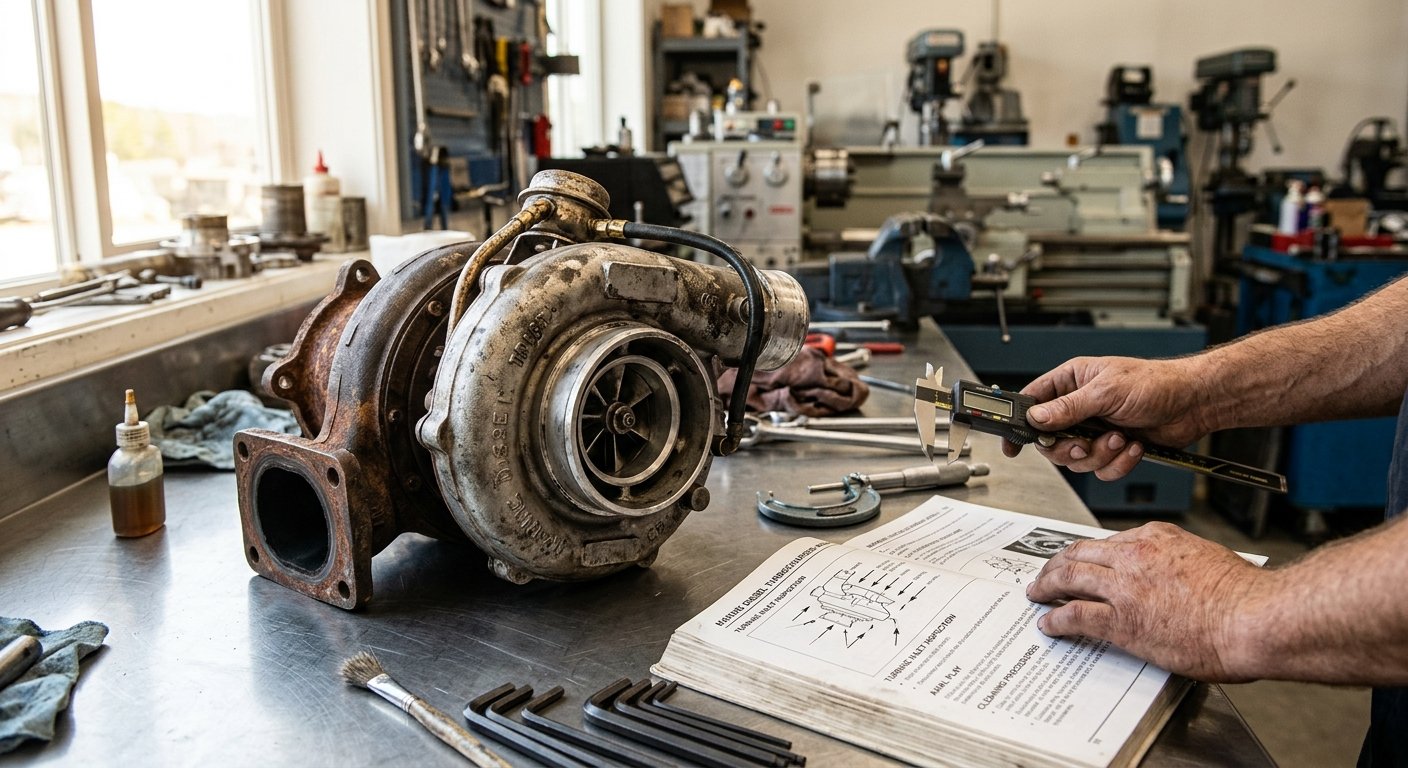
A marine diesel turbocharger requires regular inspection, cleaning, and lubrication checks to operate reliably. Neglecting turbo maintenance leads to reduced power output, excessive smoke, and eventually catastrophic failure—often at the worst possible moment offshore. This guide explains what turbocharger maintenance involves, what warning signs to watch for, and why factory-authorized service matters for the premium engines powering your vessel.
- Turbocharger health depends directly on oil quality, air filter condition, and proper cool-down procedures after hard running.
- Warning signs—blue smoke, whining noises, power loss, and high exhaust temps—should prompt immediate professional diagnosis.
- Factory-authorized technicians have brand-specific knowledge that generic shops lack, which matters enormously for MAN, Volvo Penta, Cummins, and other premium marine engines.
- Dockside service means your vessel doesn’t have to leave its slip for routine turbo inspections and preventive care.
- Catching turbo problems early through regular marine diesel service is almost always less costly than an engine overhaul after a failure.
How a Marine Turbocharger Works
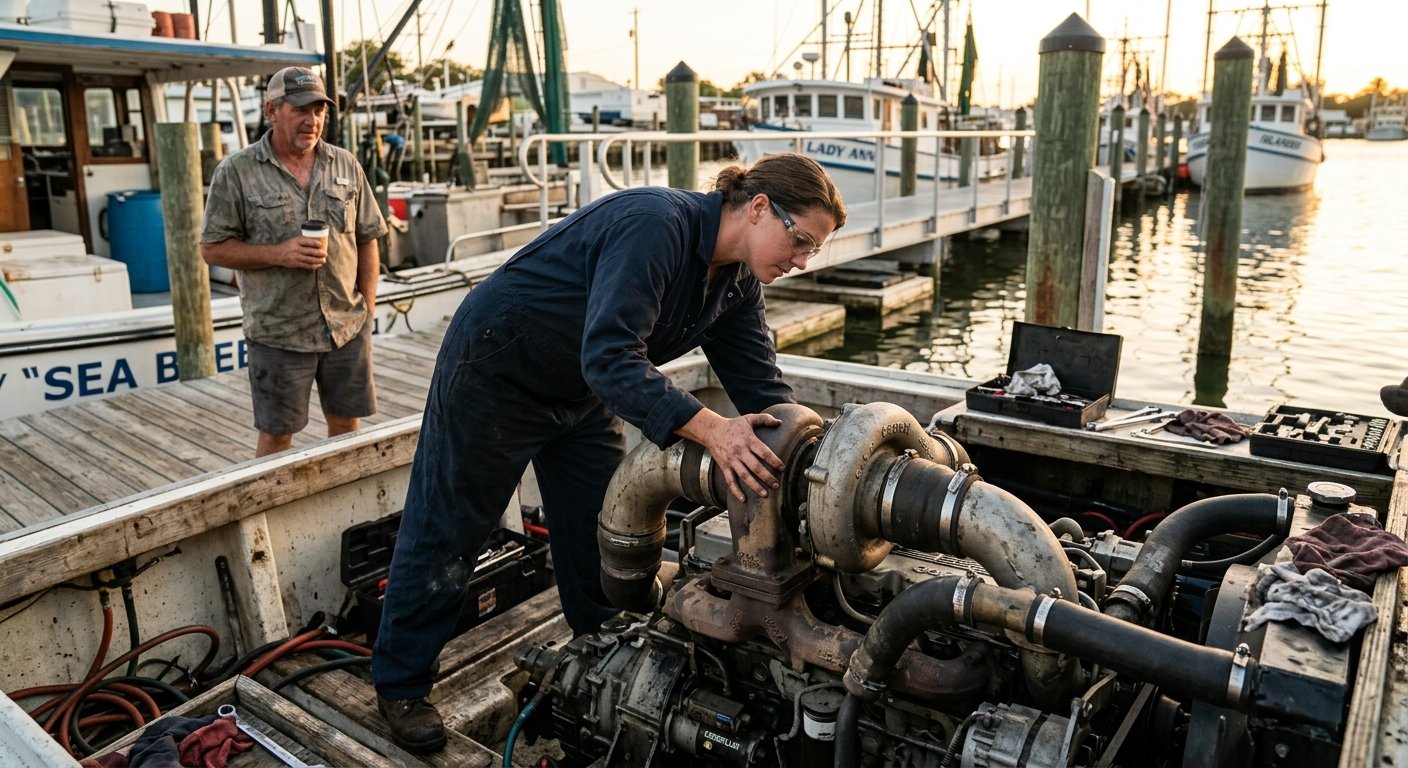
A turbocharger is essentially an air pump driven by exhaust gases. Hot exhaust spins a turbine wheel, which is connected via a shaft to a compressor wheel on the intake side. That compressor forces more air into the engine cylinders than atmospheric pressure alone could deliver, allowing more fuel to burn and generating significantly more power from the same engine displacement.
Marine applications place unique demands on this system. Turbochargers on vessels like those powered by MAN, Volvo Penta, or Cummins engines operate in high-humidity, salt-laden environments, often under sustained high loads. Unlike a car engine that spends most of its time at light throttle, a yacht engine crossing from Palm Beach to the Bahamas may run at 80 percent load for six or more consecutive hours. That sustained heat and stress is why marine turbocharger maintenance is a discipline of its own.
Turbocharger shaft speeds commonly exceed 100,000 RPM during operation. At those speeds, even minor contamination in the lubricating oil—or a brief interruption in oil pressure—can score the shaft bearings within seconds. This is why oil quality and change intervals are non-negotiable for turbo longevity.
The Four Pillars of Turbocharger Maintenance
1. Engine Oil: The Most Critical Factor
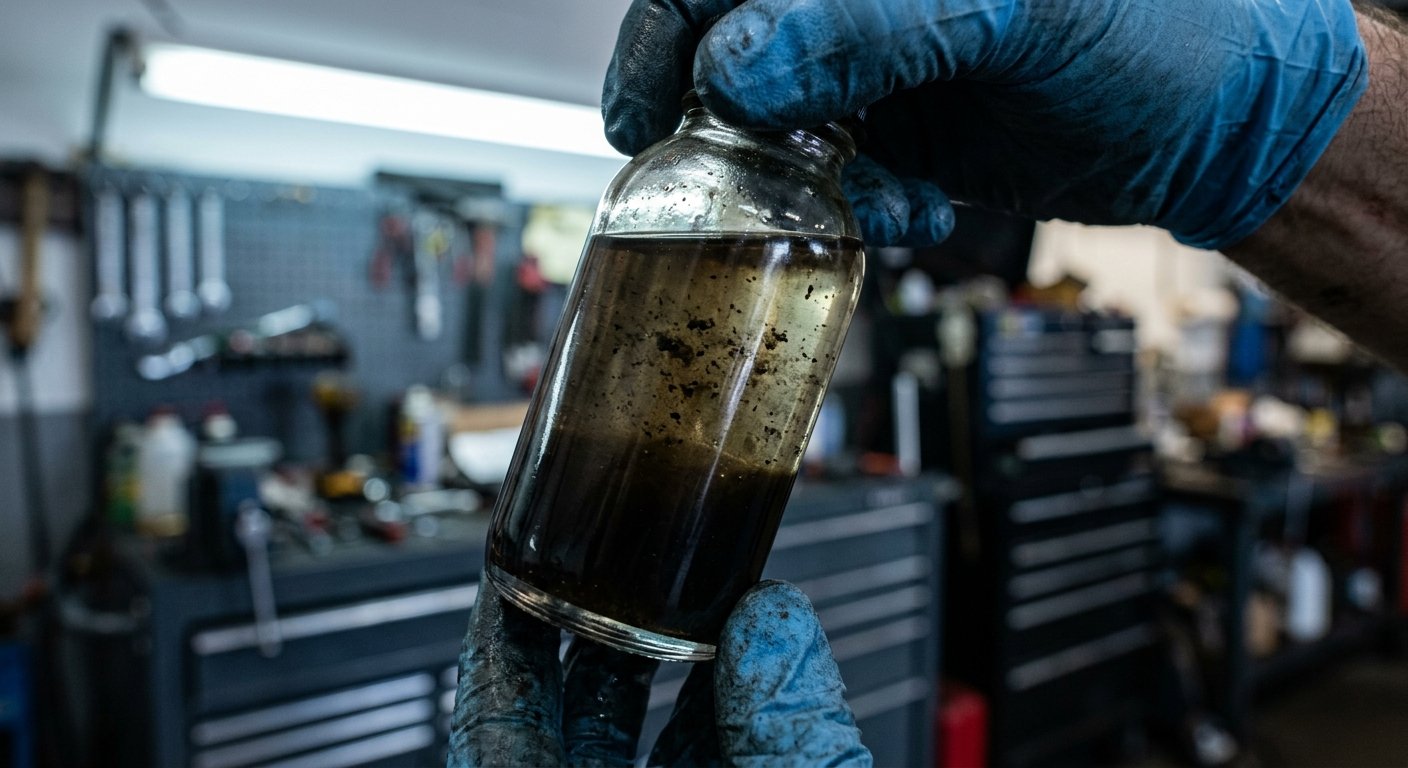
The turbocharger shares the engine’s lubrication system. Clean, properly viscosity-rated oil is what keeps the center bearing cartridge alive. Old or contaminated oil deposits carbon on the turbo shaft, restricts oil flow, and accelerates wear. Following the manufacturer’s recommended oil change intervals—and using only the specification oil listed in your engine manual—is the single highest-impact maintenance action you can take for turbo health. For most marine diesel applications under regular use, this means oil analysis at every service interval to catch contamination before it causes damage.
The BoatUS Foundation’s engine maintenance guidance reinforces that oil degradation in marine environments happens faster than in automotive use due to sustained loads and the absence of highway “rest” cycles that automobiles benefit from.
2. Air Intake System Cleanliness
The compressor side of a turbocharger depends on clean, unrestricted airflow. Clogged or water-saturated air filters force the turbo to work harder and can allow debris to contact the compressor wheel blades. In Southeast Florida’s marina environment, salt air and humidity accelerate filter degradation. Air filter inspection should be part of every routine service visit, and replacement intervals should lean toward the conservative end of the manufacturer’s range for vessels operating in tropical coastal conditions.
3. Intercooler and Boost System Integrity
Most modern marine turbodiesel engines—including those from John Deere and Volvo Penta—use an aftercooler or intercooler to reduce the temperature of compressed intake air before it enters the cylinders. A fouled or leaking intercooler reduces charge air density, hurting power and fuel efficiency. Sea water passages in the intercooler can corrode over time. During a thorough marine diesel service inspection, technicians check boost pressure, intercooler condition, and hose connections throughout the intake tract for cracks or looseness that would allow boost to escape.
4. Cool-Down Procedure After Hard Running
When a diesel engine stops, oil circulation stops. But turbocharger turbine housings retain substantial heat from exhaust gases. If you shut down immediately after a hard run, residual heat can cook the oil in the turbo’s center section, leaving carbon deposits on the shaft. The standard recommendation from engine manufacturers is to allow the engine to idle for three to five minutes after sustained high-load operation before shutting down. This cool-down period lets oil continue circulating while temperatures drop to safer levels.
Three to five minutes of idle time after a hard passage can add years to a turbocharger’s service life.
Warning Signs That Demand Immediate Attention

Turbocharger problems rarely appear without warning. Knowing what to look and listen for allows you to address issues before they escalate into a full diesel engine overhaul or leave you stranded.
- Blue or gray smoke from the exhaust: Oil is entering the combustion process, often indicating worn turbo shaft seals.
- High-pitched whining or grinding: Bearing wear, compressor wheel contact with the housing, or foreign object ingestion.
- Noticeable loss of power or acceleration: The engine isn’t receiving adequate boost; could indicate a failing turbo, boost leak, or fouled intercooler.
- Elevated exhaust gas temperatures (EGT): Restricted intake airflow or reduced turbo efficiency forces combustion temperatures higher.
- Excessive oil consumption without visible external leaks: Oil is burning internally, frequently related to turbo seal failure.
Any of these symptoms warrants professional marine diesel troubleshooting—not just a visual inspection at the dock, but a systematic diagnosis using the diagnostic tools and factory documentation appropriate to your specific engine brand.
A sudden drop in boost pressure while underway can indicate turbocharger failure in progress. Continuing to run at load with a failing turbo risks ingesting turbine debris into the engine cylinders—a scenario that can turn a turbo replacement into a complete engine rebuild.
Why Factory-Authorized Service Matters for Turbocharger Work
Marine diesel turbochargers are not generic components. MAN, Volvo Penta, Cummins/Onan, Kohler, Northern Lights, and Westerbeke each engineer their turbo systems to work within specific parameters defined by the entire engine package. Clearances, oil feed specifications, boost targets, and diagnostic fault codes differ between brands and even between model generations.
A factory-authorized service center has access to manufacturer service manuals, proprietary diagnostic software, and OEM replacement parts. This distinction is significant: an aftermarket turbocharger installed without referencing factory specifications may operate within different boost parameters than the engine management system expects, potentially causing ongoing issues the owner never connects back to the repair. The DieselNet technical reference on turbocharging provides useful background on why turbo specifications are so closely tied to overall engine calibration.
For vessels operating in Palm Beach County and Broward County, DSOA’s four decades of factory-authorized experience servicing these premium brands means every turbocharger diagnosis is performed with the exact specifications and genuine parts the manufacturer requires. And with worldwide parts shipping capability, sourcing a turbocharger for a less common engine variant isn’t a weeks-long waiting game.
Initial symptom assessment
The technician documents reported symptoms, reviews engine hours, and checks recent oil analysis and service history for the specific engine model.
Boost pressure and EGT testing
Actual boost pressure is measured under load and compared to factory specifications. Exhaust gas temperature data identifies restriction or efficiency loss.
Physical turbo inspection
The turbocharger is inspected for shaft play, wheel blade condition, oil contamination in the intake tract, and housing erosion or damage.
Oil system and filter evaluation
Oil condition, oil feed line to the turbo, and the oil return line are checked. Restricted return lines are a common and underdiagnosed cause of turbo failure.
Repair, replacement, and verification
Genuine OEM parts are used for any replacement. After service, the system is tested under operating conditions to confirm performance meets factory specifications.
Integrating Turbo Maintenance into Your Overall Service Schedule
Turbocharger maintenance doesn’t stand alone—it’s part of a comprehensive approach to marine diesel service that addresses the entire engine system. The turbo’s condition reflects the health of the oil system, air intake, cooling system, and exhaust. A technician who sees the whole picture catches interactions between systems that a narrowly focused inspection would miss.
For vessels in regular offshore use throughout the Caribbean or doing frequent passages from Southeast Florida, annual turbocharger inspections are appropriate at minimum. Higher-hour commercial vessels or charter yachts should consider inspection at every major service interval. If your engine is approaching the point where broader assessment is needed, understanding what’s involved in a full diesel marine engine repair evaluation helps you plan accordingly.
DSOA’s dockside service capability means that for most turbocharger inspections and preventive maintenance, your vessel stays in its slip in Palm Beach or Broward County. There’s no need to haul or reposition the boat for the diagnostic work that identifies problems before they become expensive.
Frequently Asked Questions
How often should a marine turbocharger be inspected?
For recreational vessels in regular use, a thorough turbocharger inspection annually or at every 500 engine hours is a reasonable baseline. Vessels with higher annual hours, commercial use, or older engines benefit from more frequent checks. Your factory-authorized service technician can recommend an interval specific to your engine model and usage pattern.
Can a turbocharger be repaired, or does it always need full replacement?
In some cases, a turbocharger can be rebuilt if the core rotating assembly and housings are within serviceable limits. However, for premium marine engines, many manufacturers recommend replacement with a factory-remanufactured unit rather than field rebuilds, as this ensures the assembly meets original balance and clearance specifications. A factory-authorized technician will evaluate which option is appropriate for your specific situation.
What causes turbochargers to fail prematurely on marine engines?
The most common causes are oil-related: dirty oil, low oil pressure, delayed oil changes, or restricted oil feed lines. Foreign object ingestion through a damaged air filter is another significant cause. Improper shutdown after high-load operation—skipping the cool-down idle period—contributes to carbon buildup on the shaft and accelerated bearing wear.
Is blue smoke always a turbocharger problem?
Blue smoke indicates oil burning in the combustion chamber, which can originate from turbocharger seal failure, worn piston rings, or valve guide wear. Turbo seal failure is a common cause, but a proper marine diesel troubleshooting diagnosis is needed to isolate the source before making repairs. Treating only the turbo when the root cause is elsewhere will result in repeat failure.
Does DSOA offer dockside turbocharger service?
Yes. DSOA provides dockside service throughout Palm Beach County and Broward County, meaning most turbocharger inspections, diagnostics, and preventive maintenance can be completed at your slip without moving the vessel. For repairs requiring major disassembly, the service plan is discussed with the owner before any work begins.
Schedule Your Turbocharger Inspection
DSOA’s factory-authorized technicians serve Palm Beach County and Broward County with dockside convenience—contact us to arrange an inspection before a small issue becomes a costly repair.

About DSOA
DSOA provides factory-authorized marine diesel engine and generator maintenance, repair, and parts services to boat and yacht owners throughout Southeast Florida and the Caribbean. With four decades of expertise servicing premium brands including MAN, Volvo Penta, John Deere, Cummins/Onan, Kohler, Northern Lights, and Westerbeke, DSOA combines authoritative technical knowledge with convenient dockside service. The company serves both experienced yacht owners and newer boaters with professional, educational guidance on proper engine care and preventive maintenance, backed by worldwide parts shipping capability. Visit dieselservicesofamerica.com →
