
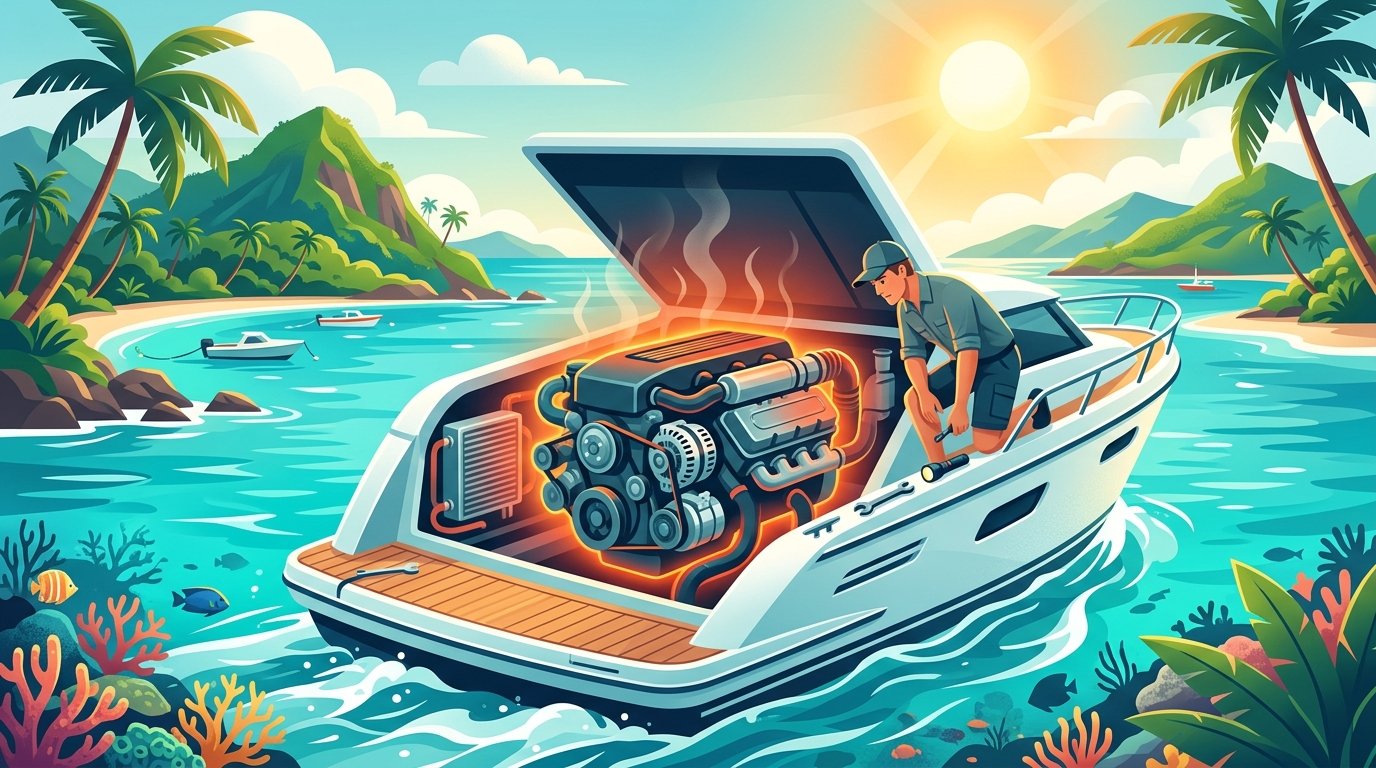
An overheating marine diesel engine doesn’t just ruin a day on the water—it can turn a routine passage into a serious mechanical emergency. In the warm, demanding waters of Southeast Florida and the Caribbean, where ambient temperatures are already elevated and vessels often run at sustained loads for extended passages, cooling system failures rank among the most common reasons owners call for urgent diesel marine engine repair.
Understanding what causes marine engine cooling problems—and how to stay ahead of them—isn’t just good boatmanship. It’s smart ownership that protects a significant investment.
Why Overheating Is a Bigger Risk in Tropical Waters
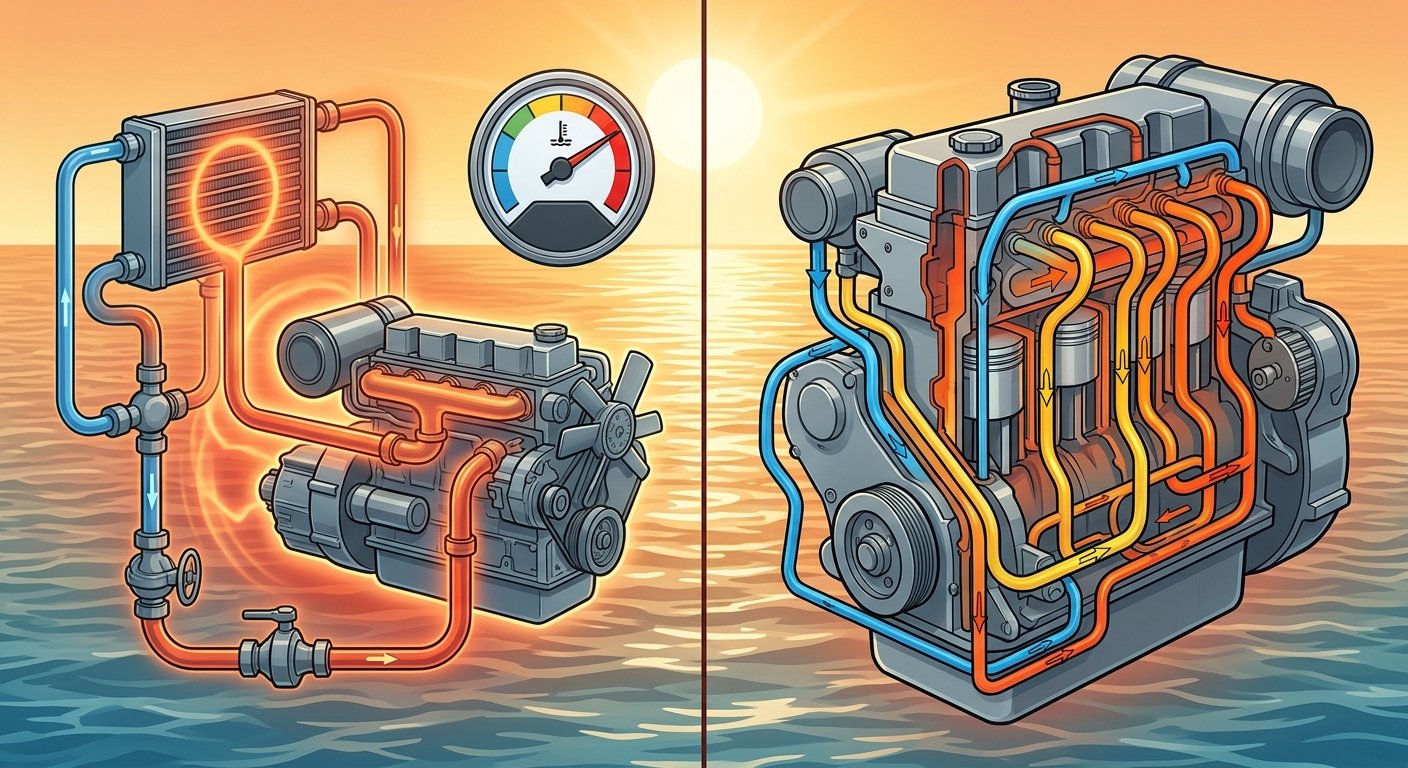
Most marine diesel engines are designed to operate within a specific coolant temperature range, typically between 160°F and 185°F depending on the manufacturer. When seawater temperatures climb into the mid-80s or higher—common throughout the Caribbean and in South Florida’s summer months—the raw water side of your cooling system works harder to maintain that balance.
This is compounded when vessels are running at higher RPMs for long passages, operating in shallow anchorages with reduced water circulation, or when the engine room itself retains heat due to poor ventilation. The margin for error narrows considerably. What might be a borderline maintenance issue in cooler northern waters becomes a genuine overheating risk here.
According to the U.S. Coast Guard, engine failures are consistently among the leading causes of on-water emergencies requiring assistance. Many of these failures are directly tied to cooling system neglect or deferred maintenance—problems that a proactive marine engine inspection would typically catch well in advance.
How Marine Diesel Cooling Systems Actually Work
Most marine diesels use a two-circuit cooling system. The raw water circuit draws seawater through a sea strainer, circulates it through a heat exchanger (and sometimes the exhaust manifold), then discharges it overboard through the exhaust. The closed freshwater circuit circulates treated coolant through the engine block and cylinder heads, exchanging heat with the raw water side.
Each component in this system has a job to do and a finite service life. When one element fails—even partially—the entire thermal balance is disrupted. The most common points of failure include:
- Raw water impellers: These rubber impellers wear, crack, or lose vanes over time. In tropical waters with higher water temperatures and year-round use, impeller degradation happens faster than many owners expect.
- Sea strainers: Debris, barnacles, and marine growth can partially or completely block water flow. In Southeast Florida and Caribbean harbors, biofouling is an ongoing reality.
- Heat exchangers: Scale buildup from mineral deposits reduces heat transfer efficiency. This is especially relevant in areas with harder water or high salinity.
- Thermostats: A stuck or sluggish thermostat disrupts the temperature regulation balance. These are inexpensive to replace but often overlooked until failure occurs.
- Coolant condition: Degraded coolant loses its corrosion inhibitors, leading to internal scale and corrosion in the freshwater circuit. Manufacturers including Volvo Penta and Cummins/Onan publish specific coolant change intervals that should be followed rigorously.
- Drive belts and water pump bearings: A worn belt slipping under load will reduce freshwater pump output. Bearings that are beginning to fail may not be audible until they’re close to seizing.
Caribbean-Specific Factors That Increase Cooling Risk
Vessels transiting between Southeast Florida and the Caribbean face a specific set of conditions that elevate cooling system stress beyond typical day-use boating.
Extended Engine Hours Under Load
A crossing from Florida to the Bahamas or an extended Caribbean passage means sustained operation—often 8 to 12 hours or more at cruising RPMs. This continuous thermal load demands that every component in the cooling circuit performs reliably. There’s no easy option to pull into a marina if an alarm sounds 40 miles offshore.
Biofouling and Growth on Raw Water Intakes
Vessels that spend extended time at anchor or in marinas throughout the Caribbean accumulate marine growth on hull fittings, sea cocks, and strainer baskets faster than vessels in temperate waters. Even a partial blockage at the sea strainer can reduce raw water flow enough to cause overheating under load.
Limited Service Access During Passages
Unlike operating close to home in Palm Beach County or Broward County, a vessel in a remote Caribbean anchorage has limited access to parts or technical assistance. This makes pre-departure inspection and proactive maintenance even more critical. DSOA’s worldwide parts shipping capability exists precisely to support owners and captains operating away from our Southeast Florida base, but the best outcome is always catching issues before departure.
The Role of Marine Engine Inspection Before Passage
A thorough marine engine inspection before any extended Caribbean voyage should be standard practice, not optional. For factory-authorized service on MAN, Volvo Penta, John Deere, Cummins/Onan, Kohler, Northern Lights, or Westerbeke engines, this means more than a visual check—it means systematic evaluation against manufacturer specifications.
Pre-passage inspection should include verification of raw water impeller condition (replace if there’s any doubt), sea strainer integrity and cleanliness, heat exchanger condition and pressure testing where appropriate, thermostat function, coolant concentration and inhibitor levels, belt condition and tension, and all hose connections for signs of hardening, cracking, or weeping.
The American Boat and Yacht Council (ABYC) provides technical standards covering cooling system integrity that serve as a baseline for professional marine service. Factory-authorized technicians reference both ABYC standards and manufacturer-specific guidelines to ensure nothing is missed.
Monitoring Systems and Early Warning Signs
Modern marine diesels from brands like MAN and Volvo Penta include sophisticated monitoring systems that log temperature trends, not just trigger alarms at critical thresholds. Understanding what your gauges are telling you—and recognizing early warning signs—can make the difference between a manageable issue and an engine-damaging event.
Watch for:
- Coolant temperature trending higher than your vessel’s typical operating range, even if still within the “normal” zone on the gauge
- Raw water exhaust that appears reduced in volume or has changed in temperature character
- Any steam or unusual exhaust smoke color, particularly white smoke which can indicate coolant entering combustion
- Engine alarm activations, even momentary ones that self-clear—these should never be ignored
- Unexplained drops in coolant reservoir level between checks
If any of these conditions appear, reducing load and speed immediately while investigating the cause is always the right first response. Running a diesel engine to failure in an attempt to reach port is one of the most expensive decisions a boat owner can make.
Boat Engine Maintenance in Fort Lauderdale and Palm Beach
For vessels based in Broward County or Palm Beach County, maintaining a consistent service relationship with a qualified diesel marine service provider before and after Caribbean trips pays dividends well beyond the obvious mechanical benefits. Technicians who are familiar with your specific vessel’s history, equipment configuration, and typical operating patterns are better positioned to identify subtle changes that might signal developing problems.
DSOA’s dockside service brings factory-authorized technical expertise directly to your vessel at its berth—eliminating the need to haul out or reposition to a service yard for routine maintenance and inspections. This convenience also reduces the likelihood that maintenance gets deferred due to logistics. Explore our on-site diesel marine engine service to understand what a dockside visit covers.
When cooling system issues progress beyond maintenance into actual repair—whether that’s heat exchanger replacement, water pump overhaul, or more significant engine work—professional diesel marine engine repair by factory-authorized technicians ensures the work is performed to manufacturer standards with correct parts.
Frequently Asked Questions
How often should the raw water impeller be replaced on a marine diesel?
Most manufacturers recommend inspecting the raw water impeller annually and replacing it at least every one to two years, regardless of apparent condition. In high-use tropical environments like Southeast Florida and the Caribbean, annual replacement is the conservative and recommended approach. A failed impeller that distributes debris through the cooling circuit can cause far more expensive damage downstream.
What coolant should I use in my marine diesel engine?
Coolant type and change intervals are specified by each engine manufacturer. Using the wrong coolant or neglecting inhibitor refresh can cause internal corrosion and scale buildup that reduces cooling efficiency over time. Consult your engine’s service manual or a factory-authorized service provider for the correct specification. Volvo Penta’s technical documentation, for example, provides specific coolant and maintenance interval requirements for their engines.
Can marine engine cooling problems cause permanent engine damage?
Yes. Sustained overheating can warp cylinder heads, damage head gaskets, score cylinder walls, and cause bearing damage. These are not inexpensive repairs. Catching cooling system issues early through regular marine engine inspection is significantly less costly than addressing heat-induced engine damage after the fact.
Should I have my boat inspected before a Caribbean passage even if nothing seems wrong?
Absolutely. Pre-passage inspections are specifically valuable because many developing issues—a marginal impeller, slight scale buildup in a heat exchanger, a coolant inhibitor level that’s due for refresh—show no obvious symptoms at the dock. The time to find these is before you’re offshore, not during a passage.
Does DSOA service boats throughout the Caribbean, or only in Southeast Florida?
DSOA is based in Southeast Florida and provides direct dockside service throughout Palm Beach County and Broward County. For vessels in the Caribbean, DSOA offers worldwide parts shipping to support owners and captains who need factory-authorized components wherever they’re operating.
Schedule Your Pre-Passage Marine Engine Inspection
Don’t let a preventable cooling system issue turn your next Caribbean trip into an emergency. DSOA’s factory-authorized technicians bring four decades of expertise servicing MAN, Volvo Penta, John Deere, Cummins/Onan, Kohler, Northern Lights, and Westerbeke engines directly to your vessel throughout Palm Beach County and Broward County.
Contact DSOA to schedule your marine engine inspection or dockside service visit before your next departure. Whether you need routine cooling system maintenance, a pre-passage checkup, or professional marine diesel engine repair, our team is ready to help you leave the dock with confidence.
