
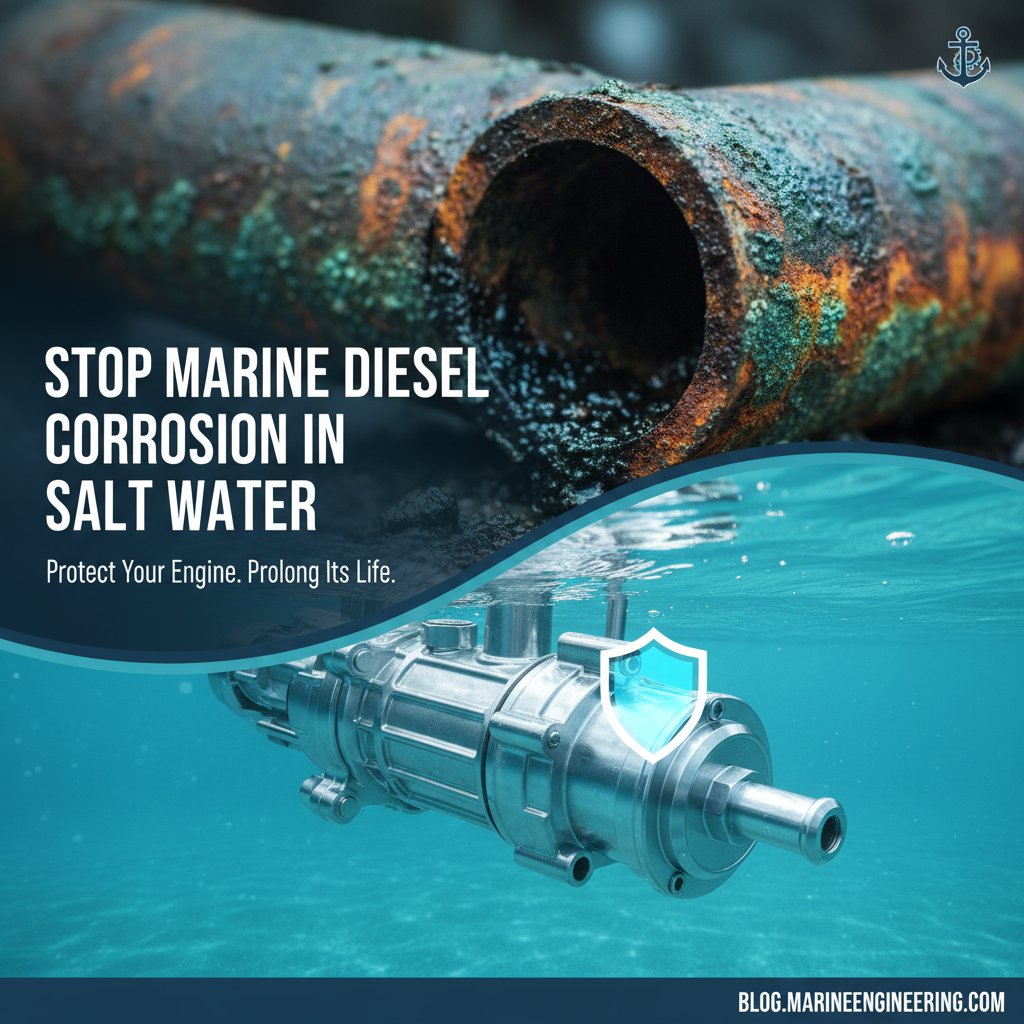
Salt water corrosion represents the single greatest threat to marine diesel engine longevity. Every hour your vessel operates in coastal or offshore waters, invisible electrochemical processes attack engine components, heat exchangers, and cooling systems. Left unchecked, corrosion transforms reliable powerplants into expensive rebuild projects—often catching owners by surprise during routine service intervals.
The aggressive nature of salt water creates a perfect storm for corrosion: dissolved salts act as electrolytes that accelerate galvanic reactions, while oxygen availability fuels oxidation processes. Marine diesel engines face simultaneous exposure through raw water cooling systems, exhaust components, and external surfaces. Understanding these mechanisms and implementing proven preventive strategies separates vessels that deliver decades of reliable service from those plagued by costly failures.
Understanding Marine Diesel Corrosion Mechanisms
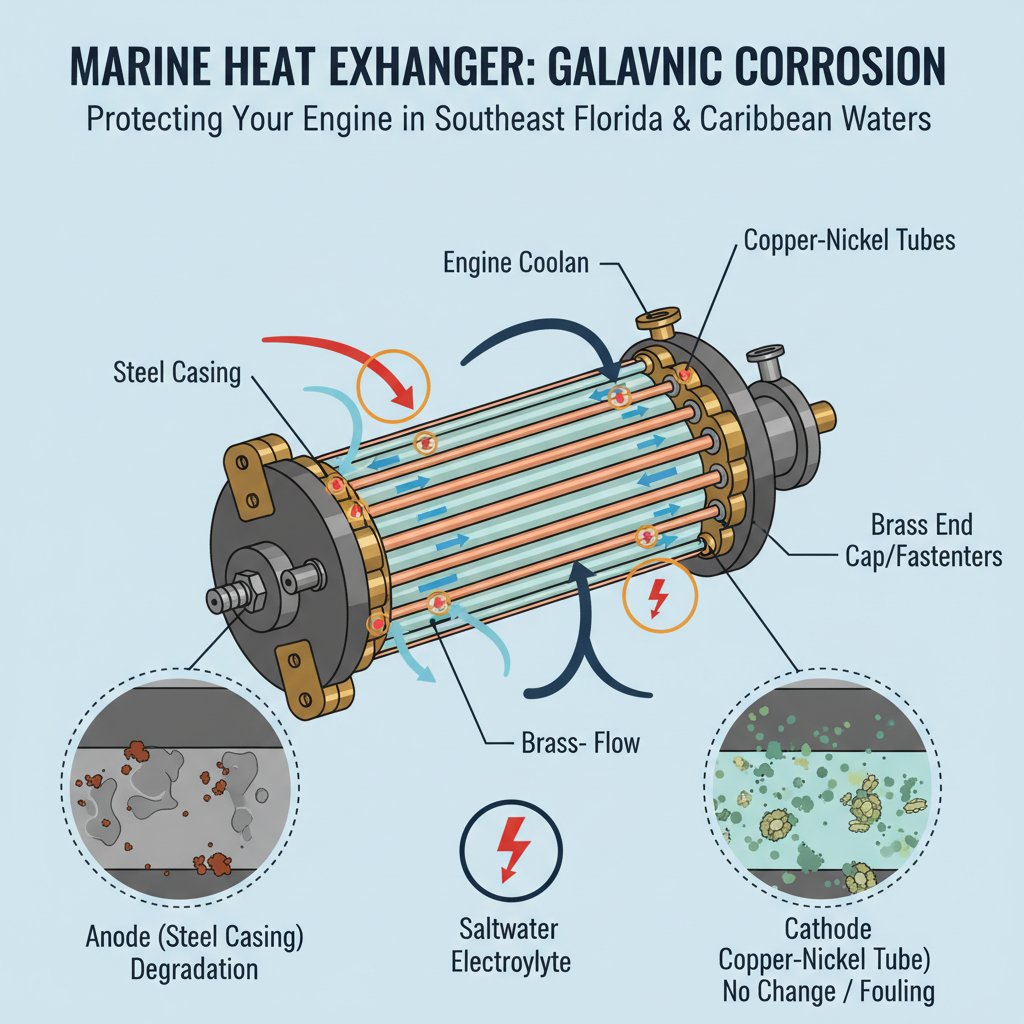
Marine diesel engines combat multiple forms of corrosion simultaneously. Galvanic corrosion occurs when dissimilar metals contact each other in salt water, creating electrical current flow that degrades the less noble metal. Heat exchangers containing copper-nickel tubes mounted in steel housings exemplify this challenge. Manufacturers like MAN, Volvo Penta, and Cummins engineer specific alloy combinations to minimize galvanic potential, but protective measures remain essential.
Crevice corrosion develops in confined spaces where oxygen depletion creates localized aggressive environments. Gasket surfaces, threaded connections, and areas beneath marine growth harbor these conditions. Meanwhile, erosion-corrosion attacks components exposed to high-velocity salt water flow—particularly raw water pump impellers, heat exchanger tubes, and exhaust mixing elbows.
Temperature fluctuations intensify these processes. Operating engines maintain elevated temperatures that accelerate chemical reactions, while shutdown periods allow salt deposits to crystallize and concentrate corrosive compounds. This cycling effect explains why infrequently operated vessels sometimes experience more severe corrosion than regularly used ones.
Critical Cooling System Protection
The raw water cooling circuit represents your engine’s most vulnerable corrosion pathway. Sea water flows continuously through heat exchangers, oil coolers, and exhaust components during operation. Implementing comprehensive cooling system protection starts with understanding your specific engine configuration.
Raw Water System Maintenance
Raw water strainers require inspection before every departure and cleaning at regular intervals. Debris accumulation restricts flow, reducing cooling efficiency while creating ideal conditions for crevice corrosion. Quality strainers feature bronze or composite construction with easily removable baskets—cheap alternatives corrode rapidly and fail unpredictably.
Heat exchangers demand particular attention in preventive marine engine maintenance programs. These components transfer thermal energy between raw water and closed freshwater circuits, utilizing copper-nickel tube bundles susceptible to both galvanic attack and deposit buildup. Annual professional inspection should include pressure testing, visual examination for electrolysis damage, and verification that sacrificial anodes retain adequate material.
Zinc pencil anodes installed in heat exchangers, oil coolers, and transmission coolers provide sacrificial protection. These components corrode preferentially, protecting more expensive base metals. However, zinc anodes only function when properly sized, correctly positioned, and replaced before complete depletion. During boat engine maintenance Fort Lauderdale technicians frequently discover completely dissolved anodes—offering zero protection while owners assumed coverage.
Marine Engine Cooling Parts Selection
Aftermarket cooling components vary dramatically in quality and corrosion resistance. Factory-authorized marine engine cooling parts utilize alloys specifically engineered for salt water environments. Heat exchanger tubes contain precise copper-nickel ratios optimized for your engine’s operating parameters. Gaskets feature materials resistant to both temperature cycling and salt water degradation.
Universal replacement parts often substitute inferior materials to reduce costs. Bronze components may actually be brass—containing zinc that rapidly dezincifies in salt water. Stainless steel fasteners might lack appropriate grade specifications, leading to crevice corrosion failures. When sourcing replacement components, specify OEM parts from manufacturers like John Deere, Northern Lights, Westerbeke, or Kohler depending on your equipment.
Closed Cooling System Management
Engines equipped with closed cooling systems isolate internal components from raw water exposure, dramatically reducing corrosion risks. Freshwater circulates through engine blocks, cylinder heads, and turbochargers before transferring heat through a raw-water-cooled heat exchanger. This configuration protects expensive internal components while concentrating salt water contact in replaceable external components.
Coolant quality determines closed system protection effectiveness. Modern marine diesel coolants contain corrosion inhibitors, cavitation suppressants, and scale preventatives formulated for mixed-metal engine construction. Testing coolant condition annually verifies additive concentration and checks for contamination—particularly critical given that small raw water leaks can compromise the entire system.
Contamination detection requires both visual inspection and chemical testing. Oily residue suggests head gasket or oil cooler failures, while salt contamination indicates heat exchanger tube leaks or failed gaskets. Professional marine diesel service providers utilize refractometers and test strips to quantify coolant condition, identifying problems before they cause component damage.
Exhaust System Corrosion Prevention
Marine exhaust systems endure the harshest corrosion environment on your vessel. Components face simultaneous exposure to high-temperature combustion gases, salt water injection for cooling, and thermal cycling between ambient and operating temperatures. Exhaust risers, mixing elbows, and mufflers require vigilant monitoring and preventive replacement.
Water-cooled exhaust components combine cast iron or steel construction with raw water injection ports. The mixing point where hot exhaust gases meet cooling water creates extreme thermal stress alongside aggressive corrosion. Most manufacturers specify exhaust component replacement intervals between 1,500 and 3,000 operating hours—conservative intervals that prevent in-service failures.
Visual inspection reveals early corrosion indicators. Surface rust, water weeping, or white salt deposits signal active corrosion. Wall thickness measurements using ultrasonic gauges quantify remaining material, allowing data-driven replacement decisions rather than arbitrary schedules. This approach proves particularly valuable for commercial operators tracking multiple engine installations across fleets.
External Engine Protection Strategies
Engine exterior surfaces face constant salt spray, humidity, and temperature variations. Bare metal corrodes rapidly, while protective coatings break down under thermal cycling and mechanical wear. Comprehensive external protection combines proper coatings with environmental controls.
High-temperature engine paints formulated for marine applications resist both thermal stress and salt exposure. Proper surface preparation determines coating longevity—removing all corrosion, grease, and contaminants before application. Many yacht engine service facilities offer professional coating services using spray booth equipment that ensures uniform coverage and proper curing.
Engine room ventilation significantly impacts corrosion rates. Adequate airflow removes moisture and salt-laden air, reducing condensation on cool surfaces. Dehumidification systems prove particularly effective for vessels in tropical climates or those stored for extended periods. Maintaining engine room humidity below 50% dramatically slows external corrosion processes.
Fuel System Corrosion Considerations
While diesel fuel itself doesn’t corrode steel tanks and components, water contamination creates corrosion risks throughout fuel systems. Marine environments promote condensation inside fuel tanks, while contaminated fuel deliveries introduce water directly. Once present, water settles below diesel fuel, creating ideal conditions for microbial growth and corrosion.
Water-fuel interfaces harbor bacteria and fungi that metabolize hydrocarbons while producing corrosive organic acids. These microbes form slimy biomass that clogs filters while attacking tank walls and fuel system components. Regular fuel polishing, biocide treatments, and water removal prevent these problems from developing.
Fuel tank inspection and cleaning on five-year intervals allows direct assessment of internal conditions. Professional technicians remove accumulated sludge, water, and microbial growth while inspecting for active corrosion. Aluminum tanks prove particularly vulnerable to pitting corrosion from microbial acids, sometimes requiring replacement despite external appearances suggesting good condition.
Preventive Maintenance Program Essentials
Systematic preventive marine engine maintenance delivers exponential returns in corrosion prevention. Scheduled inspections identify developing problems before they cause failures, while regular servicing maintains protective systems at full effectiveness.
Annual professional service should include comprehensive cooling system inspection, anode replacement, coolant testing, and exhaust component evaluation. Many operators in Southeast Florida and the Caribbean schedule these services during summer months when vessel usage decreases. This timing allows addressing discovered issues without impacting peak operating seasons.
Operating intervals between professional services require owner-performed monitoring. Pre-departure checks verify cooling water flow, confirm normal operating temperatures, and inspect for new leaks or unusual sounds. Post-operation freshwater flushing (where applicable) removes salt deposits from raw water circuits, dramatically extending component life.
Detailed maintenance logs document service history, track component replacement intervals, and establish operating hour baselines. These records prove invaluable when diagnosing intermittent problems or planning major service intervals. Digital maintenance tracking applications now simplify record-keeping while providing automatic service reminders based on calendar dates or accumulated operating hours.
Professional Service Advantages
Factory-authorized service providers bring specialized knowledge, diagnostic equipment, and genuine parts access that DIY approaches cannot match. Technicians trained on specific brands—whether Volvo Penta, MAN, or Onan generators—understand model-specific vulnerabilities and apply manufacturer-developed service procedures.
Dockside service convenience eliminates the expense and hassle of transporting vessels to shore facilities. Mobile service units carry specialized tools, diagnostic computers, and common replacement parts directly to your vessel. This approach minimizes downtime while allowing technicians to assess complete installations including engine room ventilation, exhaust routing, and cooling water plumbing.
Parts availability separates professional service providers from general mechanics. Authorized dealers maintain inventory of critical components while accessing manufacturer distribution networks for rapid delivery. Worldwide parts shipping capability ensures that vessels cruising remote areas receive needed components regardless of location—critical for addressing corrosion damage discovered far from home ports.
Take Action Against Corrosion
Salt water corrosion never stops, but comprehensive prevention strategies keep it from compromising your marine diesel engines. Regular professional maintenance combined with attentive owner monitoring creates the foundation for decades of reliable operation. The investment in proper preventive care costs a fraction of corrosion-related repairs while delivering peace of mind during every voyage.
Don’t wait for corrosion symptoms to appear. Contact DSOA today to schedule comprehensive marine diesel service for your vessel. Our factory-trained technicians serve Southeast Florida and the Caribbean with expert maintenance, genuine parts, and convenient dockside service. Protect your investment with professional care that keeps engines running reliably season after season.
