
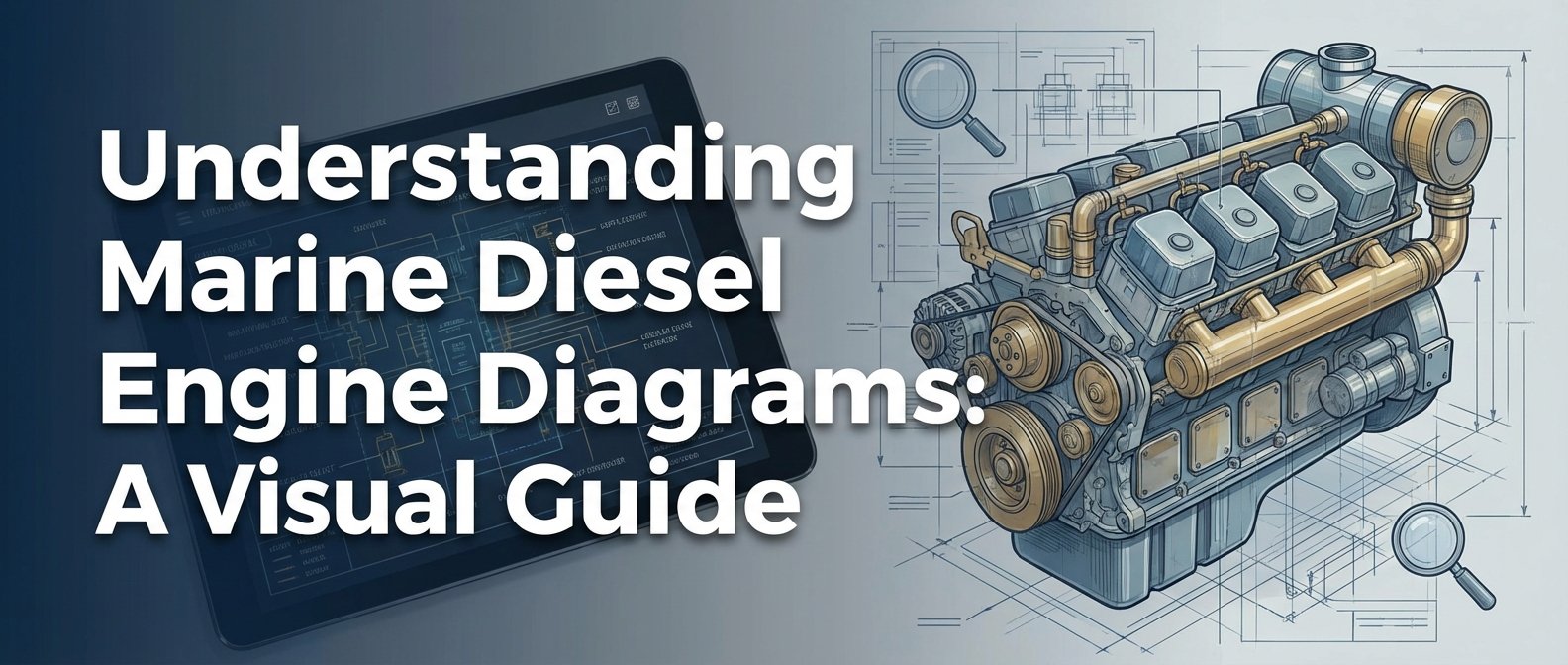
Marine diesel engine diagrams serve as the essential blueprint for understanding, maintaining, and troubleshooting your vessel’s power plant. Whether you’re a seasoned yacht owner or new to marine diesel engines, the ability to read and interpret these diagrams can mean the difference between a quick fix at the dock and an extended stay in the boatyard. These visual representations decode the complex systems that keep your vessel running reliably across Southeast Florida waters and throughout the Caribbean.
Why Marine Diesel Engine Diagrams Matter
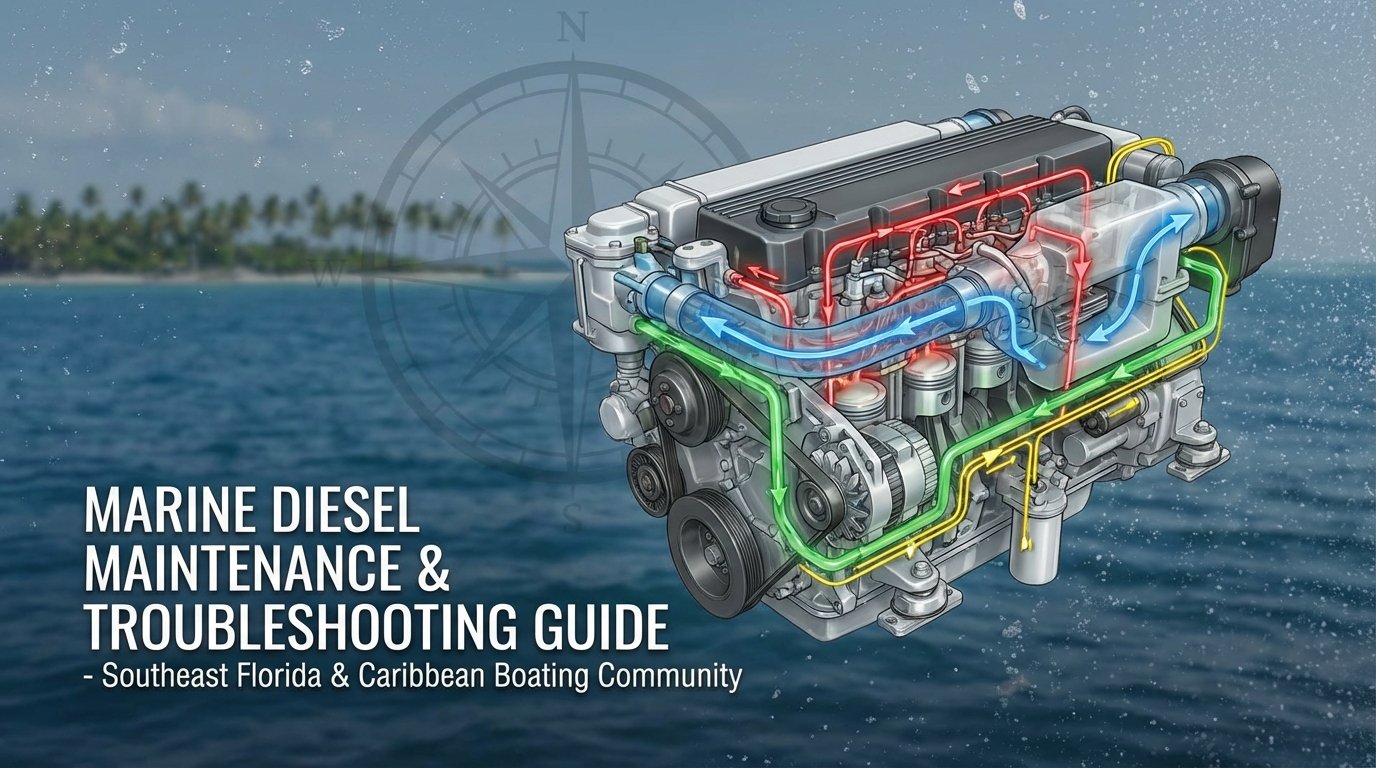
A marine diesel engine diagram functions as your engine’s roadmap, illustrating how fuel, air, coolant, and electrical systems interconnect to generate power. Unlike automotive engines, marine diesels operate in a uniquely harsh environment—surrounded by corrosive saltwater, subjected to constant motion, and expected to run for extended periods under load. Understanding these diagrams helps you communicate effectively with technicians, identify potential problems before they escalate, and maintain your investment properly.
Professional service providers like factory-authorized technicians rely on manufacturer-specific diagrams to diagnose issues accurately. When you understand the basics of what these diagrams show, you become a more informed owner, capable of recognizing when something doesn’t look or sound right. This knowledge proves particularly valuable when you’re away from your home port and need to explain an issue to an unfamiliar service provider.
Key Components in Marine Diesel Engine Diagrams
Modern marine diesel engine diagrams typically illustrate several interconnected systems. Each brand—whether MAN, Volvo Penta, Cummins, or John Deere—presents this information slightly differently, but the fundamental components remain consistent.
Fuel System Components
The fuel system diagram shows the path diesel travels from your tank to the combustion chamber. Key elements include the primary and secondary fuel filters, fuel lift pump, high-pressure injection pump, and injectors. Many diagrams also indicate fuel return lines, which recirculate unused fuel back to the tank. Understanding this flow helps you troubleshoot issues like hard starting, power loss, or rough running—common problems that often stem from contaminated fuel or air in the system.
Fuel system diagrams become particularly important when bleeding air after filter changes or when diagnosing low-pressure delivery problems. The diagram shows you where bleed points exist and the proper sequence for purging air from the system.
Cooling System Layout
Marine diesel engines use either raw water cooling or closed cooling systems with heat exchangers. Engine diagrams illustrate how coolant circulates through the block, heads, and heat exchanger, while also showing raw water flow paths. These diagrams identify critical components including the raw water pump, thermostat, heat exchanger, expansion tank, and various hoses and connections.
For boat owners in tropical climates, cooling system diagrams prove essential for understanding how your engine manages heat. Overheating remains one of the most common marine diesel problems, and a diagram helps you trace coolant flow to identify restrictions, leaks, or failed components.
Air Intake and Exhaust Systems
The air intake side shows how your engine breathes, from the air filter through the intake manifold. Turbocharged engines include additional components like intercoolers and boost pressure lines. Exhaust diagrams illustrate the path from exhaust manifold through the heat exchanger (for wet exhaust systems), mixing elbow, and out through the hull.
These diagrams help you understand why maintaining clear air filters and unobstructed exhaust paths matters so much. Restrictions in either system directly impact engine performance and fuel efficiency.
Electrical and Starting Systems
Electrical system diagrams show battery connections, starter motor, alternator, and the various sensors that monitor engine parameters. Modern engines incorporate numerous sensors for temperature, pressure, and speed—all clearly marked on comprehensive diagrams. Understanding these connections helps when troubleshooting starting issues or diagnosing why warning lights illuminate.
Reading Manufacturer-Specific Diagrams
Each engine manufacturer presents diagrams using their own conventions and symbology. Volvo Penta diagrams, for instance, use specific color coding and numbering systems that differ from MAN or Cummins documentation. Factory-authorized service centers maintain complete libraries of these manufacturer-specific diagrams, including updates and revisions that reflect engineering changes over a model’s production run.
When requesting a marine diesel engine diagram pdf from your engine manufacturer or service provider, ensure you’re getting documentation that matches your specific engine model and serial number. Engines evolve over production years, and using an incorrect diagram can lead to confusion or misdiagnosis. Professional technicians always verify they’re working from the correct documentation before beginning diagnostic work.
Understanding Diagram Symbols and Conventions
Marine diesel engine diagrams use standardized symbols to represent components. Pumps typically appear as circles with arrows indicating flow direction. Valves show as various geometric shapes depending on type—ball valves look different from check valves or relief valves. Electrical components use international electronic symbols. Heat exchangers appear as boxes with crossed lines indicating heat transfer between fluids.
Taking time to learn these symbols transforms a confusing schematic into a readable document. Most comprehensive service manuals include a legend explaining the symbols used throughout their diagrams.
Using Diagrams for Boat Engine Troubleshooting
When your marine diesel engine develops a problem, systematic troubleshooting using diagrams dramatically improves diagnostic accuracy. Rather than guessing at the cause, you can trace systems methodically to isolate the issue.
Systematic Diagnostic Approach
Start with the symptom—hard starting, overheating, loss of power, unusual noises, or excessive smoke. Reference the diagram for the system most likely involved. For hard starting, examine the fuel system diagram. For overheating, focus on cooling system flow paths. This systematic approach prevents the common mistake of replacing parts randomly hoping to solve the problem.
Professional diagnostics combine diagram knowledge with proper testing equipment. While understanding the diagram helps you identify what should happen, testing confirms what actually is happening. This is why factory-authorized technicians prove so valuable—they combine diagram expertise with manufacturer-specific diagnostic procedures and proper test equipment.
Preventive Maintenance Planning
Engine diagrams also guide preventive maintenance schedules. By seeing how systems interconnect, you understand why certain maintenance tasks matter. Changing fuel filters isn’t just about clean fuel—it’s about protecting expensive high-pressure injection pumps downstream. Flushing cooling systems isn’t merely routine—it prevents scale buildup that restricts flow and causes overheating.
Diagrams help you visualize the cascade effect when maintenance gets deferred. A corroded raw water pump impeller doesn’t just affect the pump—it reduces flow through the entire cooling system, potentially damaging the engine block, heads, and exhaust components.
Accessing and Organizing Engine Documentation
Modern engine manufacturers provide documentation in digital formats, making marine diesel engine diagrams more accessible than ever. However, organization remains crucial. Maintain a dedicated folder—physical or digital—containing all diagrams, service manuals, and technical bulletins for your specific engine.
When working with professional service providers, having your engine documentation readily available streamlines the service process. Technicians can quickly reference specifications, torque values, and system diagrams specific to your engine rather than searching through generic information.
Digital Resources and Mobile Access
Many manufacturers now offer mobile apps or online portals where owners can access technical documentation using their engine serial number. Download these resources before departing on extended cruises, ensuring you have access even without internet connectivity. PDF versions of critical diagrams stored on your phone or tablet provide valuable reference when discussing issues with service providers via phone or email.
When to Consult Professional Technicians
Understanding marine diesel engine diagrams empowers you as an owner, but it doesn’t replace professional expertise. Factory-authorized technicians bring years of hands-on experience with specific engine brands like Kohler, Northern Lights, Westerbeke, and other marine power systems. They’ve seen failure patterns, know common issues with particular models, and understand the nuances that diagrams can’t fully convey.
Complex diagnostic work, especially involving electronic engine management systems, requires specialized scan tools and software that interface with engine control modules. While diagrams show you what sensors exist and where they’re located, interpreting the data they provide requires professional-grade equipment and training.
For boat owners throughout Southeast Florida and the Caribbean, establishing a relationship with a qualified marine diesel service provider ensures you have expert support when needed. Many service providers offer dockside convenience, bringing diagnostic expertise and factory-authorized knowledge directly to your vessel. This proves particularly valuable when troubleshooting complex issues that require specialized knowledge beyond what diagrams alone can provide.
Building Your Marine Engine Knowledge
Mastering marine diesel engine diagrams doesn’t happen overnight. Start with basic system understanding, then gradually build knowledge about how components interact. Focus first on the systems most critical to reliable operation—fuel delivery, cooling, and lubrication. As you become comfortable with these fundamentals, expand into electrical systems and emissions controls.
Attend manufacturer training sessions when available, or ask your service provider if they offer owner education programs. Many experienced marine technicians enjoy sharing knowledge with engaged owners who want to understand their vessels better.
Partner With Marine Diesel Experts
Understanding marine diesel engine diagrams represents an important step toward informed vessel ownership, but it’s just one component of proper engine care. Regular professional maintenance, prompt attention to developing issues, and using factory-authorized service providers ensure your marine diesel engine delivers reliable performance for thousands of hours.
Whether you need routine maintenance, complex diagnostics, or genuine factory parts shipped anywhere in the world, working with experienced professionals who understand your specific engine brand makes all the difference. Dockside service convenience combined with factory-authorized expertise keeps your vessel running reliably, so you can focus on enjoying your time on the water rather than worrying about mechanical issues.
Contact qualified marine diesel specialists who service MAN, Volvo Penta, John Deere, Cummins, Onan, Kohler, Northern Lights, and Westerbeke engines to ensure your vessel receives the expert care it deserves. Professional technicians don’t just fix problems—they help you understand your engine better, making you a more capable and confident boat owner.
